



















(Singapore, 13.08.2026)The United States and Japan are pushing ahead with an ambitious plan to recover rare earth minerals from around 6,000 metres beneath the Pacific Ocean, as both countries seek to reduce their dependence on China for materials critical to electric vehicles, semiconductors and defence technologies.
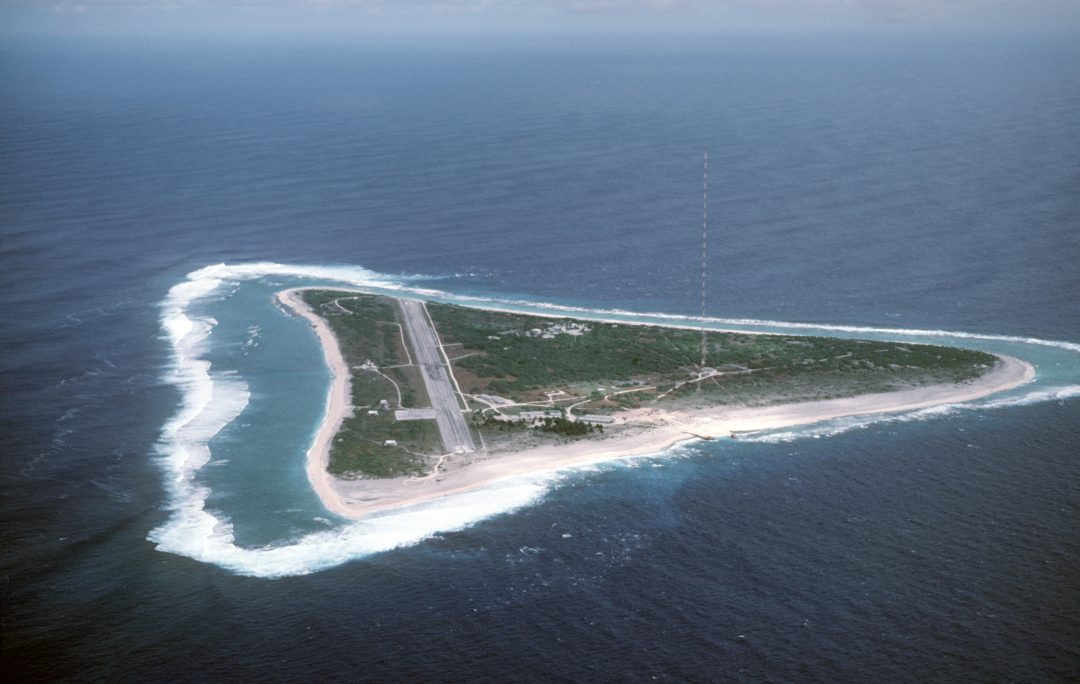
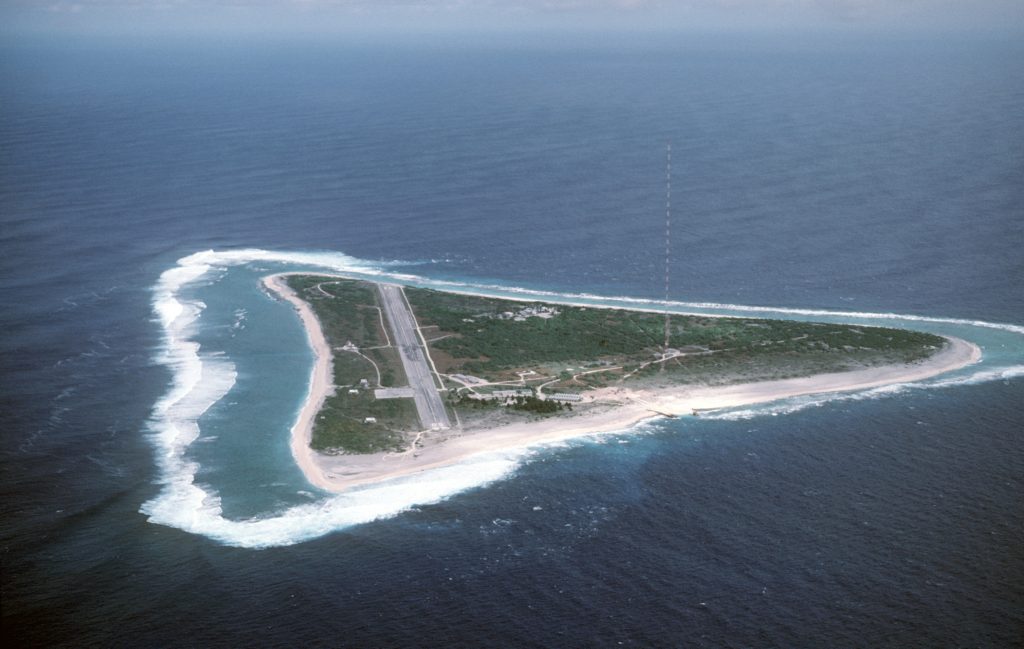
At the centre of the plan is Minamitorishima, a tiny and remote Japanese island more than 1,000 miles southeast of Tokyo, surrounded by seabed deposits believed to contain enormous quantities of rare earths. Japanese researchers estimated in 2018 that mud south of the island could hold more than 16 million tonnes of rare earth minerals, potentially enough to meet global demand for some elements for centuries.
The project gained political momentum after Japanese Prime Minister Sanae Takaichi and US President Donald Trump discussed cooperation on developing the deposits during their White House meeting in March, following an earlier conversation in Tokyo last October. Their governments subsequently signed a memorandum of understanding on deep-sea mining, turning what had long been viewed as an experimental project into part of a broader effort to strengthen critical mineral supply chains.
Bloomberg reported that Japan has already retrieved test samples from the seabed, with recent results showing significant levels of yttrium, gadolinium and dysprosium, including heavy rare earths for which China dominates global production. Further drilling is planned, while Tokyo aims to develop a commercialisation plan by 2028.
A full-scale mining test lasting about a month is scheduled for February 2027 and will include refining and smelting, with Japan hoping to assess the commercial feasibility of domestically produced rare earths about a year later.
Breaking China’s Rare Earth Dominance
The project has taken on greater strategic importance as China tightens its control over exports of critical minerals. China supplies about 90% of the world’s rare earths and holds an especially strong position in heavy rare earth elements used in high-performance magnets, electric vehicle motors and advanced defence equipment.
Japan has spent years trying to diversify its supply following earlier disruptions in shipments from China, including investing in overseas processing facilities and supporting Australian producer Lynas Rare Earths. Despite those efforts, Japan still obtains roughly two-thirds of its rare earth imports from China and remains almost entirely dependent on the country for heavy rare earths.
Exports of dysprosium and terbium from China to Japan, both important materials for high-performance magnets, have fallen to zero this year, adding urgency to Tokyo’s search for alternative supplies.
Takaichi has made reducing Japan’s reliance on China a central part of her economic security agenda, with the country’s long-term growth strategy envisioning about US$5.7 billion in public and private investment for deep-sea resource development through 2040.
Washington shares similar concerns, particularly after Beijing imposed rare earth export controls on the US in response to Trump’s tariff policies. Trump in April ordered federal agencies to speed up reviews and permits for seabed mineral exploration and mining projects both domestically and internationally.
Several North American companies have expressed preliminary interest in the Minamitorishima project, according to Bloomberg, including Houston-based offshore engineering company Deep Reach Technology. Japan has so far handled the exploration work itself, but US companies with extensive experience in offshore oil and gas drilling could eventually contribute technology and expertise.
Minamitorishima’s deposits may also offer an environmental processing advantage because samples have shown relatively low levels of radioactivity, unlike some land-based heavy rare earth deposits where extraction can release harmful radioactive materials.
Huge Potential, But Huge Costs
Turning the deposits into a commercially viable mine will nevertheless be difficult because no seabed mining operation of this kind has yet reached commercial scale, while the Minamitorishima deposits lie at depths far beyond conventional offshore oil drilling.
Water pressure at 6,000 metres is around 600 times greater than at sea level, while researchers still know relatively little about deep-sea ecosystems that could be affected by large-scale extraction. One private-sector estimate suggests the project could require billions of dollars of investment over more than a decade, with production costs potentially reaching about three times those of land-based extraction in China.
Researchers at the University of Tokyo estimate that around 3,500 tonnes of mineral-rich mud could eventually be lifted from the seabed each day using a suction-pump system adapted from deep-sea oil operations, although there is not yet a consensus on the most effective commercial extraction method.
Professor Kentaro Nakamura of the University of Tokyo, who has studied the deposits, believes the technical hurdles are manageable and that political commitment will ultimately determine whether the project proceeds.
The economic race is also increasingly intertwined with security concerns, particularly as Chinese oceanographic survey ships have repeatedly operated near Minamitorishima. Commercial tracking data analysed by Bloomberg showed one Chinese research vessel conducting seabed surveys close to the boundary of Japan’s exclusive economic zone, where Tokyo holds sole rights to explore and exploit natural resources.
Tensions intensified in June 2025 when a Chinese aircraft carrier entered the island’s exclusive economic zone for the first time, an action that did not violate international law but prompted concern in Tokyo. Japan has since stepped up defence activity around the remote island, including deploying an anti-ship missile system for live-fire training and considering additional radar and surveillance facilities.
China’s Foreign Ministry said its marine scientific research activities serve peaceful purposes and comply with international law, while its naval activities in the area are also consistent with international rules and practices.
A Long-Term Bet on Supply Security
Even if Japan’s tests prove successful, commercial production is unlikely to begin soon enough to provide an immediate solution to US and Japanese dependence on China, and some Japanese officials privately acknowledge that the project is unlikely to become operational before Trump’s current presidency ends.
That raises questions over whether Washington will maintain the same level of interest under future administrations, particularly as the US pursues other sources of critical minerals that could deliver results more quickly.
Still, Minamitorishima offers something potentially more important than short-term production. If Japan and the US can eventually establish extraction, refining and magnet production without relying on China, they could create a more complete alternative supply chain for some of the world’s most strategically important minerals.
For Tokyo, the project represents both an economic security strategy and a long-term investment in resource independence, while for Washington it provides another way to signal that China’s dominance over rare earth supplies may not remain unchallenged indefinitely.
The challenge now is turning vast quantities of mineral-rich mud sitting six kilometres beneath the Pacific into a commercially viable source of rare earths, a task that could take more than a decade but potentially reshape one of the world’s most concentrated strategic supply chains.