
























(SINGAPORE, Aug. 13, 2026) — South Korea’s stock market is staging a dramatic rebound just weeks after one of its most violent selloffs in decades, underscoring the power of the artificial-intelligence investment boom and the heightened risks created by leverage, concentrated index exposure and growing globalized trading.
The KOSPI surged 4.1% to 6,847.66 by 10:30 a.m. today as foreign investors poured 1.37 trillion won (about S$1.23 billion) into Korean equities, led by semiconductor heavyweights SK hynix and Samsung Electronics. SK hynix jumped 7.3% and Samsung gained 5.1%, helping push the benchmark about 30% above its July 29 intraday low, reported the AJP news agency.
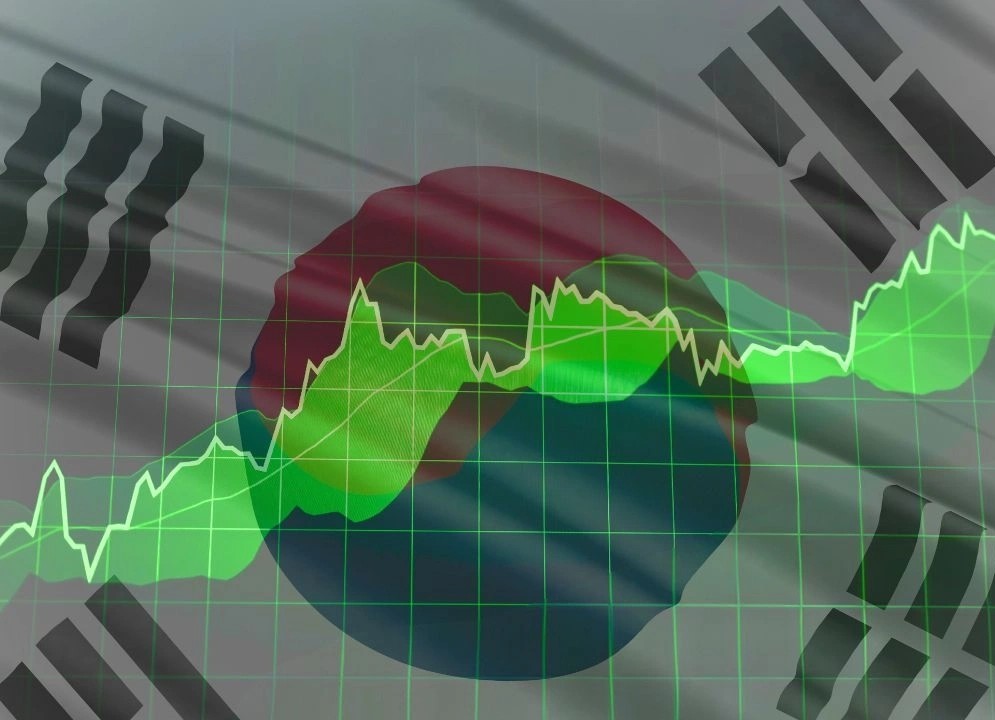
Yet the rebound is strikingly different from the euphoria that propelled Korean stocks higher earlier this year. Retail investors sold a net 1.69 trillion won of KOSPI shares today, while foreign and institutional investors did the buying. Investor deposits at domestic securities firms had fallen below 100 trillion won by Tuesday, and during the July turmoil Korean retail investors turned to US equities.
That shift captures the larger story of South Korea’s 2026 market cycle: a stock market once celebrated as an easy route to wealth has become a global case study in how an AI-fuelled rally can morph into forced selling by leveraged investors — and how quickly investor psychology can change.
Not long ago, a 26-year-old trader in Hong Kong who had been on the job for only six months allegedly used his company’s account without authorization, diverting HK$50 million (S$8.17 million) as margin financing to buy Hong Kong-listed CSOP SK Hynix Daily (2x) Leveraged Product, reported the Chinese media outlet Baobian (豹变) News.
The trade initially appeared to vindicate the bullish mood. As SK hynix shares surged, the leveraged position generated substantial unrealized gains. But when the Korean market dived, the combination of company funds and leverage became disastrous. During the subsequent rout, the trader allegedly suffered a loss of about HK$150 million.
His case illustrates what happened across the Korean market: leverage amplified gains when semiconductor shares were rising and magnified losses when they reversed.
From AI boom to national stock-market frenzy
The rally had powerful fundamentals behind it.
Global demand for AI computing capacity exploded during the first half of 2026, driving demand for high-end memory chips, particularly high-bandwidth memory. Samsung Electronics and SK hynix, two of the world’s most important memory-chip producers, benefited enormously from the surge in demand and pricing.
Their share prices became the main engine of the KOSPI. As earnings expectations rose, so did the index, turning South Korea into one of the world’s best-performing major equity markets.
The wealth effect spread beyond professional investors. University students, office workers and households discussed Samsung and SK hynix on social media and at work. Some invested their savings; others borrowed through margin accounts or personal credit loans to chase the rally.
One Seoul technology worker said he bought 20 million won of SK hynix shares early in the year. By the June peak, his unrealized gains had exceeded 50 million won. He imagined that another six months of appreciation might provide the down payment for an apartment in Seoul’s affluent Gangnam district.
The same psychology spread abroad. Hong Kong became an important channel for investors seeking exposure to Korea. Two leveraged exchange-traded products tracking SK hynix and Samsung Electronics were launched there in mid-2025. With two-times leverage built in, they offered investors a convenient way to magnify exposure to the Korean semiconductor boom.
Mainland Chinese investors participated more cautiously because of restrictions on direct access to Korean equities. Many instead invested through regulated public funds and ETFs (exchange-traded funds) tracking Korean or semiconductor indexes.
For investors who participated, the outsized returns reinforced the impression that the AI-memory trade was a rare opportunity.
When leverage turned against investors
The first warning signs emerged in June. The KOSPI triggered a circuit breaker on June 8 as the rally began to reverse. Two weeks later, Samsung Electronics and SK hynix both plunged more than 12%, dragging the broader index lower.
On June 26, another circuit breaker was activated.
Rather than abandoning the trade, many investors bought the dip, reasoning that the long-term AI story remained intact. But as selling intensified in July, that confidence disappeared.
The decisive collapse came on July 28 and 29. On July 28, the KOSPI plunged more than 10%. The following day, it fell another 5.98% to close at 5,663.24, while intraday losses exceeded 12% and the index briefly fell to 5,262.77. Circuit breakers were imposed on consecutive days, an unprecedented episode for the KOSPI and KOSDAQ.
The scale of the market move was not simply the result of changing views on semiconductor earnings. Leverage created a feedback loop.
When prices rise, leveraged investors can use relatively little capital to control larger positions, increasing buying power and pushing prices higher. When prices fall, brokers and funds require investors to reduce positions. Forced selling then pushes prices down further, prompting additional margin calls and liquidations.
The same mechanism that accelerates a bull market can turn a correction into a cascade.
Korea’s market structure made the problem worse. Samsung Electronics and SK hynix account for an unusually large share of the KOSPI, leaving the benchmark heavily exposed to two companies and the semiconductor cycle.
That concentration has growing importance beyond South Korea. As AI has made semiconductors central to global equity valuations, movements in Samsung and SK hynix influence investors in the US, Japan and elsewhere.
The KOSPI’s 60-day correlation with the Nasdaq 100 has risen to about 0.46, nearly three times its five-year average, according to Bloomberg data cited in the material. The figure suggests the two markets are now noticeably more synchronized.
In other words, Korea has become part of a global AI-risk trading system.
A warning about the semiconductor cycle
The deeper problem may be less about Korea than about how investors price cyclical industries during a boom.
Memory chips have many characteristics of a commodity business. Prices, profits and investment tend to move through powerful cycles as supply and demand change.
That presents an important valuation trap. At the peak of a cycle, profits can be exceptionally high, making price-to-earnings ratios appear unusually low. To an investor accustomed to valuing growth companies, a low P/E can look like a bargain.
For cyclical businesses, however, the opposite can be true: peak earnings can make a stock look cheapest just before profits begin to fall.
That distinction matters because the AI boom has led investors to view semiconductor companies not simply as cyclical manufacturers but as structural growth stories.
The question is not whether AI demand is real. It clearly is. The question is whether growth in AI infrastructure spending, memory demand and chip prices can continue at the pace implied by current valuations.
One investor who avoided a large Korean position throughout the rally warned that rapidly rising memory prices could eventually suppress demand for smartphones, computers and other consumer electronics. As additional production capacity comes online, supply could also increase, eventually pushing prices toward more sustainable levels.
That is the core risk beneath the market’s spectacular numbers: an excellent industry can still be a bad investment if investors pay too much at the wrong point in the cycle.
Korea’s rebound is powerful — but different
Today’s rally shows that the Korean bull story is far from dead.
Foreign investors are returning in force to the country’s largest technology companies. SK hynix and Samsung have once again become market leaders, while gains have begun spreading into semiconductor equipment, electronic components and other parts of the AI supply chain.
The recovery is also being supported by renewed confidence in global AI spending after July’s concerns over excessive capital expenditure briefly shook technology markets.
But the investor base has changed.
Retail investors, who were among the most enthusiastic participants in the earlier rally, are using the rebound to reduce exposure. Foreign institutions are instead stepping in to buy large-cap semiconductor names.
That suggests the current upswing may be driven more by institutional reassessment of valuations and AI growth prospects than by another wave of household speculation.
Korea’s global influence is nevertheless likely to endure. SK hynix and Samsung remain critical suppliers to the AI ecosystem, meaning their share-price movements provide investors worldwide with an increasingly important read on the health of the AI trade.
The irony is that the same characteristics that made Korea attractive — its concentration in memory chips and sensitivity to the AI cycle — also make it particularly volatile.
The market’s 2026 experience therefore offers two lessons. First, AI has transformed Korea from a regional equity story into a global market signal. Second, globalization does not eliminate traditional market risks; it can amplify them.
Leverage, concentration and momentum can turn a powerful structural story into a speculative frenzy. When sentiment reverses, those same forces can transform a correction into forced liquidation.
Today’s 4.1% rebound may look like the return of the Korean miracle. But investors are no longer trading the same market they were trading six months ago.
The exuberance has been tested, the leverage exposed, and the global investment community has learned to watch Seoul much more closely, concluded Baobian.