


























(Singapore, 28.08.2026)Nightclubs are usually built around novelty. New music, new crowds and new venues constantly reset the nightlife landscape, while few clubs remain culturally relevant for decades.
Zouk, which opened at Jiak Kim Street in 1991, has now reached its 35th year — a milestone that raises a more interesting question than longevity alone: how does a nightlife brand survive several generations without becoming a nostalgia act?
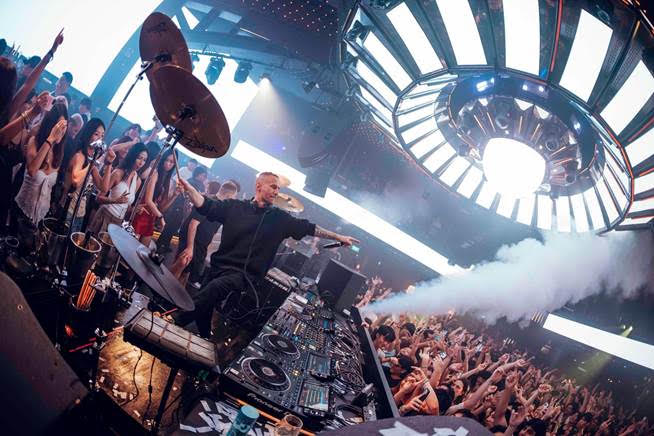
Its anniversary celebrations throughout August offered part of the answer. Rather than focusing solely on its past, Zouk brought together former and current resident DJs, international acts and newer party concepts, effectively putting different generations of its audience and musical identity in the same programme.
Christine Tan, Zouk’s Head of Brand Marketing, said the club’s history is closely tied to personal memories formed over decades — from first clubbing experiences and birthdays to couples who met on its dancefloor.
But she also acknowledged the risk that comes with such a long history.
“Our responsibility now is to respect it without being trapped by it,” she said, adding that the challenge is to ensure Zouk continues to mean something to the next generation.
That tension between legacy and reinvention is increasingly relevant for long-established entertainment brands. Nightlife habits have changed, audiences are more fragmented, and younger consumers discover music and social experiences through a far wider range of digital and physical channels than previous generations.
For a club that has been operating since 1991, survival therefore depends less on preserving a fixed formula than on continuously reinterpreting what the venue represents.
The resident DJ as institutional memory
A central part of Zouk’s anniversary programme was Residents’ Night on 21 August, which brought together resident DJs from different eras.
Jeremy Boon and Hong returned to the Mainroom alongside current residents Ghetto and Caden, while Rattle and Gainzter played at Phuture and Krisha performed at Capital.
The line-up highlighted one of the less visible elements behind a nightclub’s longevity: resident DJs do more than play music. Over time, they become part of the institution’s memory, observing shifts in audience tastes, music genres and nightlife culture from behind the decks.
Ghetto, who has been a resident DJ at Zouk since 2010, described the challenge not as recreating an earlier era, but understanding what made it work and translating that for a new audience.
“I’ve seen different generations come through these doors, different sounds take over the dancefloor and nightlife itself change,” he said.
That distinction matters. For heritage brands, nostalgia can attract existing loyalists, but too much dependence on the past can alienate younger consumers who have no personal connection with earlier eras.
Zouk’s current strategy appears to be to use its history as credibility rather than as the product itself.
Thirty-five years later, the audience is still changing
The final weekend of Zouk’s anniversary month reflects that approach.
French electronic artist Madeon is scheduled to perform on 28 August, while the month closes on 29 August with Sin City, a hip-hop night that has built a following among a younger generation of clubgoers.
The contrast is significant. Zouk’s long-term identity has been shaped by electronic dance music and resident DJ culture, but its continued relevance increasingly depends on responding to wider shifts in music and audience behaviour.
That also means the meaning of “Zouk” is no longer necessarily the same for a 50-year-old who first visited in the 1990s and a 22-year-old entering the club today.
For the former, it may represent a formative chapter of Singapore nightlife. For the latter, the brand has to compete in the present tense, not on reputation inherited from the past.
At 35, Zouk’s most notable achievement may therefore not simply be that it has lasted.
It is that the club is still confronting the same question every nightlife venue eventually faces: when the music, audience and culture keep changing, how much of the past should a brand keep — and how much must it be willing to leave behind?