


























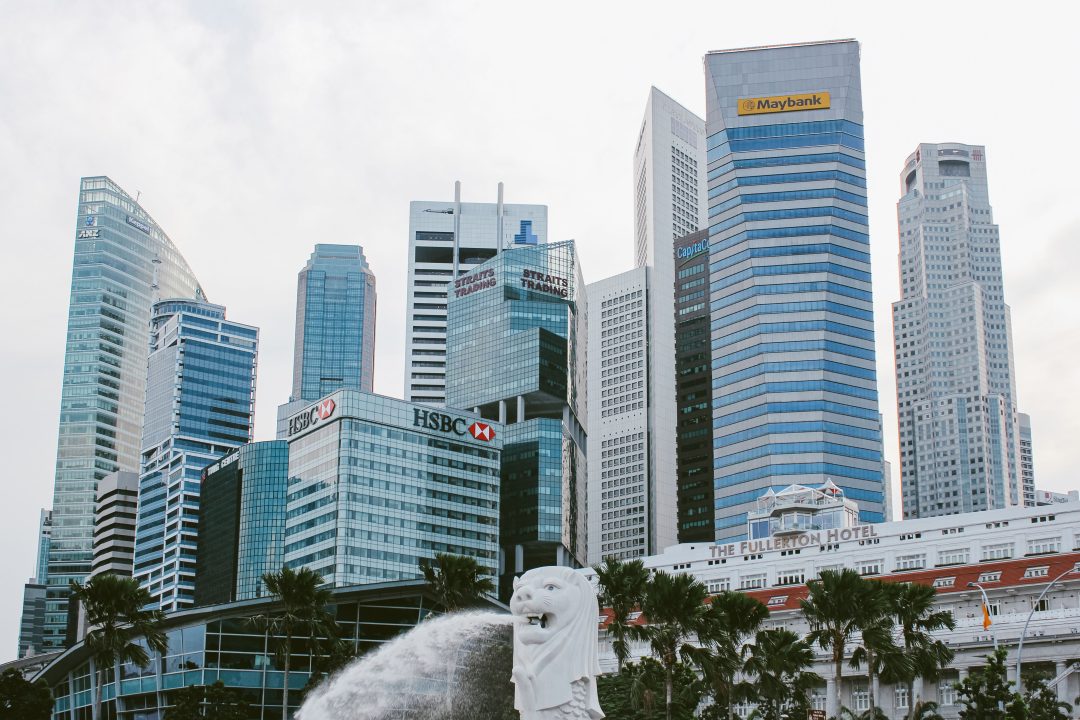
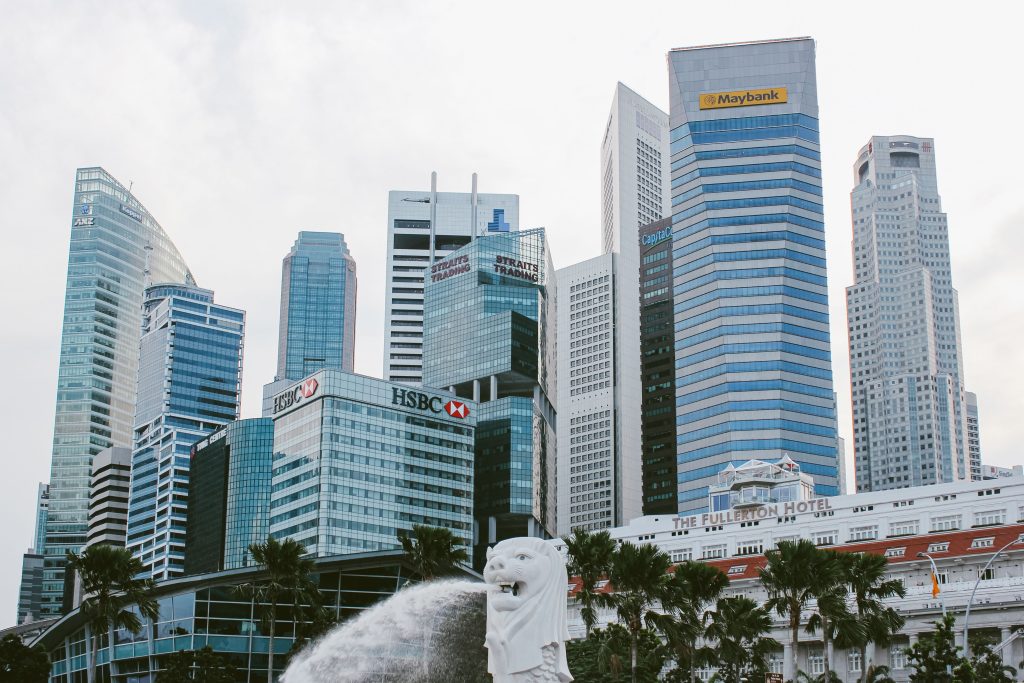
(Singapore, 13.10.2026)Singapore’s reputation as a safe haven for investors is facing a fresh test as a selloff in its biggest banking stocks weighs on the local stock market, while expectations of further monetary tightening raise concerns about earnings, borrowing costs and the outlook for the economy.
The Straits Times Index (STI) has fallen 6.6% from its peak more than five weeks ago, dragged down by shares of DBS Group Holdings, Oversea-Chinese Banking Corporation (OCBC) and United Overseas Bank (UOB).
The three lenders, which together account for more than half of the benchmark index, lost a combined US$22.4 billion (S$28.7 billion) in market value last week alone, highlighting how heavily Singapore’s stock market depends on the performance of its banking sector.
The decline marks a sharp reversal for a market that had previously attracted international investors seeking stability amid volatility caused by the Iran war and uncertainty surrounding the global artificial intelligence (AI) investment boom.
Singapore stocks had climbed to a series of record highs earlier this year, supported by strong corporate earnings and the city-state’s reputation for financial stability. However, rising global bond yields and concerns about bank profitability are now prompting investors to reconsider whether valuations have become too expensive.
Analysts are increasingly concerned that Singapore’s banks could face a more challenging environment when they report their next set of earnings in November.
Rising Bond Yields Pressure Bank Shares
One of the biggest concerns facing Singapore banks is the sharp increase in global bond yields, which has made fixed-income investments more attractive compared with dividend-paying bank stocks.
Higher yields can also reduce the market value of bonds held by banks, potentially creating valuation losses in their investment and trading portfolios.
JPMorgan Chase warned that rising long-term bond yields could lead to significant mark-to-market losses for Southeast Asian banks and put pressure on their capital management activities.
Other major financial institutions have also adopted a more cautious outlook.
Citigroup downgraded OCBC shares to a sell rating last week and maintained its sell recommendation on UOB, while HSBC lowered its assessment of Singapore equities to neutral, citing stretched valuations and tighter financial conditions affecting the property sector.
Despite the recent decline, Singapore banking stocks remain relatively expensive compared with their international peers.
DBS, Singapore’s largest lender, trades at approximately 16.9 times its expected earnings over the next 12 months, compared with 13.2 times for the broader MSCI financial sector index.
The valuation gap suggests investors are still paying a premium for Singapore banks, even as concerns grow over the sustainability of their earnings and dividend payouts.
Alex Ho, a sales trader at CMC Markets Singapore, warned that the bigger risk would be a prolonged decline spreading beyond banking stocks, particularly if corporate earnings or shareholder returns begin to weaken.
November’s bank earnings announcements will therefore be closely watched for signs of whether the recent market weakness reflects temporary investor caution or deeper financial pressure.
However, some analysts believe Singapore’s banking sector remains fundamentally sound.
Jen-Ai Chua, an Asia equity research analyst at Julius Baer, told Bloomberg that there were no clear signs of serious deterioration in loan quality, while lending growth remained relatively healthy.
She said the market could experience further volatility in October, but the absence of significant bad-debt problems could help prevent a more prolonged banking downturn.
Singapore Central Bank Expected to Tighten Again
Adding to the uncertainty, Singapore’s central bank is widely expected to tighten monetary policy again this week as rising energy costs and strong economic growth keep inflation risks elevated.
According to a Bloomberg survey, 17 of 20 economists expect the Monetary Authority of Singapore (MAS) to increase the slope of its exchange-rate policy band at its quarterly review on Wednesday (Oct 14), while three expect no change.
Unlike most central banks, which use interest rates as their main policy tool, the MAS manages monetary conditions primarily through the Singapore dollar’s exchange rate.
A steeper policy-band slope allows the currency to appreciate more quickly, helping to reduce the cost of imported goods and contain inflation.
The central bank has already tightened policy twice this year, first in April and again in July, when it made what it described as a very slight adjustment.
Singapore’s inflation pressures have been driven partly by higher energy prices following the US-Israeli war on Iran, while the rapid expansion of AI-related industries has supported stronger-than-expected economic growth.
Core inflation reached 2.2% in August, its highest level in two years, although it remained within the MAS forecast range of 1.5% to 2.5% for 2026.
Further price pressures could emerge in the coming months, with public transport fares scheduled to rise 7% in December.
Although electricity and natural gas tariffs are expected to decline in the fourth quarter, Bank of America economists anticipate a sharper rebound early next year as higher global energy costs feed through to consumers.
Maybank Securities economists Chua Hak Bin and Brian Lee said further monetary tightening would help address renewed energy and food price pressures, as well as the broader impact of higher import costs.
Both Maybank and Bank of America see the possibility of another policy adjustment in January if inflation remains persistent.
Meanwhile, Singapore’s economic growth is expected to moderate after a strong first half supported by electronics exports.
Preliminary third-quarter gross domestic product figures, due on Wednesday, are expected to show growth slowing to 5.1%, although the MAS still forecasts full-year expansion of between 4.5% and 5.5%.
Recent retail sales figures have also pointed to weakness in some consumer sectors, including motor-vehicle parts and food and beverages, suggesting that strong headline economic growth has not been evenly distributed.
The upcoming MAS decision and third-quarter GDP figures will provide investors with a clearer picture of Singapore’s economic outlook, ahead of the November bank earnings season that could determine whether the recent stock market decline deepens or stabilises.