

























(Singapore, 25.11.2026)Lakshmi Venu has filed a petition in the Madras High Court seeking a share of assets held by her father’s branch of India’s TVS business family. The petition seeks a formal division of family assets and access to records detailing those holdings, according to a statement issued on Wednesday, 25 November.
The filing follows a legal notice Lakshmi sent to her father, billionaire Venu Srinivasan, on 16 November setting out her demands. She said she turned to the court after efforts to reach a private settlement failed and her father’s reply showed that his position had not changed. According to the statement, the proceedings concern ownership of the family’s wealth and do not involve the companies’ day-to-day operations. Srinivasan did not immediately respond to requests for comment from Bloomberg, which reported the filing.
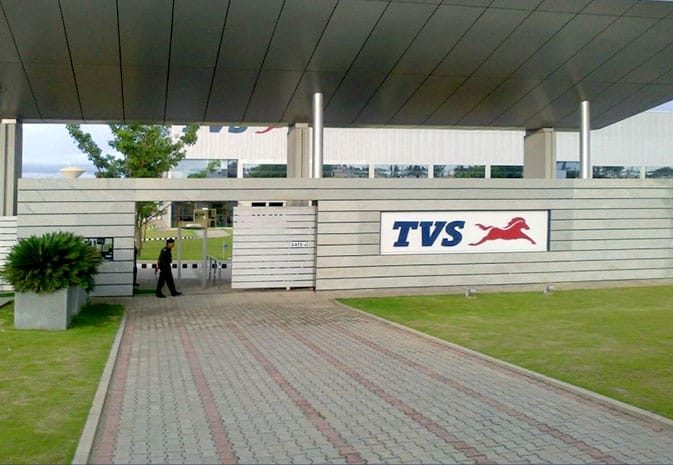
The family controls two-wheeler manufacturer TVS Motor Co. and its parent, TVS Holdings Ltd., as well as automotive components supplier Sundaram-Clayton Ltd. and non-bank lender TVS Credit Services Ltd. TVS Motor was valued at US$23.7 billion on Wednesday, while Sundaram-Clayton had a market capitalisation of US$247 million. Lakshmi’s petition concerns assets held by her father’s branch of the family, whose business interests span manufacturing and financial services.
The two sides disagree over what earlier family agreements settled when the wider TVS group was reorganised. Lakshmi argues that the restructuring allocated businesses among different branches of the extended family and left ownership within her father’s branch unresolved. She alleges that the beneficial interest in family assets was concentrated in favour of her brother, Sudarshan Venu, who serves as chairman and managing director of TVS Motor.
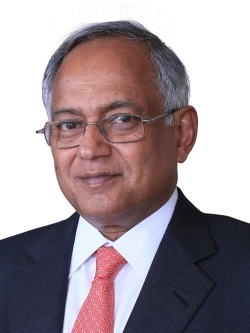
Srinivasan’s lawyer, senior advocate Abhishek Manu Singhvi, disputed that account in an interview with Business Today. He said the family had reached written settlements in 2017, 2020 and 2024 that covered both ownership and management. According to Singhvi, the family entered those agreements voluntarily and Lakshmi’s latest challenge seeks to reopen matters that had already been settled.
Alongside her request for a division of assets, Lakshmi is seeking records that would show what the family holds. She alleges that the information was withheld despite repeated requests. Her mother, Mallika Srinivasan, who chairs tractor maker TAFE, has backed the claim. The statement quoted Mallika as saying that her daughter had a legitimate claim to a share of the family assets equal to her brother’s.
Srinivasan is also involved in a separate leadership dispute at the Tata Group, where he serves as vice-chairman of Tata Trusts. The group of charities owns about two-thirds of Tata Sons, the conglomerate’s holding company. In September, Tata Trusts said Natarajan Chandrasekaran, the chairman of Tata Sons, had indicated that he would not seek another term when his current one ends in February 2027.
Indian business families weigh succession options
The dispute over how the TVS family’s assets should be divided comes as some of India’s largest business fortunes are set to pass to a new generation. UBS estimates that heirs to Indian billionaires stand to inherit more than US$382 billion over the next 15 years, the largest projected transfer outside the United States. Much of that wealth is tied to corporate holdings, where a family can retain substantial influence over board appointments and major decisions even after appointing an outside executive to run the business.
A survey by HSBC Private Banking found that 88 per cent of Indian entrepreneurs surveyed wanted to keep their businesses in the family, while nearly half had yet to put a succession plan in place. At Reliance Industries, Mukesh Ambani’s three children lead the group’s consumer, technology and new energy businesses. At Adani Group, Gautam Adani’s two sons and two nephews are in line to take over the ports-to-power conglomerate over the next decade.
Other groups have appointed professional executives while retaining family oversight. Hero MotoCorp promoted finance chief Niranjan Gupta to chief executive in 2023, succeeding founding family member Pawan Munjal, who had led the motorcycle maker since 2001. Gupta left two years later after friction over the extent of his authority, according to people familiar with the matter. Hero has since appointed another outside chief executive, while Munjal has remained involved in operations and strategy as executive chairman.
For some families, selling a controlling stake has offered another route. Bain & Co. data showed that transactions involving controlling stakes accounted for about 40 per cent of Indian private equity deals in 2025, a share that has risen over the past decade. EY India estimated that buyouts and other control transactions involving family- and founder-owned businesses were worth about US$19 billion between 2020 and 2025.
In 2020, the family behind JB Chemicals & Pharmaceuticals sold its majority stake to an affiliate of KKR for about US$413 million. Pranabh Mody, a former president of the drugmaker, said some relatives favoured the sale to preserve family ties. Torrent Pharmaceuticals agreed in 2025 to buy the stake for about US$1.4 billion and completed the purchase in January 2026. Mody went on to run Eragon Ventures, a family office that invests across several asset classes.
At TVS, the dispute over family wealth turns on whether earlier agreements settled how assets would be divided within one branch of the family. Lakshmi Venu has asked the Madras High Court to grant her access to records of the holdings she says remain undivided.