

























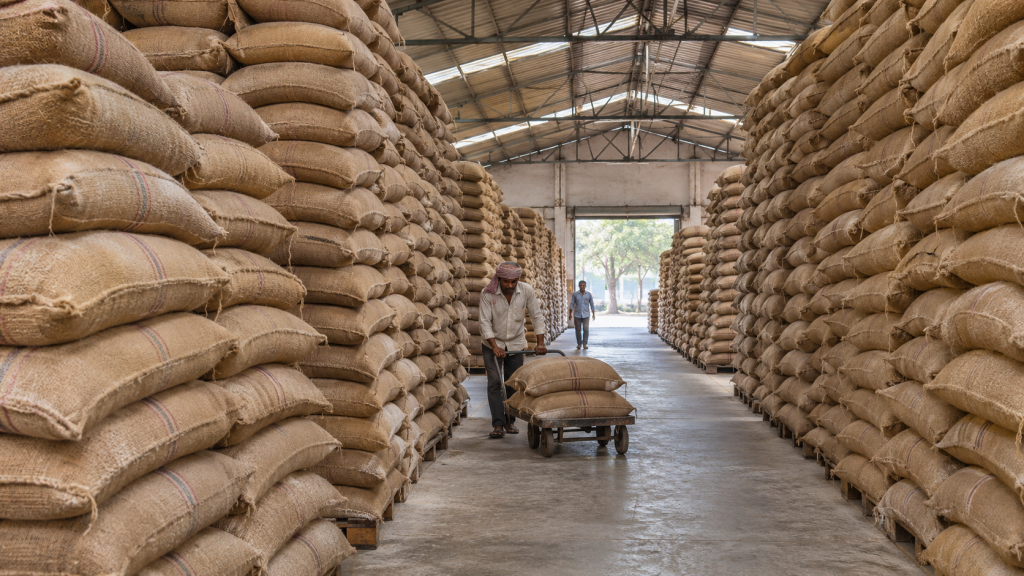
(Singapore, 18.11.2026)India supplies about 40% of the rice traded worldwide, but its rise as an export powerhouse is creating a fiscal problem at home. Government rice stocks have climbed to more than four times the official target, and rice now accounts for more than two-thirds of a federal food subsidy bill that has more than doubled in a decade.
The food subsidy bill reached 2.28 trillion rupees (about S$31.1 billion) in the 2025/26 financial year. Federal officials are increasingly concerned about the cost of supporting rice production as state governments offer farmers bonuses on top of the national minimum support price, Reuters reported, citing government correspondence and interviews with officials and scientists.
The subsidy system dates back to the mid-1960s, when poor harvests left India struggling to feed its population. Today, the federal government sets a minimum support price each year, taking into account costs such as labour and fertiliser. Bonuses offered by rice-producing states raise farmers’ returns further, giving them an incentive to keep planting rice even as government warehouses fill up.
Advances in crop science have also helped lift production, with a flood-tolerant rice variety introduced for commercial cultivation in 2009 making harvests more reliable in parts of eastern India where monsoon floods often damaged crops. Over the 15 years to 2025/26, rice production in Bihar rose 182% to 8.75 million tonnes, while output in neighbouring Odisha increased 50% to 10.2 million tonnes.
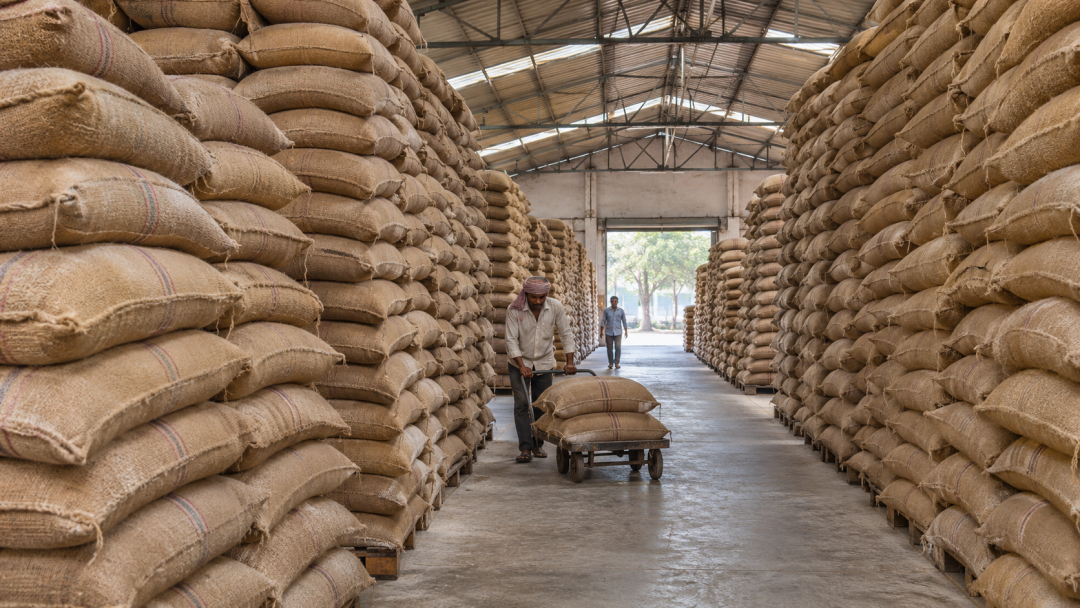
National output rose 50% in a decade to a record 154 million tonnes in 2025/26, compared with domestic consumption of 107 million tonnes. The government has diverted some rice to ethanol production, but its stocks still reached a record 55.47 million tonnes on 1 October 2026. The federal food ministry plans to add 13.1 million tonnes of storage capacity as purchases continue to outpace the movement of grain out of warehouses.
India’s surplus puts pressure on Asian exporters
India exported 22.3 million tonnes of rice in 2025, twice as much as a decade earlier, earning US$12 billion. Although weaker rains associated with El Niño are expected to reduce the 2026/27 harvest, the US Department of Agriculture forecasts that Indian exports will rise over the next two years, supported by ample stocks.
Indian rice was selling at a discount of about US$110 a tonne to benchmark Thai rice, which traded at around US$497 a tonne in mid-November. Thailand sought closer cooperation with India and Vietnam in 2025 to stem falling prices and said in October 2026 that India’s large stocks were adding to pressure on Thai exporters.
India’s rice exports have also drawn criticism from US President Donald Trump, who has accused India of selling rice below cost. New Delhi rejected the allegation, saying it sells premium basmati rice to the US. The two countries are negotiating a trade deal.
Ashok Gulati, an agricultural economist and former government adviser on crop prices, said Indian taxpayers were effectively subsidising overseas consumers when surplus rice was sold at prices that undercut competing suppliers.
Crop incentives add to the import bill
India’s price supports make rice more profitable for farmers and give them less incentive to switch to crops such as oilseeds and pulses. India spent US$22.7 billion importing those crops in 2025, up 120% over a decade and nearly twice what it earned from rice exports that year.
Rice also uses more fertiliser than oilseeds and pulses, according to agricultural experts. India’s fertiliser ministry estimates that the nationwide fertiliser subsidy bill will exceed 3 trillion rupees (about S$41 billion) in 2026/27, four times its level a decade earlier. Federal officials have also warned that water-intensive rice cultivation is putting pressure on groundwater and have urged states to adjust their incentives to encourage other crops.
With agriculture employing more than 40% of India’s workforce and many farmers relying on government purchases at guaranteed prices, changing those incentives is politically difficult. Farmers protested in 2020 and 2021 over laws they feared would undermine the minimum support price, prompting the government to repeal the legislation. Federal officials have since urged states to curb their rice bonuses, but state governments have been reluctant to do so for fear of a backlash from farmers.
The gap between production and domestic demand could widen as crop research lifts yields further. India’s government advisory body NITI Aayog projects that rice production could reach 171 million tonnes by 2036, while domestic demand could rise to 110 million tonnes.
In a letter dated 29 September, Punjab Chief Minister Bhagwant Mann urged the federal government to move 600,000 tonnes of rice from the previous year’s harvest out of local warehouses. He warned that a delay could hold up government purchases of the new crop and trigger unrest among farmers.