
















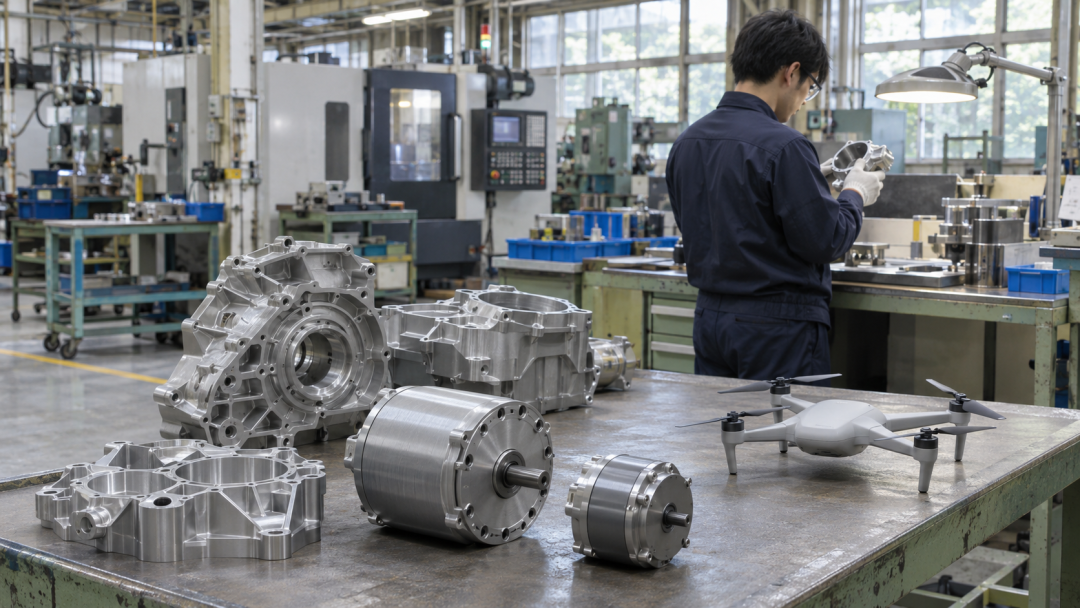
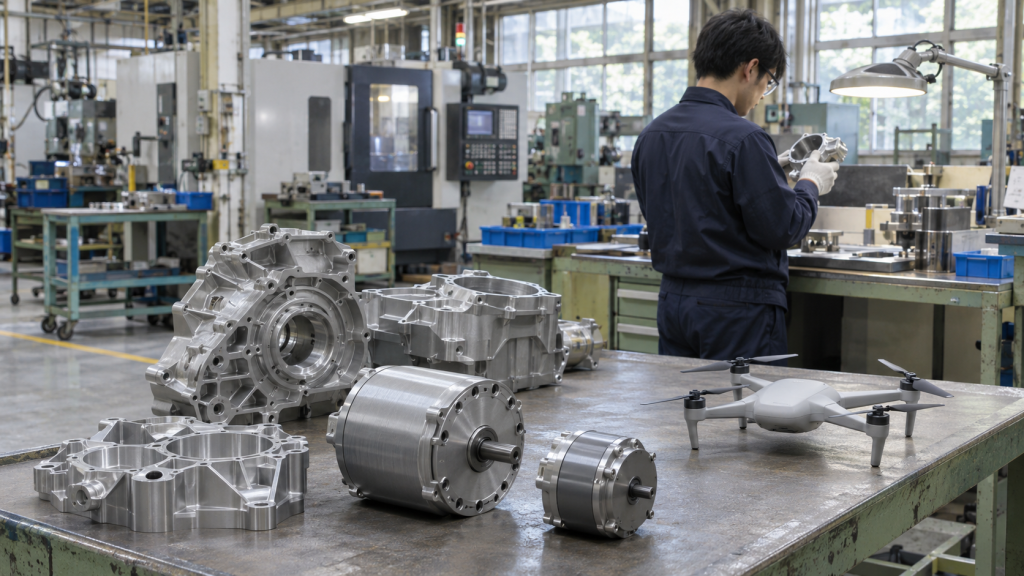
(Singapore, 24.11.2026)Japanese car parts maker Aster spent years supplying components for Toyota vehicles. It now earns about 10 per cent of its revenue from defence work after entering the sector last year. The company supplies electric motors for drones made by US defence technology firm Anduril, and chief executive Takenobu Hongo says the work is more profitable for Aster than making automotive motors.
Aster’s move comes as Prime Minister Sanae Takaichi’s government seeks to draw more automotive suppliers into Japan’s biggest military build-up since the Second World War. Reuters reported that the Acquisition, Technology and Logistics Agency, which oversees defence procurement, has been assessing potential suppliers and introducing them to defence contractors. The agency has also said it is willing to fund projects that advance to prototype development.
The push gives parts makers a chance to find new customers as Japan’s car industry faces strong competition from Chinese manufacturers. Japanese factories produced nearly 900,000 fewer vehicles in 2025 than they did a decade earlier, according to the Japan Automobile Manufacturers Association. Japan remains the world’s third-largest vehicle producer, with annual output of more than eight million vehicles. The industry supports one in 10 jobs nationwide and includes some 70,000 companies making components.
That network gives Tokyo access to manufacturers with experience in precision engineering, electronics and quality control. Pontus Haggstrom, a Japan-based automotive adviser and former chief executive of Stellantis Japan, said those skills were relevant to defence manufacturing. He added that automotive suppliers were accustomed to producing complex goods reliably and at scale.
Tokyo has pledged to release a national security strategy by the end of the year that will set out plans to strengthen domestic defence production. The government is seeking to expand Japan’s military capabilities amid security concerns involving China, Russia and North Korea, while the United States, Japan’s main security ally, has been pressing its partners to increase military spending.
The effort to expand domestic production also comes as US arms makers face pressure to replenish arsenals depleted by conflicts in Europe and the Middle East. Japan received about a tenth of US arms exports between 2021 and 2025, according to the Stockholm International Peace Research Institute.
Japan’s procurement agency said it acts as a point of contact for companies seeking to enter the defence industry and will continue working with other government departments to encourage new suppliers. Koko Kato, an adviser to Takaichi’s cabinet, said she oversaw changes in February to a separate trade ministry programme that helps automotive suppliers diversify into defence and other industries.
Some car parts suppliers are already receiving more orders from defence customers. Kyowa Industrial, a maker of car engine components, has received more orders for prototype drone engines. Chief executive Hiroko Suzuki said customers had told the company that their traditional suppliers lacked capacity. Defence work now accounts for about 10 per cent of Kyowa’s annual sales, up from 3 per cent in spring 2025.
The procurement agency has also been linking Japanese manufacturers with prospective customers in the United States and Europe. It said 48 Japanese companies from several industries attended a forum in Tokyo in September, twice the number that took part a year earlier. In October, the agency launched a programme to fund the development and testing of new military technology.
Japan exported just over 1,100 drones in 2025, compared with roughly 123,000 exported by Taiwan, according to figures compiled by Taiwan’s Research Institute for Democracy, Society and Emerging Technology.
Some Japanese drone makers already source much of what they need from automotive suppliers. Ishikawa Energy Research, based in the industrial city of Ota, buys more than half of its drone components from car parts manufacturers. Its aircraft are used mainly for agricultural work such as crop spraying, and founder Mitsuru Ishikawa, a former Honda engineer, said the company was also exploring defence applications.
Major carmakers remain cautious
The move into defence has so far been concentrated among smaller suppliers. Toyota executive Hiroyuki Ueda said at a results briefing earlier this month that the company’s position was to stay out of defence work. Honda said it had no specific plans to enter the sector, while Nissan declined to comment on potential defence work. All three have substantial businesses in China, which has criticised Japan’s military build-up.
Subaru already has a defence business and has built military aircraft for Japan’s Self-Defence Forces for decades. A company spokesperson said Subaru expected defence-related demand to grow and intended to pursue those opportunities. The spokesperson declined to give a specific forecast.
Some parts makers remain wary of how their biggest customers might respond. Mitsubishi Electric chief financial officer Kenichiro Fujimoto said some automotive suppliers the company had approached about a military drone venture had declined to participate because they were concerned about upsetting their main customers. He did not name the suppliers.
When Hongo gathered Aster’s roughly 100 employees at its Yokote factory in November 2025 to tell them Anduril wanted to use their motors, he wondered whether some would object. The response was warmer than he had expected. “Everyone was more like, ‘Wow, that’s impressive!’” he recalled.