



















(Singapore, 10.11.2026)From recovering wasted energy and providing clean water to cutting industrial emissions and advancing financial inclusion, Singapore’s sustainability efforts are increasingly producing measurable environmental, economic and social outcomes.
These achievements were recognised at the 11th Singapore Apex Corporate Sustainability Awards, organised by UN Global Compact Network Singapore (UNGCNS), at its inaugural Charity Gala Dinner held at One Farrer Hotel on 4 November. The event was graced by Guest of Honour Gan Siow Huang, Minister of State for Foreign Affairs and Energy, Trade and Industry.
This year’s awards recognised organisations across three categories — Sustainable Business, Sustainable Solutions and LowCarbonSG — while introducing the Sustainability Leadership Awards to honour individuals driving sustainability transformation within UNGCNS member companies.
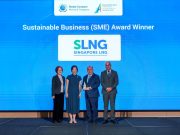
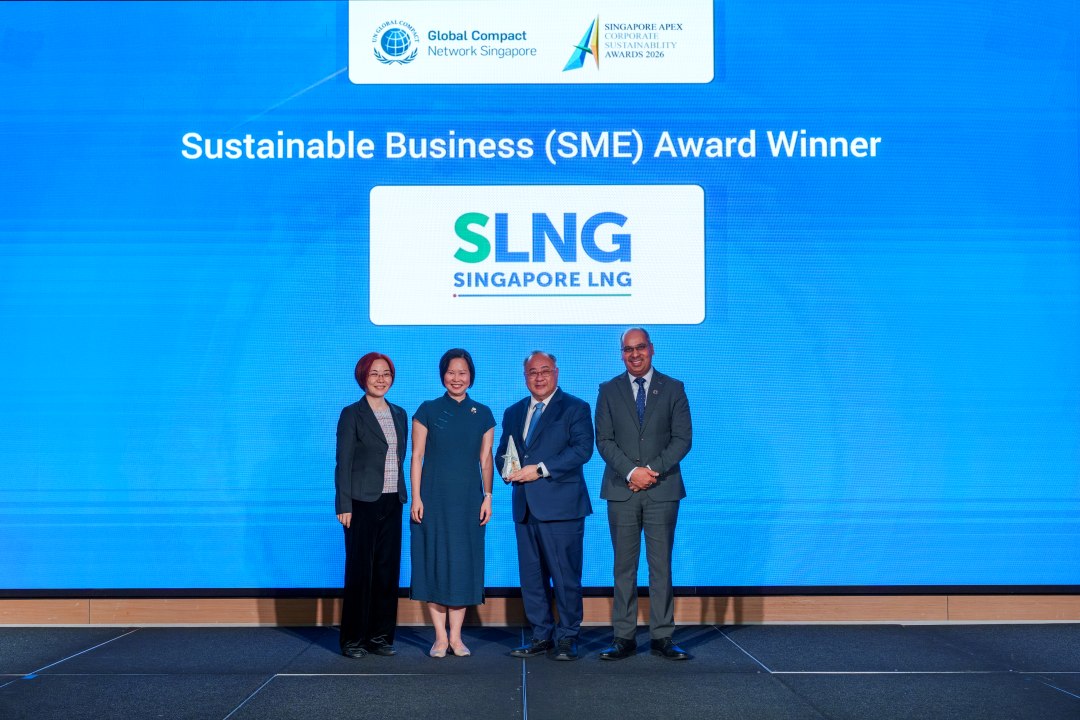
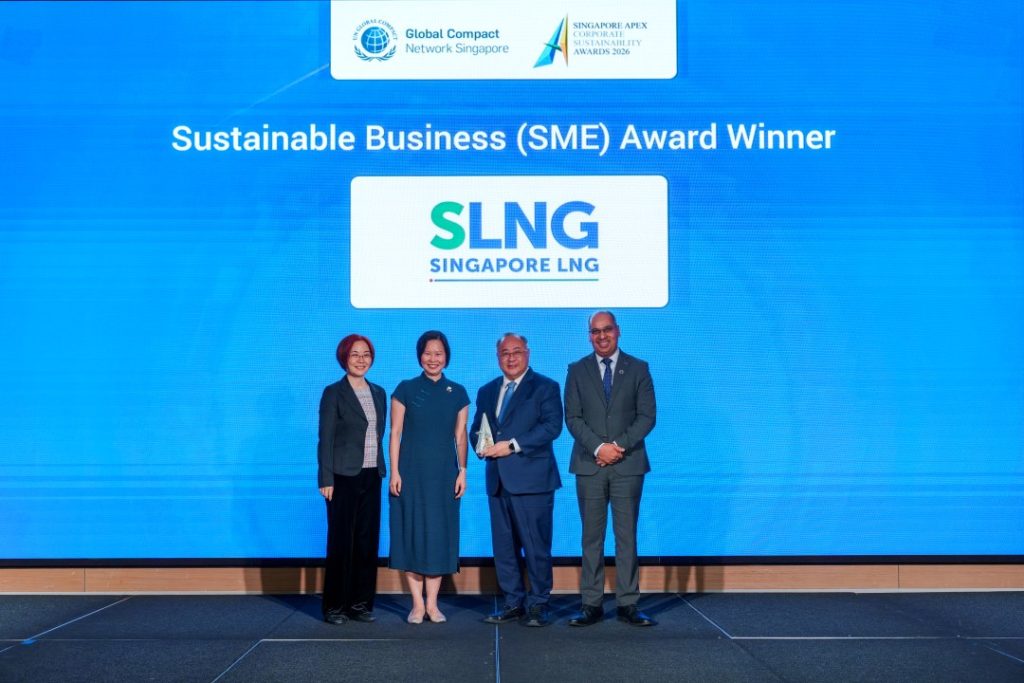
Among the recipients were Singapore LNG Corporation (SLNG) and Wateroam, recognised for their sustainable business initiatives, alongside Giti Tire’s Group CEO and Chairman Dr Enki Tan and Ant International’s Chief Sustainability Officer Leiming Chen, who received individual leadership awards.
Turning Sustainability Challenges into Business Opportunities
One of the notable Sustainable Business Award recipients was Singapore LNG Corporation, which operates Singapore’s national liquefied natural gas terminal.
The company is exploring ways to recover cold energy released during LNG regasification, a process traditionally associated with significant unused thermal potential.
At Singapore International Energy Week 2025, SLNG collaborated with partners, including NTS, to develop a Cold Battery prototype capable of capturing this energy for other applications.
Another recipient, Singapore social enterprise Wateroam, demonstrated how sustainability innovation can address basic human needs.
Since 2014, Wateroam’s portable water filtration solutions have provided access to clean water for more than 500,000 people worldwide.
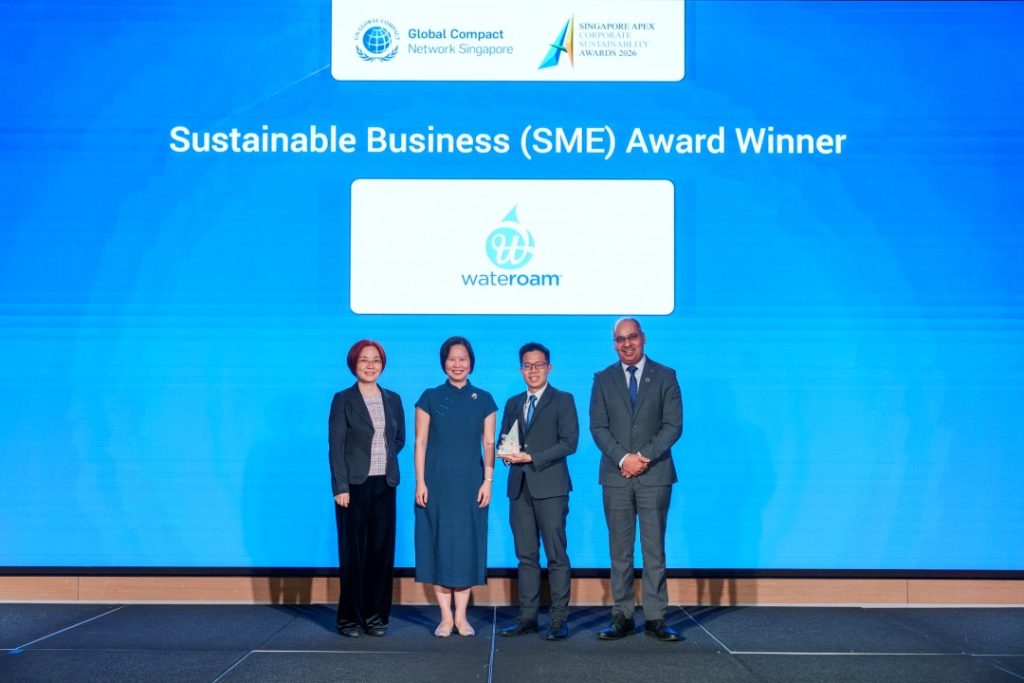
Following the Myanmar earthquake and floods in Sumatra in 2025, the organisation deployed more than 200 emergency water filtration kits, reaching over 70,000 people across the affected communities.
Industrial Decarbonisation Must Make Economic Sense
The inaugural Sustainability Leadership Awards also highlighted the role of corporate executives in turning sustainability commitments into operational results.
Dr Enki Tan, Group CEO and Chairman of Giti Tire, received the SDG Champion Leadership Award for advancing the company’s decarbonisation strategy.
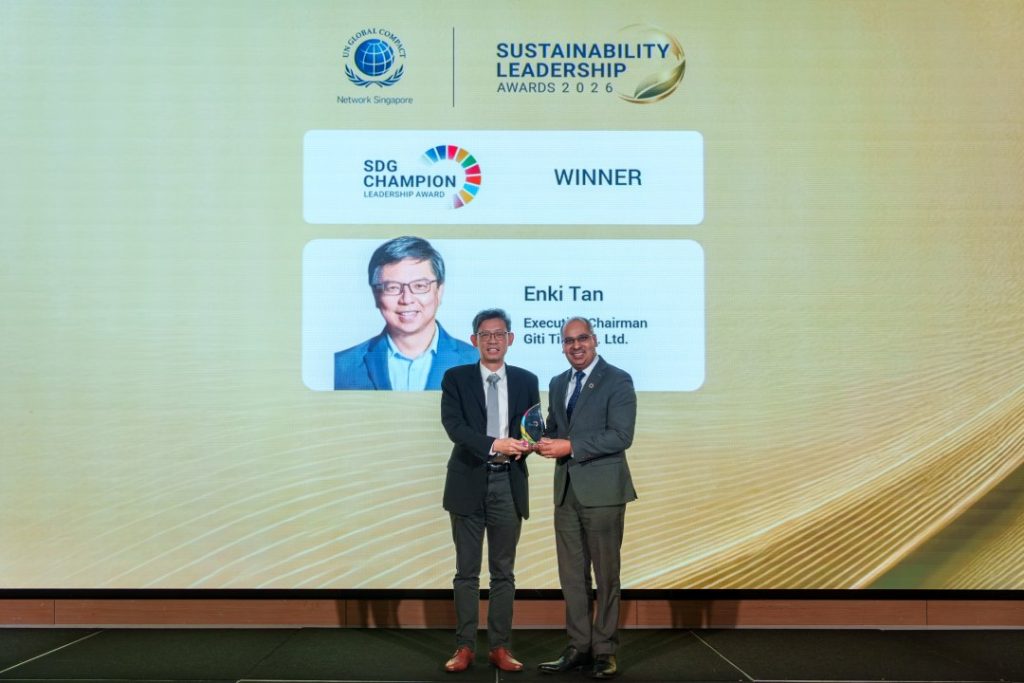
Under its Engineering Net Zero, Crafted at Net Zero Cost approach, Giti Tire reported reducing emissions by more than 10,000 tonnes while generating over US$2 million in savings over three years.
Its Smart Green Anhui Plant operates a carbon-neutral production line with positive net present value, demonstrating how emissions reduction can be incorporated into commercially viable manufacturing operations.
While climate action often dominates sustainability discussions, social inclusion remains another important dimension of corporate responsibility.
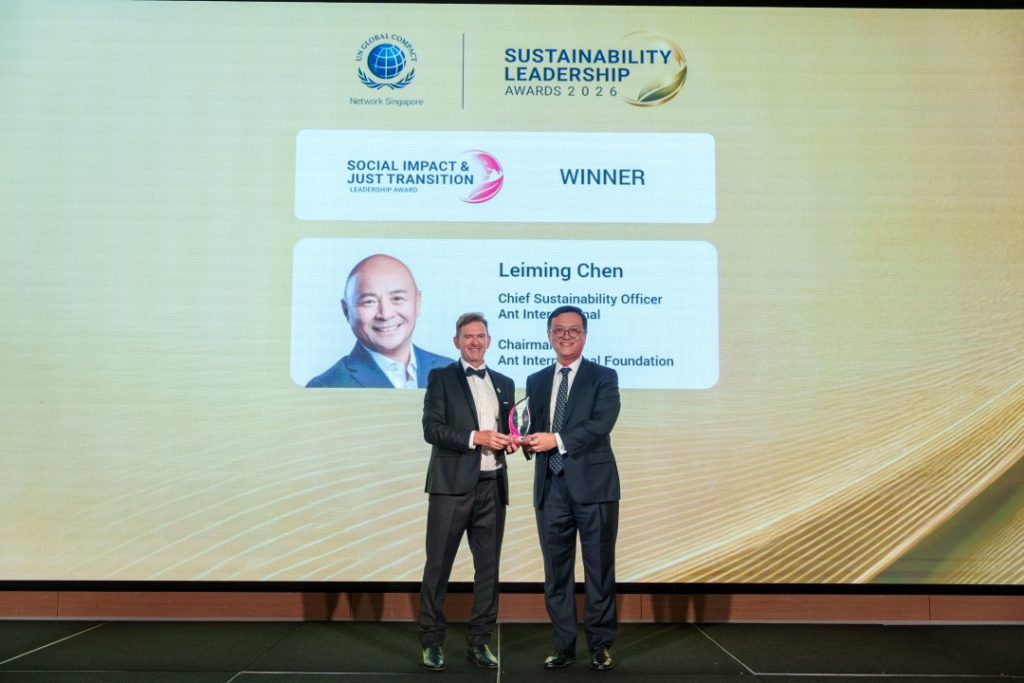
Leiming Chen, Chief Sustainability Officer of Ant International, received the Social Impact & Just Transition Leadership Award for initiatives aimed at expanding access to financial services, sustainability capabilities and digital skills.
As Ant International’s first Chief Sustainability Officer, Chen developed the company’s sustainability framework with inclusion as a central principle.
Through Programme SIRIUS, he brought together 13 digital wallet and banking leaders across 11 Asia-Pacific economies to develop a sustainability impact scorecard for micro, small and medium-sized enterprises (MSMEs), working with the International Finance Corporation and industry partners.
The initiative seeks to help smaller businesses assess and communicate their sustainability performance, an area where limited resources and reporting capabilities can present significant barriers.
Chen also chairs the Ant International Foundation, which oversees the 10×1000 Tech for Inclusion programme.
The programme has certified 9,504 learners across 110 markets, with women accounting for 55% of participants and individuals from MSMEs representing another 55%.
The recognition highlights how sustainability leadership extends beyond environmental targets to include financial accessibility, skills development and opportunities for smaller businesses to participate in the digital economy.
Developing Singapore’s Next Generation of Sustainability Talent
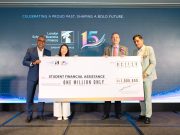
Beyond recognising corporate achievements, the gala also raised funds for UNGCNS Youth Sustainability Initiatives, anchored by a new programme called Sustainability Education, Engagement & Discovery (SEED).
Scheduled to begin in mid-2027, SEED will provide 100 university and polytechnic students with free access to 17 workshops, each focusing on one of the United Nations Sustainable Development Goals.
The workshops will draw on real-world business case studies from UNGCNS member companies and be followed by internship opportunities.
The initiative comes amid growing demand for sustainability-related capabilities across Singapore’s economy.
According to figures cited by UNGCNS, the proportion of university graduates securing full-time employment within six months declined from 87.5% in 2022 to 74.4% in 2025, while SkillsFuture Singapore has identified increasing demand for green skills across 13 sectors.
By connecting students with practical sustainability challenges and industry experience, SEED aims to strengthen the pipeline of talent capable of supporting Singapore’s green transition.
David Fogarty, Chief Executive Officer of UN Global Compact Network Singapore, said the award recipients demonstrated how sustainability commitments could translate into tangible outcomes.
“This year’s winners show what action on the Global Goals looks like in practice: emissions cut, clean water delivered and people brought into work,” he said.
“As governments head to COP31, Singapore business is showing it can deliver.”
As businesses face growing expectations to demonstrate the effectiveness of their sustainability strategies, this year’s awards highlight a broader transition from corporate commitments to measurable results.
Whether through energy efficiency, industrial decarbonisation, access to clean water or financial inclusion, the examples recognised by UNGCNS illustrate how sustainability is becoming increasingly connected to business operations, economic value and social development.