

















(Singapore, 20.08.2026)Agriculture and computing power once moved on two parallel tracks. When AI data centers were “grabbing land” around the world, agriculture was on the receiving end. But an emerging trend is beginning to reshape this dynamic — South Korea has secured 32 GPUs for agricultural R&D, Japan has incorporated agriculture into its national AI robotics strategy, and the European Union has designated agriculture as a key sector for generative AI applications. Agriculture is no longer a bystander in the computing power landscape.
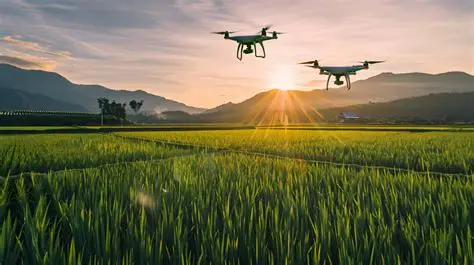
Computing Power Begins to Flow into Farmland
In April 2026, South Korea’s Rural Development Administration, under the Ministry of Agriculture, Food and Rural Affairs, won a national GPU allocation competition among 121 proposals from 28 government agencies, securing support from the Ministry of Science and ICT’s “Public Sector AI Innovation GPU Allocation Project.” Under the plan, its supercomputing center will receive four NVIDIA B200 servers (32 GPUs) by the end of the year, dedicated exclusively to agricultural AI R&D.
The allocation plan is clear: 75% of the computing power will go toward developing a large language model specialized for “agriculture and life sciences,” focusing on automated data quality management and conversational AI services for agriculture. The remaining 25% will be used to build an “AI agricultural researcher system” capable of autonomously analyzing massive agricultural datasets and generating optimal research hypotheses, significantly shortening the cycle for new crop variety development.
The South Korean government is investing 2.4 trillion won (approximately US$1.67 billion) this year to drive AI transformation across the public sector, covering 33 agencies including defense and agriculture — five times last year’s budget.
When agriculture competes with defense for the same pool of GPU resources, it sends a clear signal: computing power is no longer a resource exclusive to the tech industry. It is becoming a new dimension of competition in agriculture.
Beyond South Korea, a number of countries are also channeling computing power into agriculture.
Japan’s AI-related budget for fiscal 2025 stands at 196.9 billion yen (approximately US$1.28 billion). The Hokkaido regional government has simultaneously launched an “Agricultural AI & DX Promotion Initiative,” with dedicated funding from 2026 to 2028 to develop agricultural talent skilled in AI applications.
Japan has also approved a “National AI Robotics Strategy,” which aims to deploy 10 million AI robots across 18 industries by 2040, with food manufacturing and agriculture among them, supported by a five-year investment of approximately US$6.1 billion.
The European Union’s Digital Europe Programme 2025-2027 has allocated over €1.2 billion, naming agriculture as a key sector for generative AI applications. In June 2025, the Dutch government announced a €70 million investment to build an AI factory in Groningen, which became operational in 2026, focusing on AI applications in agriculture, healthcare, energy, and defense.
The Dutch Minister of Economic Affairs stated: “Countries that do not develop their own technologies will become dependent on others. That is why we are committed to building a strong Dutch AI infrastructure.”
From Policy to Farmland: Agricultural Computing Power in Practice
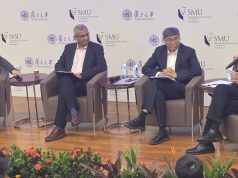
Liang Chengwang, Executive Chairman of Zixin Group Holdings, believes that the impact of computing power on agriculture is already becoming visible. “AI is a double-edged sword. The unchecked expansion of computing infrastructure does create competition for farmland, but computing power itself is also reshaping agriculture — from breeding to the field, from processing to the supply chain — the way agriculture is done is being redefined.”
Competition among industry players is equally intense. According to a Ken Research report, the global AI agriculture market is moderately fragmented, with leading players including John Deere (approximately 11% market share), Microsoft (8%), Trimble (8%), and Bayer’s Climate Corporation (7%). Syngenta is opening its Cropwise platform — covering 30 countries and 70 million hectares of farmland — to developers worldwide, aiming to become the “industry standard for agricultural data integration.”
Industry research firm IIM Info reports that the global market for large language models in agriculture reached approximately US$4.72 billion in 2025, up 82.6% year-on-year, and is projected to exceed US$21 billion by 2030.
Even before computing power became a policy issue, Zixin Group had already integrated digital technologies into its agricultural operations. Its planting bases use IoT monitoring systems to track soil conditions and crop data in real time; digital tools assist in sweet potato breeding through research collaborations; and smart control systems optimize production processes at its processing facilities.
In Liang’s view, computing power will not eliminate agriculture, but it will eliminate outdated production models. Having been rooted in agriculture for 17 years, Zixin Group’s consistent approach has been to safeguard farmland as a foundation while embracing digital technologies.
He said: “A combination of land as the foundation, full value chain operations, and digital technology capabilities is what gives modern agricultural companies the resilience to navigate cycles.”