

























by Larry Teo/Fortune Times
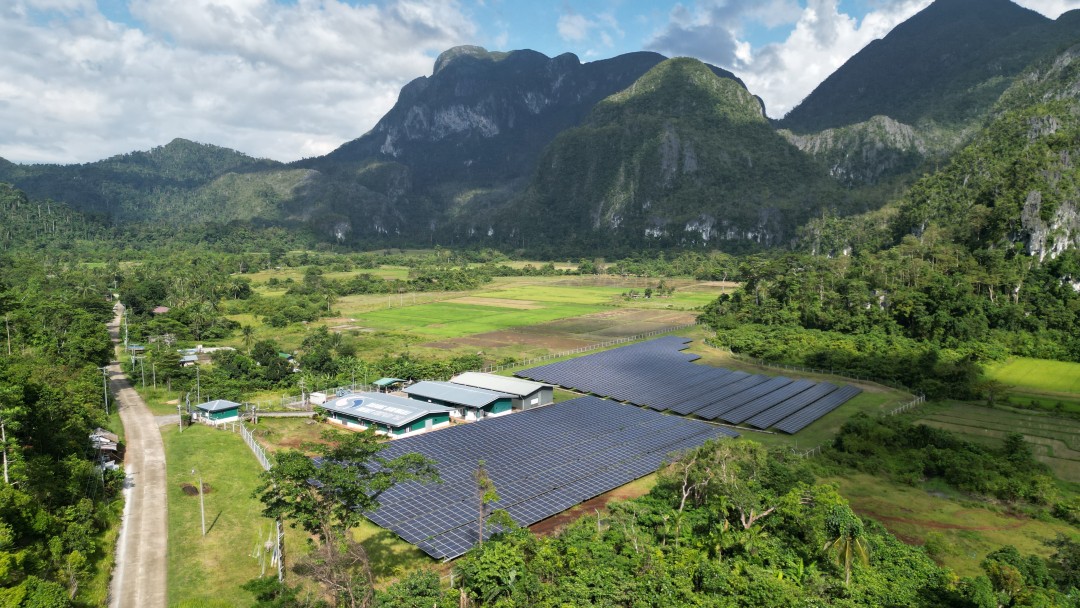
(Singapore, 13.04.2026) In March, when the Maharlika Consortium kicked off the 2 billion Philippine pesos (about S$35 million) worth of microgrid constructions to power around 12,000 homes in the Philippines, the bigger story may lie not in the project itself. It is more about a shift in how Southeast Asia is likely to build electricity infrastructure in the next decade.
A microgrid is a small, local electricity system that can produce, store, and distribute its own power. It can work on its own without relying on a main power grid, but it can also connect to it when necessary. It usually uses a mix of energy sources like solar panels or diesel generators; batteries to store electricity, and smart control systems to manage everything efficiently.
Its popularity is increasing because extending traditional power lines to hard-to-reach areas is too slow or too expensive; renewable energy and battery costs are becoming cheaper over time, and investors favor systems that are decentralized that can be built faster, scaled up gradually, and adapted easily.
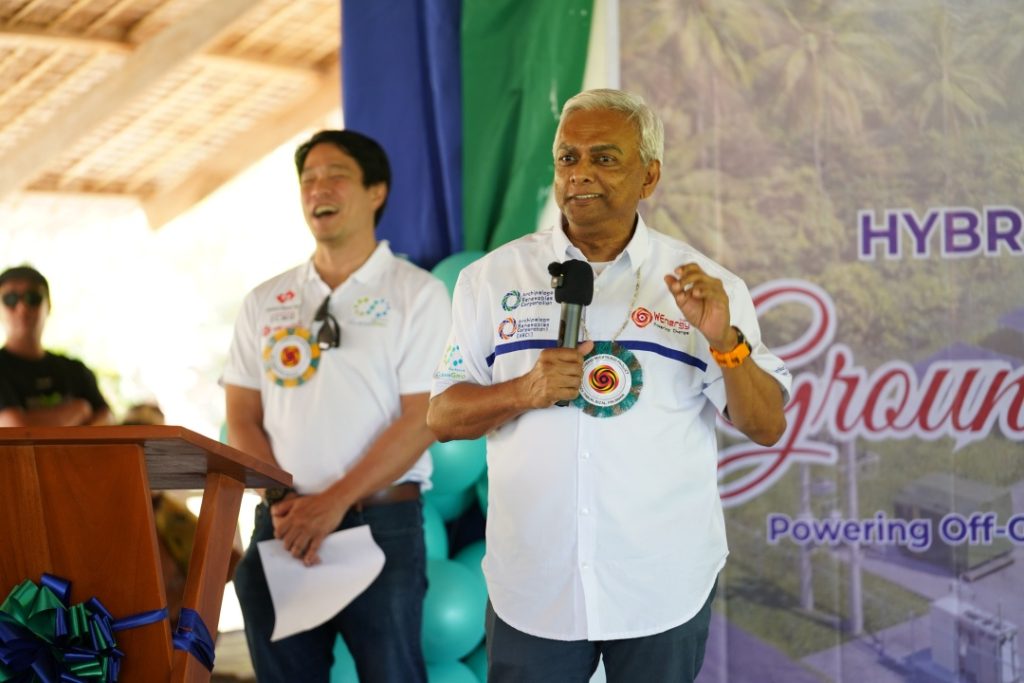
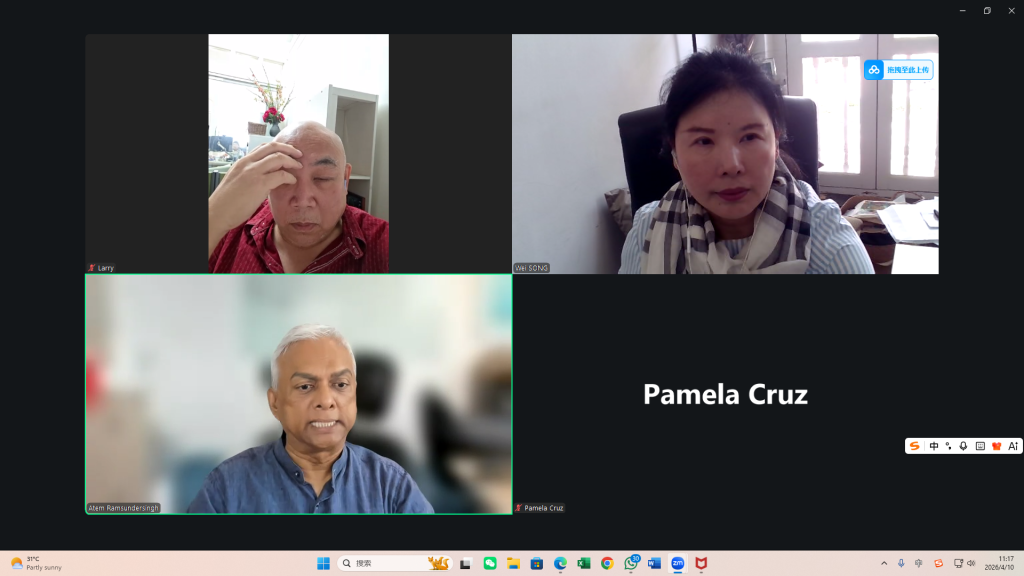
But Atem S. Ramsundersingh, founder and CEO of Singapore-based WEnergy Global, believes that people should discard the conventional way of thinking about microgrids. In an interview with Fortune Times, he said people should no longer see microgrids only as small, “niche” systems used mainly for providing electricity to remote rural areas. Instead, he argues that microgrids are more important and broader than that—they should be viewed as a modern energy solution for many different settings, not just villages without power.
Headquarter in Singapore, WEnergy Global is the technical developer and operator for the project of Maharlinka, a Philippine private joint venture.
The CEO believes microgrids are evolving into mainstream bankable and investable energy infrastructure for commercial and industrial use. “They could scale up to power industrial zones, tourism developments, and even decentralized data centers,” he forecast. “They are no longer just a solution for remote or underserved places like outlying islands.”
Still, having said that, for Ramsundersingh, the current economics of piecemeal, distributed microgrids are compelling on their own. Southeast Asia has over 100 million people without reliable electricity access, constituting a large market opportunity worth about US$27–30 billion. In his view, thousands of dispersed electricity nodes of microgrids can effectively substitute large, centralized power plants. serving the region’s vast, fragmented populations.
The Philippines as both market and policy benchmark
WEnergy Global has gone big in the Philippines not only because of its many islands, but also because of its supportive regulatory environment. Ramsundersingh described the country as one of the most advanced in Southeast Asia for having strong laws that make it easy and fair for private companies to invest in and run small off-grid power systems. The Microgrid Systems Act, passed in 2022, is widely seen as a regional first and has significantly enlarged the sector’s possibilities.
This regulatory support is critical because a microgrid company does not just install solar panels. It builds and runs the entire electricity system, including generators, batteries, distribution lines, meters, and conducts ongoing operation and maintenance — typically, over 15 to 20 years. For isolated island environments, logistics can be especially challenging, with heavy battery systems weighing around 2,000 kilograms transported through difficult terrains. Ramsundersingh characterized the logistics as a “military-type operation,” where it can be more demanding than engineering.
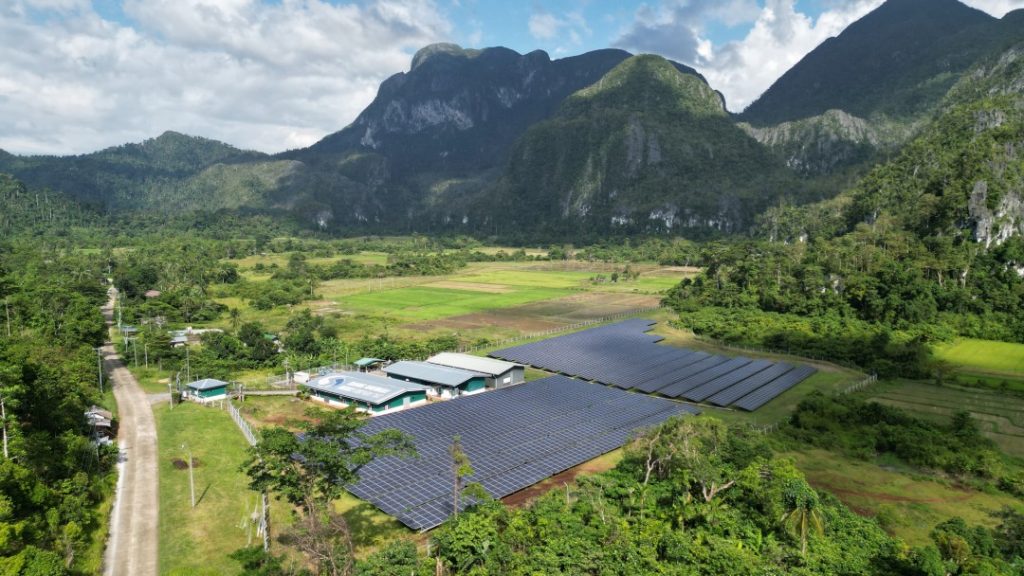
While WEnergy’s projects now underway in Palawan took up to seven years to secure the permits, Ramsundersingh is glad that approval timelines have since improved to around two to three years. Still, bureaucratic delays remain a key constraint.
Apparently, the stepped-up speed is driven by an urgent need to expand electricity access in the Philippines. However, current efforts are still not good enough compared to what is to be done. His guess is that the country still needs to electrify about 2.7 million households and small businesses, needing about US$7 billion in investment. Against this backdrop, WEnergy’s US$35 million investments across 24 microgrids—serving about 11,500 households—represents only a fraction of the overall demand. Policy progress, he noted, has not yet been matched by capital deployment.
“We are likely the only major microgrid provider in the region right now. Given the strong demand, we welcome more competitors to help expand the sector and benefit consumers,” he said.
Singapore as the coordination and capital hub
While WEnergy’s projects are executed in the Philippines, they are initiated and structured in Singapore.
Ramsundersingh sees Singapore not as an end-use market, but as a strategic hub for financing and managing energy investments. The city-state offers three key advantages: access to global capital, proximity to international technology suppliers, and a governance system trusted by institutional investors. These, he pointed out, enable companies like WEnergy Global to assemble efficient multidisciplinary teams spanning the Netherlands, Germany, Sri Lanka, India, the Philippines, and Singapore.
On a macro level, he envisaged that Southeast Asia’s energy transition may not always be led by large utility corporations, but increasingly by smaller, highly specialized developers capable of operating in disconnected and remote markets.
He also emphasized that WEnergy is not merely an equipment supplier. It acts as a long-term shareholder-operator, responsible for financing, building, and running systems over decades—a distinction essential in markets wary of short-term players.
From ESG narrative to investment-grade infrastructure
Microgrids have conventionally been viewed as ESG-driven investments with uncertain economics. Ramsundersingh called that perception outdated.
From experience, he reckoned payback periods now would not exceed seven years, with internal rates of return between 13% and 18%. Unlike solar farms, he said, microgrid electricity demand tends to grow rapidly and predictably once supply becomes certain and reliable to a community. Households increase consumption through appliances; businesses extend operating hours, and tourism activity grows. Overall demand growth, he said, can reach around 20% annually in some communities.
He also pointed to a strong user payment discipline, claiming that around 98% of consumers pay on time in WEnergy-operated sites. The primary risks, according to him, are not collection issues but external shocks such as typhoons, floods, and global disruptions like pandemics.
Beyond financial returns, he cited measurable positive social impacts from microgrid electrification, including a roughly 15% improvement in school pass rates in served communities and the emergence of new local businesses, with permits issued to around 60 women entrepreneurs overall.
The company’s funding source includes both institutional investors and sustainability-focused individuals from Germany, the Netherlands, Taiwan, Singapore, Australia, Hong Kong, Austria, and Japan. WEnergy has also secured financing from Filipino lenders, including a recent US$14 million loan and earlier support from the Development Bank of the Philippines.
From rural electrification to digital and industrial infrastructure
Looking ahead, Ramsundersingh’s focus is not only on augmenting rural electrification, but on scaling into industrial and digital infrastructure.
He believes Southeast Asia’s growing industrial demand is constrained not in terms of capital or land, but by grid bottlenecks and long lead times for grid extension. In this context, he sees a role for “off-grid mega grids” combining solar, wind, batteries, gas, and eventually hydrogen to power industrial estates and fast-moving developments.
One nascent concept involves deploying containerized micro–data centers near microgrid sites. In Palawan alone, WEnergy operates around 20 microgrids. If each were to host a 0.5-megawatt modular data center, the combined network could function as a 10-megawatt digital infrastructure platform, powered by locally generated clean energy and supported by satellite connectivity.
A regulatory question for Southeast Asia
Ultimately, Ramsundersingh frames microgrids as more than an energy-access solution. He sees them as an emerging infrastructure asset class that could evolve from rural electrification into a foundation for digital and industrial growth.
However, he stressed that this transformation depends heavily on legal regulations. Countries such as Indonesia, he suggested, may need major policy shifts—including scrapping or decreasing subsidies that favor centralized grids—to unlock the potential of decentralized systems.
If more Southeast Asian governments adopt frameworks like those of the Philippines—where private developers can own and operate microgrids transparently—he believes the sector could scale rapidly across the region.
For now, the Maharlika Consortium project stands as an important milestone that may signal even greater significance in the future. The larger question it raises is whether Southeast Asia is ready to take decentralized power not just as a stopgap for last-mile electrification, but as a new backbone for economic development.