

























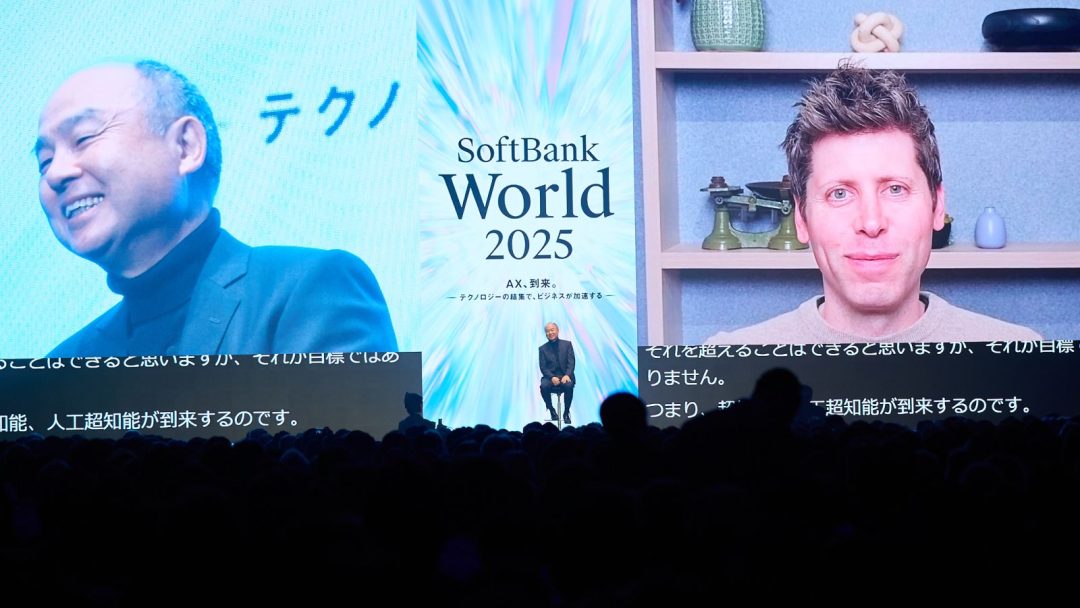
(Singapore, 20.05.2026)Some executives inside SoftBank Group are reportedly growing uneasy over founder Masayoshi Son’s deep commitment to OpenAI and its CEO Sam Altman, as the Japanese investment giant pours more than US$60 billion into the fast growing AI company.
According to people familiar with internal discussions, Son has repeatedly brushed aside concerns raised by some SoftBank executives about the risks of concentrating so much capital into a single company. Several insiders reportedly fear the investment could become another major setback like SoftBank’s costly investment in WeWork years ago.
As first reported by Bloomberg, some SoftBank officials are also concerned that Son has become too personally devoted to Altman and his vision for artificial general intelligence, or AGI, which refers to AI systems capable of matching or surpassing human intelligence.
SoftBank has defended the partnership, saying it has “a high level of conviction” in OpenAI and its leadership. OpenAI also described SoftBank as one of its closest collaborators.
The concerns come at a time when competition in artificial intelligence is intensifying. Rivals such as Anthropic and Google are rapidly advancing their own AI models, raising questions over whether OpenAI can maintain its dominant position.
For Son, the OpenAI investment is not simply about financial returns. He has openly described AI as the defining technological revolution of the coming decades and wants SoftBank positioned at the center of it. The company’s Chief Financial Officer, Yoshimitsu Goto, recently said SoftBank aims to become a key player in the global AI transformation.
So far, the strategy has boosted SoftBank’s financial performance. The company recently reported record annual profits, helped significantly by the rising valuation of OpenAI. Still, some insiders believe the company is taking too much risk by relying so heavily on one investment.
SoftBank has reportedly sold assets, including its stake in Nvidia, to help finance its AI ambitions. It has also slowed other investment activity while its Vision Fund division reportedly reduced staff because of fewer deals.
Credit rating agency S&P Global earlier lowered its outlook on SoftBank, warning that the company’s large commitments to OpenAI could strain liquidity and weaken asset quality. SoftBank shares also fell sharply in Tokyo after reports emerged about growing internal concerns surrounding the OpenAI investment.
Fear of Repeating the WeWork Mistake
Some executives reportedly see parallels between OpenAI and SoftBank’s infamous investment in WeWork. SoftBank lost more than US$14 billion after aggressively backing WeWork founder Adam Neumann, whose expansion plans later collapsed under financial pressure and governance issues.
Critics inside the company worry that Son may once again be overly captivated by a charismatic founder and ambitious vision. Venture capitalist Habib Imam said both investments share similarities, including founder driven leadership and massive spending tied to long term goals.
However, supporters of Son argue that major technological shifts require bold risks. Many investors believe large AI investments are necessary to remain competitive in the emerging industry.
Son’s admiration for Altman reportedly dates back to their first meeting in 2017, when OpenAI was still a non-profit organization. According to people familiar with the matter, Son immediately believed in Altman’s vision of AGI and remained convinced even when other investors were skeptical.
Over the years, the relationship between the two leaders deepened significantly. In early 2025, Son and Altman appeared together at the White House during the announcement of the “Stargate Project,” a US$500 billion initiative involving OpenAI, SoftBank, Oracle and Abu Dhabi backed MGX to develop AI infrastructure and data centers across the United States.
Shortly after, SoftBank committed another US$30 billion to OpenAI, making it the company’s largest investment in a private firm. Son later told shareholders he believed OpenAI could become “the most valuable company on the planet.”
Despite OpenAI’s strong position, the AI race has become increasingly competitive. Anthropic’s Claude models have gained significant traction, while Google’s Gemini platform is also improving rapidly in advanced reasoning and scientific research capabilities. Anthropic is reportedly seeking a valuation exceeding US$900 billion, potentially overtaking OpenAI as the world’s most valuable AI startup.
These developments have led some investors to question whether SoftBank should diversify its AI investments instead of focusing so heavily on OpenAI alone. However, SoftBank executives have said there are currently no plans to invest in OpenAI’s competitors.
Another concern among some SoftBank insiders is the company’s limited influence over OpenAI despite its enormous financial commitment. SoftBank reportedly owns more than 10% of OpenAI yet does not hold a seat on the company’s board. Other major investors, including Microsoft and Amazon, also lack board representation due to OpenAI’s unusual corporate structure.
Still, some insiders worry SoftBank lacks sufficient control over a company that now plays such a critical role in its future. There are also reports that Altman has expanded certain projects, including international Stargate initiatives, without SoftBank’s direct involvement.
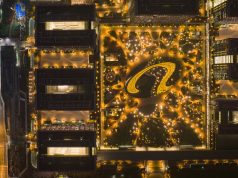
People close to Son reportedly believe his aggressive AI strategy is partly driven by a desire to secure his legacy after missing the earliest wave of the AI boom. Son is widely known for making one of the most successful investments in tech history after backing Alibaba Group and founder Jack Ma in 2000. That investment eventually generated enormous returns and cemented Son’s reputation as a legendary technology investor.
But not all his bets succeeded. Following setbacks involving WeWork and other failed investments, Son reportedly viewed the rise of AI, especially OpenAI, as a second chance to reshape the future of technology.
Some investors remain skeptical. Imam warned that no single AI investment today may be capable of delivering returns similar to Alibaba’s historic success. Still, Son appears determined to push forward.
For supporters, the OpenAI bet reflects visionary leadership and long-term ambition. For critics inside SoftBank, however, it may represent a dangerous concentration of risk tied too closely to one founder, one company and one future that remains uncertain.