



























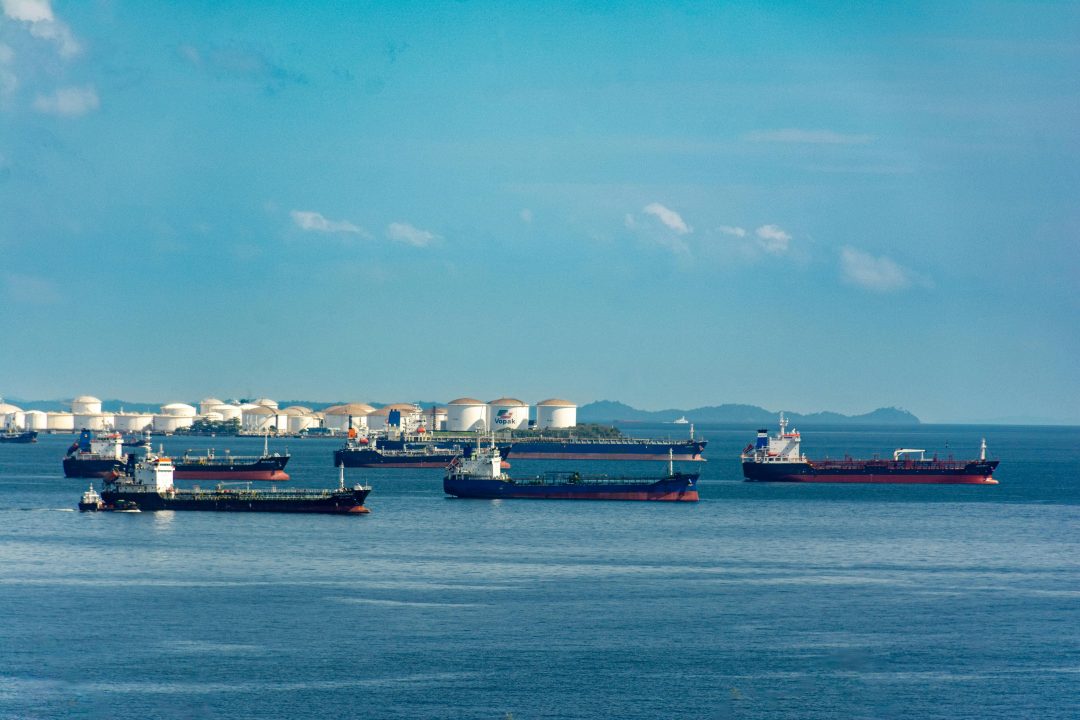
(Singapore, 13.04.2026)Global oil prices surged sharply on Monday, climbing back above the $100-per-barrel mark, after the United States announced plans to begin a naval blockade targeting Iranian oil shipments. The move comes after high-stakes negotiations between Washington and Tehran failed to produce a breakthrough, raising fears of prolonged conflict and supply disruptions.
Brent crude jumped more than 7% to trade above $102 a barrel, while U.S. West Texas Intermediate (WTI) rose to nearly $104. The rebound follows losses late last week, as markets reacted swiftly to escalating geopolitical tensions in the Middle East.
The latest spike was triggered by U.S. President Donald Trump’s announcement that American naval forces would begin enforcing a blockade on vessels entering or leaving Iranian ports via the strategically vital Strait of Hormuz. The narrow waterway is one of the world’s most important transit routes, carrying roughly a fifth of global oil and liquefied natural gas supplies before the conflict began.
Tensions Rise After Failed Talks
The decision to impose the blockade follows the collapse of direct U.S.-Iran negotiations held over the weekend in Pakistan. The talks were aimed at extending a fragile ceasefire and ending a conflict that has now entered its seventh week. However, key disagreements, particularly over Iran’s nuclear ambitions, ultimately prevented both sides from reaching a deal.
The failed negotiations have left the ceasefire in a precarious state. Analysts say the blockade signals that hopes of quickly restoring normal shipping through the Strait are fading. Under the plan, U.S. forces will begin inspecting and potentially stopping ships linked to Iranian trade, while allowing vessels heading to non-Iranian ports to continue transit.
Iran has strongly opposed the move. Its Revolutionary Guards warned that any foreign military presence near the Strait could be treated as a violation of the ceasefire, raising the risk of direct confrontation.
Oil traders reacted immediately to the developments, pushing prices sharply higher amid concerns over supply shortages. Physical oil markets are already showing signs of strain, with some cargoes reportedly fetching prices as high as $150 per barrel. Tankers have also begun avoiding the Strait ahead of the blockade, highlighting the growing uncertainty in global energy logistics.
Asia Braces for Economic Impact
The impact of rising oil prices is expected to be felt most acutely in Asia, where economies are heavily dependent on energy imports from the Middle East. Countries such as Japan and South Korea rely on the Strait of Hormuz for more than 80% of their oil and gas supplies, prompting governments to scramble for alternatives and introduce energy-saving measures.
The consequences are likely to extend beyond fuel costs. Higher energy prices could ripple through industries such as manufacturing, agriculture, and transportation, driving up inflation and slowing economic growth. Analysts warn that for many Asian economies; this disruption may not be short-lived due to limited alternative supply routes.
China, one of Iran’s largest oil buyers, may also play a key role in how the situation evolves. There is growing speculation that Beijing could exert economic pressure on Washington, particularly through its control of critical mineral supply chains.
Uncertain Outlook for Oil and Growth
Economists say the global outlook now depends heavily on how the conflict develops. In a base case scenario, oil prices could remain elevated in the near term before easing later in the year. However, a more severe escalation, particularly if the Strait is largely shut, could send prices soaring to as high as $170 per barrel, significantly weighing on global growth and pushing inflation higher.
On the other hand, a renewed ceasefire or diplomatic breakthrough could help stabilize markets and bring oil prices back down. For now, uncertainty remains high, with Southeast Asian nations already urging both sides to resume negotiations and ensure safe passage through the Strait.
As tensions persist, global markets are expected to remain volatile, with oil prices closely tied to developments in the Middle East in the weeks ahead.