

























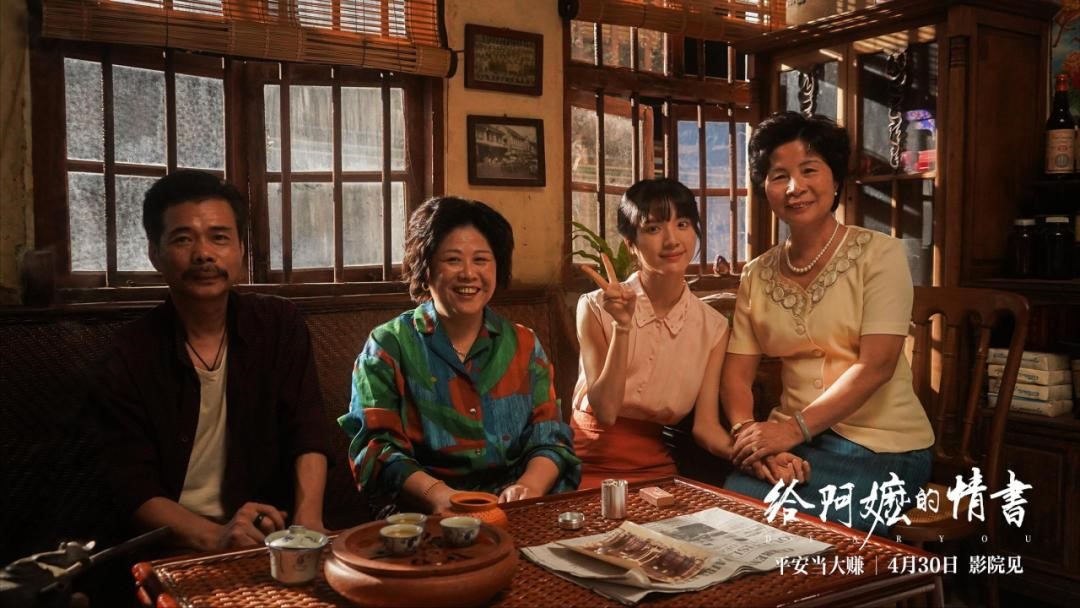
(Singapore, 21.05.2026) The strong box office performance in China of the domestically produced film A Love Letter to Grandma (给阿嬷的情书), along with its artistic resonance within the international film community, has emerged as a new catalyst for both cultural and industrial revival in China’s Chaoshan (潮汕)region.
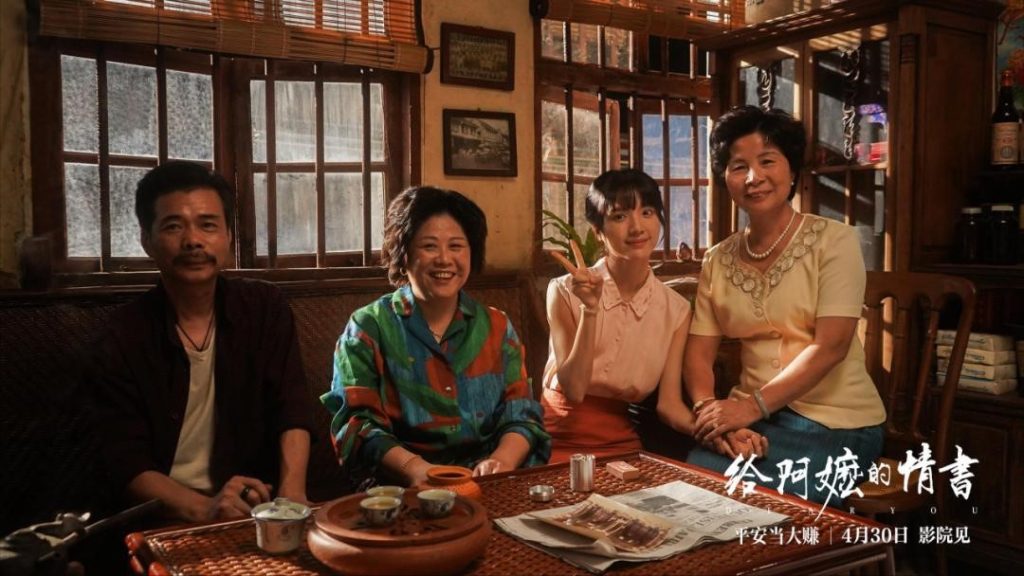
What this momentum is basically showing is how local traditions, together with the collective memory of the Chaoshan diaspora—especially across Southeast Asia—may be activated as a kind of driving force shaping the future transformation of this long-overlooked coastal corridor lying between Guangdong and Fujian.
As of May 20, A Love Letter to Grandma had already grossed around 1.4 billion yuan (about S$270 million) after just 21 days in cinemas across China. Last weekend, the film’s single-day box office surpassed 100 million yuan, capturing more than 85% of the market share. Together with the praise it received at the Cannes Film Festival, this suggests that the film still has even greater potential ahead.
Surprisingly, the film was made on a very modest budget—only about 14 million yuan—and it is performed entirely in the Chaoshan dialect and features a cast of mostly non-professional actors. So, at the start, many people actually expected it to be a flop. But instead, it turned into a box-office sensation. On major online platforms, more than 500,000 viewers gave it an impressive score of about 9.1 out of 10.
The film tells the story of “qiaopi” (侨批)—letters and remittances sent home by early generations of Chinese migrants in Southeast Asia—interwoven with a tale of patient waiting and endurance embodied by two women who never meet yet remain connected across mountains and seas through a bond of mutual support. It expresses a deeply classical faith in truth, goodness, and beauty, as well as a firm, unwavering commitment to the “life-valuing” spirit (贵生精神) rooted in Chaoshan culture and within the wider Chinese cultural tradition, according to the column Sanshidai (叁十代)in the tech-focused media outlet 36 Kr.
” It is precisely the simple and unadorned way in which universal emotions are conveyed through the film’s three perspectives that forms the most fundamental reason it is able to transcend geographical and cultural boundaries and, in doing so, resonate with a much broader audience,’ added the column.
The film’s director Lan Hongchun (蓝鸿春) recalled that his own great-grandfather, after leaving for Nanyang (南洋) or Southeast Asia, completely lost contact with the family. Meanwhile, his grandmother’s older brother spent his entire life pedaling a tricycle for a living, yet he managed to raise all the children in the family. He became the inspiration for a character in the film.
In many ways, the film’s success feels like a rare moment of renewed visibility for Chaoshan, bringing the region back into the national spotlight. Shantou (汕头)—one of the three core cities of Chaoshan—was once Guangdong’s second-largest city after Guangzhou. It was even among China’s earliest Special Economic Zones (SEZ) alongside Shenzhen. “Chaoshan” is a broader geographical and cultural term that refers to the interconnected cities of Chaozhou (潮州), Shantou, and Jieyang (揭阳).
However, over time, Chaoshan’s overall economic position gradually weakened. Even today, Shantou’s GDP is only in the range of about 300 billion yuan—roughly one-twelfth of Shenzhen’s—and it ranks around 11th within Guangdong province. At one point, it was described as the “most neglected” SEZ.
Still, Chaoshan has never really been short of opportunity. In the past couple of years especially, it has repeatedly come back into national attention through traditional cultural heritage, such as the vigorous Yingge (英歌) dance, which has gone viral in China’s cultural and tourism discussions.
During this year’s Lunar New Year holiday, data from China’s major online travel platform Ctrip showed hotel bookings in Shantou surged by 186% year-on-year. Meanwhile, Jieyang and Chaozhou recorded increases of 162% and 135% respectively—actually outperforming even Sanya, often dubbed “China’s Hawaii.” Earlier on, Jieyang Chaoshan International Airport had already surpassed 10 million annual passenger throughput, marking it as a major regional transport hub.
Before this recent cultural revival, Chaoshan’s “aged” appearance was often mocked. Online discussions frequently cited Shantou’s aging infrastructure and its perceived lack of modern urban prosperity as evidence that it had fallen short of expectations for an SEZ, according to another commentary in 36Kr.
Now though, that same “old Chaoshan” is being rediscovered and reinterpreted in a more positive light. As the column Chengshijinhualun (城市进化论) pointed out, this shift is especially visible following the breakout success of A Love Letter to Grandma.
The film’s narrative spans several decades, tracing successive waves of “qiaopi” from the 1950s through to the 1990s. It gradually constructs a portrait of generational struggle and endurance, gaining emotional weight as it unfolds against the poignant and beautiful cultural landscape of Chaoshan. Outside the film itself, the real shooting locations and traditional cultural elements allow audiences to physically enter that cinematic world, making history feel almost tangible.
If one looks at other recent “viral cities,” such as several places in Shanxi province whose popularity was boosted by the online game Black Myth: Wukong, a similar pattern becomes clear: local culture itself acts as a powerful tourism magnet. The more distinctive and recognisable a place’s cultural identity is, the stronger its pull becomes for visitors who are looking not just for picturesque sceneries, but also emotional resonance, Chengshijinhualun noted.
Chaoshan, however, is often seen as more than just a collection of individual cultural attractions. Some observers argue that it actually forms a relatively complete and living cultural system—something that is still coherent, deeply rooted, and continuously passed down across generations.
For example, the Chaoshan dialect preserves many ancient Chinese vocabulary items and grammatical structures that have disappeared elsewhere. There are also customs that are rare in other parts of China today, such as burning paper towers during the Mid-Autumn Festival or dragon-burning rituals during Lunar New Year celebrations. Together with Yingge dance and local cuisine, these traditions form a full cultural ecosystem—one that naturally provides strong material for film, media, and storytelling.
Chaoshan is actively trying to convert the growing cultural attention into economic gains. Riding on the success of A Love Letter to Grandma, local authorities have already begun preparing for a new wave of tourism: Shantou has launched travel routes linking filming locations, Jieyang has staged festivals similar to those shown in the film, and across the region, many businesses are offering discounts to customers who present ticket stubs related to the movie.
Across both cinema and real life, the long-standing image of overseas Chaoshan merchants remains another defining symbol. Behind the historical narrative of “venturing south to Southeast Asia” lies a deeply entrepreneurial community built on the belief that “hard work can lead to success anywhere.”
So, in order to recreate anything close to its former SEZ dynamism, relying only on tourism clearly is not enough. Overseas Chinese capital is increasingly seen as a key lever. The idea is to use the global Chaoshan diaspora—estimated at around 15 million people—as a bridge. The real challenge, however, is how to actually attract overseas entrepreneurs to come back and reinvest.
Last month, Shantou held an investment promotion event bringing together Chaoshan business leaders from both domestic and overseas communities. In response to investor concerns, the city tried to present a “new Chaoshan” narrative. It laid out a structured industrial roadmap: alongside traditional sectors like textiles and toys, it also highlighted emerging industries such as offshore wind power and what it calls the “data-processing economy”, Chengshijinhualun reported.
In particular, Shantou has proposed developing industries related to data elements and blockchain. The goal is to improve the efficiency of cross-border data flows through new technological infrastructure, so that companies can carry out data processing, digital trade, and related services locally. In the longer term, the city hopes to position itself as a digital services hub oriented toward overseas markets.
All of this, in a way, signals that Shantou is trying to offer a new kind of opportunity—even for local Chaoshan merchants themselves—centered on “data-enabled” industrial development. And there is a growing consensus behind this shift: in today’s economy, investment decisions are less about tradition or nostalgia, and more about whether a place can genuinely offer scalable opportunities and long-term industrial potential.
The old Chaoshan portrayed in A Love Letter to Grandma and the new Chaoshan shaped by the digital economy both reflect forms of revitalisation—one rooted in the strengths of the past, the other oriented toward future possibilities.