





















(Singapore,26.06.2026) In the first quarter of this year, the combined exports of five Korean corporate giants —among them Samsung Electronics and SK Hynix— accounted for more than 40% of South Korea’s total exports for the first time. So great was their share that they contributed no less than 82.8% of the country’s increase in exports.
South Korea’s semiconductor exports leapt by 139% year-on-year raising the KOSPI stock index to heights never before attained. The worth of SK Hynix grew so steeply that its market value surpassed the US$1 trillion (S$1.3 trillion) mark.
Enriched by the magic of AI and semiconductors, South Korea is prospering tremendously. Yet its riches are gathered in the hands of a few corporations and even a few people, while inequality widens and the governance of the economy is in question. Therefore, the country stands on a perilous foundation, raising questions on whether such prosperity may endure over the long term, observed the Chinese business and tech analysis media outlet Dongzhen Shanglue (东针商略).
On the one hand, the AI boom has sent South Korea’s semiconductor exports soaring. On the other, the traditional sort of manufactures remains trapped in a grievous downturn. Thus, the country is presenting a tale of two economies — one flourishing and the other languishing, noted Dongzhen Shanglue (东针商略).
At the same time, retail spending and equipment investment are stuck in a state of contraction as consumption and productions fall after only eight brief months of respite, Dongzhen Shanglue pointed out.
As the riches generated by the semiconductor industry are concentrated in a few hands, the gulf between the high and the low social strata is widening. For every billion won of wealth the sector yields, it creates only 2.1 employments—scarcely a third of what the common manufactures are wont to provide.
The disparity in pay between employees of the doing-well corporations and workers of the smaller enterprises has grown so vast that now the former earns more than twice the latter.
Worried by this trend and to grant the common folk a share in the AI windfall, South Korea has recently approved the listing of leveraged funds tied to single stocks; a measure which its detractors, mockingly, have christened a “national casino.”
Some economists fear that urging common folk to invest in shares of great leverage may draw them into the perils of speculation, destabilize the market, and enable greater flow of wealth to the already rich who know how to play the game.
Some experts warn that the semiconductor industry is given to cycles of fortune and decline. To place excessive trust in a single engine of growth may repeat the fate of Nokia, whose fall cast Finland into long stagnation.
Therefore, what South Korea urgently needs is new and multiple sources of prosperity while the present boom lasts. Or else, the great tear between the “the rich and the poor” would eventually shake the very foundations of the country’s economy.
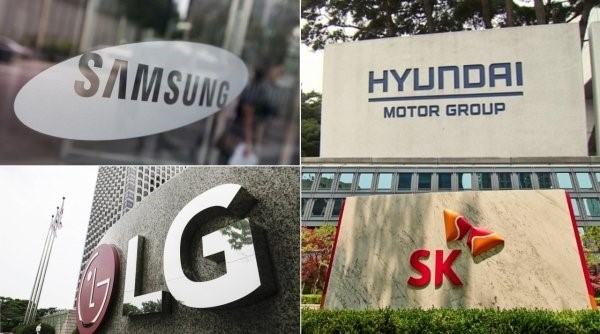
Dongzhen Shanglue asked why it has come to pass those Korean conglomerates such as Samsung, Hyundai, and SK Hynix reap record gains while young folk struggle to find decent employment and small businesses labour hard to keep their shops from ruin; and some poor souls, burdened by distressing debt, are in despair?
Dongzhen Shanglue called this phenomenon the “Neuron Economy” (神经元经济). The phrase describes societies most imbalanced like South Korea, where a handful of mighty corporations serve as the country’s very nerves and sinews. They absorb most of the capital, talent, and policy attention. They generate the vast majority of export growth and stock-market wealth.
Meanwhile, tens of thousands of SMEs and traditional industries resemble the silent tissues that uphold the brain. They sustain the common metabolism of the country and keep its vital humours in motion, yet play little part in its growth.
According to Dongzhen Shanglue, South Korea has become the first country to display in full the nature and characteristics of a Neuron Economy. The roots of the South Korean model were planted more than half a century ago.
In the 1960s, the government of President Park Chung-hee embraced a policy of unequal advancement, gathering the country’s scant resources into the hands of a few chosen large firms. From this design sprang that marvel which came to be called the Miracle on the Han. (汉江奇迹).
The chaebols were granted loans at low interest, allotments of foreign exchange, and shelter from market rivalry. In return, they were bound to fulfil export quotas as the government decreed. That was a bargain struck between power and wealth: capital received privilege, and the state received growth.
Yet even Park himself could not have dreamt how lopsided the concentration would become, Dongzhen Shanglue quipped.
In the first quarter of 2026, the five biggest South Korean exporters 一 the other three being Hyundai, Kia, and LG 一 accounted for 43.5 per cent of the country’s exports, amounting to US$219.9 billion. These same giants generated nearly US$50 billion in additional exports year-on-year. In other words, what drive forward the Korean economy are restricted to these five companies. Such a degree of dependence has no precedent in the modern annals of Korea.
Even during the zenith of the chaebol age in the 1990s, the foremost five exporters accounted for about 30% cent of South Korea’s exports. Yet surpassing the 40 per cent threshold took less than two years.
The chief force behind this transformation is the semiconductor supercycle, born of the worldwide frenzy for investments in artificial intelligence.
In the first quarter of 2026, Korean semiconductor exports surged by 139 per cent year upon year, while all other exports combined increased by only 11.6 per cent.
Meanwhile, industries ranging from automobiles and steel to chemicals and consumer wares are beset by more expensive raw materials, fiercer competition from abroad, and the languor of weakening global demand.
Dongzhen Shanglue contends that South Korea’s approval of 18 leveraged and inverse exchange-traded funds linked to Samsung Electronics and SK Hynix marks a dramatic but alarming turn in economic policy. The reasoning of the government was plain enough: if ordinary labourers cannot partake of the bounty of the AI boom through employment, then let them partake through the financial markets.
Thus, the government endeavours to transform its citizens into beneficiaries of capital appreciation rather than rising wages. Dongzhen Shaglue described this arrangement as a “financialized AI dividend”, or a “national dividend of computing power”. Through leveraged financial products, the government hopes ordinary Koreans can share in the wealth created.
Dongzhen Shanglue warned that this policy has crossed a boundary long observed in the governance of economies. Governments may foster favourable conditions for business and provide protections for the people, but they have not encouraged highly leveraged speculation nor yoked the fortunes of households to the performance of a mere handful of stocks.
South Korea has crossed that line, Dongzhen Shanglue lamented, adding that the move carries three long-term risks.
First, when leveraged investment breeds wealth more swiftly than labour itself, faith in the ancient promise—that diligence leads to prosperity—begins to decay. As wealth becomes ever more dependent upon the ownership of assets rather than productive effort, society risks forsaking the virtues of craftsmanship and enterprise in favour of the temptations of speculation.
Second, leveraged exchange-traded funds possess the power to magnify the motions of the market. When share prices ascend, the hedging activities of market-makers may create a self-reinforcing spiral upward. Yet when prices descend, that same mechanism may hasten the fall.
Because Samsung Electronics and SK Hynix together constitute a mighty portion of the Korean stock market, severe turbulence in either company could shake the stability of the entire exchange. Given the cyclical nature of semiconductors, the risk is highly possible and disastrous.
Third, should the brightest graduates, the boldest venture capitalists, and the keenest attention of government all flow toward semiconductors and AI-related enterprises, then other crafts—from precision machinery and materials science to food processing and the chemical arts—may gradually decline.
Such a process proceeds slowly and often unseen, until the cost of reversing it becomes too great.
South Korea’s experiment, Dongzhen Shanglue suggests, may prove not merely a Korean story, but an early glimpse into the future course—and possible dangers—of technology-driven capitalism throughout the world.