




























(Singapore, 23.07.2026)Samsung Electronics has overhauled its foldable smartphone range, introducing a wider entertainment-focused model as competition in the premium handset market is set to intensify with Apple’s expected entry into the category.
The South Korean technology company unveiled three new foldable devices, comprising the US$1,200 (S$1,549) Galaxy Z Flip 8, the US$1,900 (S$2,452) Galaxy Z Fold 8 and the US$2,100 (S$2,710) Galaxy Z Fold 8 Ultra, according to Bloomberg.
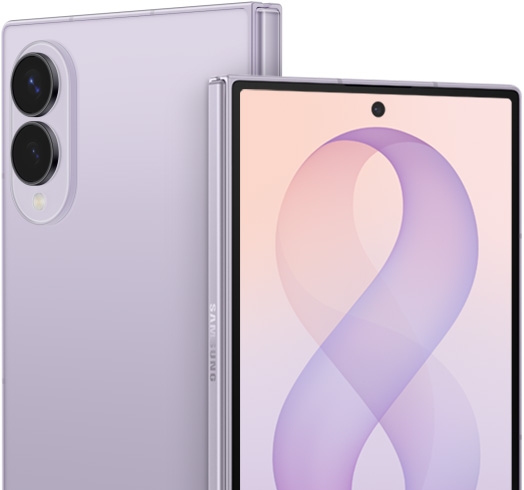
The biggest change is the Galaxy Z Fold 8, which now has a shorter and wider design intended to make video viewing, reading and gaming more comfortable. Samsung is positioning the model as the mainstream option in its foldable range, while retaining a more traditional tall design for the higher-priced Fold 8 Ultra.
The launch gives Samsung a head starts over Apple, which is expected to introduce its first folding iPhone in September. Bloomberg reported that Apple’s device is likely to use a similar passport-style design, potentially bringing greater attention to a product category that remains small compared with conventional smartphones.
Chinese manufacturers including Huawei have already released devices with a similar form, while Google’s original Pixel Fold also adopted a shorter and wider design. However, the expected rivalry between Samsung and Apple could give foldable phones their biggest marketing push yet in the United States and other major markets.
Samsung opened preorders for the new devices on Wednesday, with shipments scheduled to begin on Aug. 7.
The Galaxy Z Fold 8 is the lightest device Samsung has produced in the series so far. Its 5.5-inch outer display is easier to use with one hand, while the 7.6-inch unfolded screen has a 4:3 aspect ratio that allows films and television programmes to fill more of the display.
That addresses one of the weaknesses of earlier Galaxy Fold models, whose squarer inner screens often failed to make videos appear significantly larger than on less expensive smartphones.
The trade-off is that the outer screen is shorter than before. Users who mainly watch vertical content on TikTok, Instagram Reels or YouTube Shorts may find that videos appear smaller.
The Fold 8 also has only two rear cameras, consisting of a 50-megapixel main camera and a 50-megapixel ultra-wide lens. The simpler camera arrangement is another feature it is expected to share with Apple’s upcoming foldable phone.
Samsung is keeping a more familiar design for the Galaxy Z Fold 8 Ultra, which is aimed at users who want stronger cameras and more space for running two applications side by side.
The Ultra model costs US$100 more than last year’s version. Rather than making major design changes, Samsung has focused on smaller improvements following the significant reductions in weight and thickness introduced with the Galaxy Z Fold 7.
The company has adjusted the hinge and reduced part of the outer frame to make the device easier to unfold. Charging speeds have also increased to 45 watts for wired charging and 20 watts for wireless charging, compared with 25 watts and 15 watts respectively on the previous model.
The Fold 8 Ultra includes a larger 5,000 milliampere-hour battery despite being thinner than its predecessor.
Samsung has also tried to reduce the visible crease that runs through the centre of foldable displays. Both Fold 8 models use a new titanium alloy film over the screen and a thin titanium plate beneath it.
The crease remains visible when viewed from an angle, leaving Samsung behind some Chinese competitors, including Oppo, but the line is less noticeable than before.
Byung Duk Yang, executive vice-president of Samsung’s Core Component Technology team, told Bloomberg that reducing the crease should not come at the expense of other benefits. He said Samsung’s engineers had devoted considerable time and effort to improving the display.
Neither Fold 8 model supports Samsung’s S Pen stylus, a decision intended to keep the screen assembly as thin as possible.
The Galaxy Z Flip 8, meanwhile, receives fewer changes. The device is US$100 more expensive than last year’s model and has returned to using a Qualcomm processor after Samsung briefly switched to its own Exynos chip.
Samsung has made the phone thinner and expanded what users can do on its outer FlexWindow display. More applications can now be opened without unfolding the device, although the overall hardware changes are more limited than those introduced on the Fold models.
Artificial intelligence is also becoming a larger part of Samsung’s strategy.
Google Gemini’s automated functions will work with more than 40 supported applications, allowing users to ask the phone to complete tasks such as searching for and ordering concert tickets. Users will still need to confirm purchases and can monitor or stop the process at any stage.
A new My FanCam feature can track people in recorded videos and automatically crop the footage into a format suitable for social media. Users can also create customised home-screen widgets through simple text prompts.
Samsung also refreshed its smartwatch lineup with the US$700 Galaxy Watch Ultra 2 and US$380 Galaxy Watch 9. Both models now use Qualcomm processors and have larger batteries and brighter displays.
The company used the same launch event to show its upcoming smart glasses, developed with Google, Warby Parker and Gentle Monster. The glasses are expected to be released in several styles later this year and provide up to nine hours of active use.
The first models will focus on audio and hands-free access to Google Gemini. Their built-in cameras will allow the assistant to understand the user’s surroundings, although Samsung did not allow journalists to test the glasses during the event.
Samsung’s expanded product lineup comes as Apple prepares major updates across its own hardware business. Bloomberg reported that Apple is planning new MacBook Pro, MacBook Air, iMac, Mac mini and Mac Studio models as demand for computers capable of running artificial intelligence applications grows.
Apple is also preparing a device leasing programme with Klarna, allowing customers to make lower monthly payments and upgrade earlier. The initiative follows price increases across several Apple products and could help the company support demand as it introduces more expensive devices, including its first foldable iPhone.