


























(Singapore, 13.07.2026)Extreme heatwaves are putting growing pressure on Italy’s €4.5 billion (S$6.64 billion) Parmigiano Reggiano industry, reducing milk production and driving up energy costs as producers race to protect an 800-year-old cheese-making tradition from a changing climate.
According to Reuters, farmers in Italy’s northern Emilia-Romagna region once only needed to open barn windows at night during summer to keep their cattle cool.
Today, those windows remain open around the clock as temperatures climb above 40 degrees Celsius, forcing farmers to invest in cooling systems to protect their cows and the milk used to produce one of Italy’s most famous exports.
“Extreme heat impacts milk’s quality and quantity,” said Nicola Bertinelli, president of the Parmigiano Reggiano Consortium, who also runs a dairy farm founded by his family in 1895 near Parma.
The impact is being felt across the entire production chain, from dairy farms and animal feed to cheese production and storage warehouses.
When temperatures rise above 40 degrees Celsius, cows spend more time lying down, eat less and can produce up to 10% less milk.
That poses a major challenge for Parmigiano Reggiano producers because the cheese is made using only three ingredients — milk, salt and rennet.
Strict production rules add another layer of difficulty.
Authentic Parmigiano Reggiano can only be produced in five Italian provinces, mostly in the Emilia-Romagna region. Cows producing the milk must also be fed exclusively with grass and hay grown within the designated production area.
That means drought and extreme heat can affect not only the cows but also the local crops needed to feed them.
“If it doesn’t rain, grass doesn’t grow, hay cannot be produced and it’s impossible to obtain the milk needed to make the cheese,” Bertinelli said.
To protect their cattle, farmers have installed large fans and water-misting systems in barns. However, keeping the equipment running during increasingly intense heatwaves has sent electricity and operating costs higher.
The financial impact does not stop at the farm.
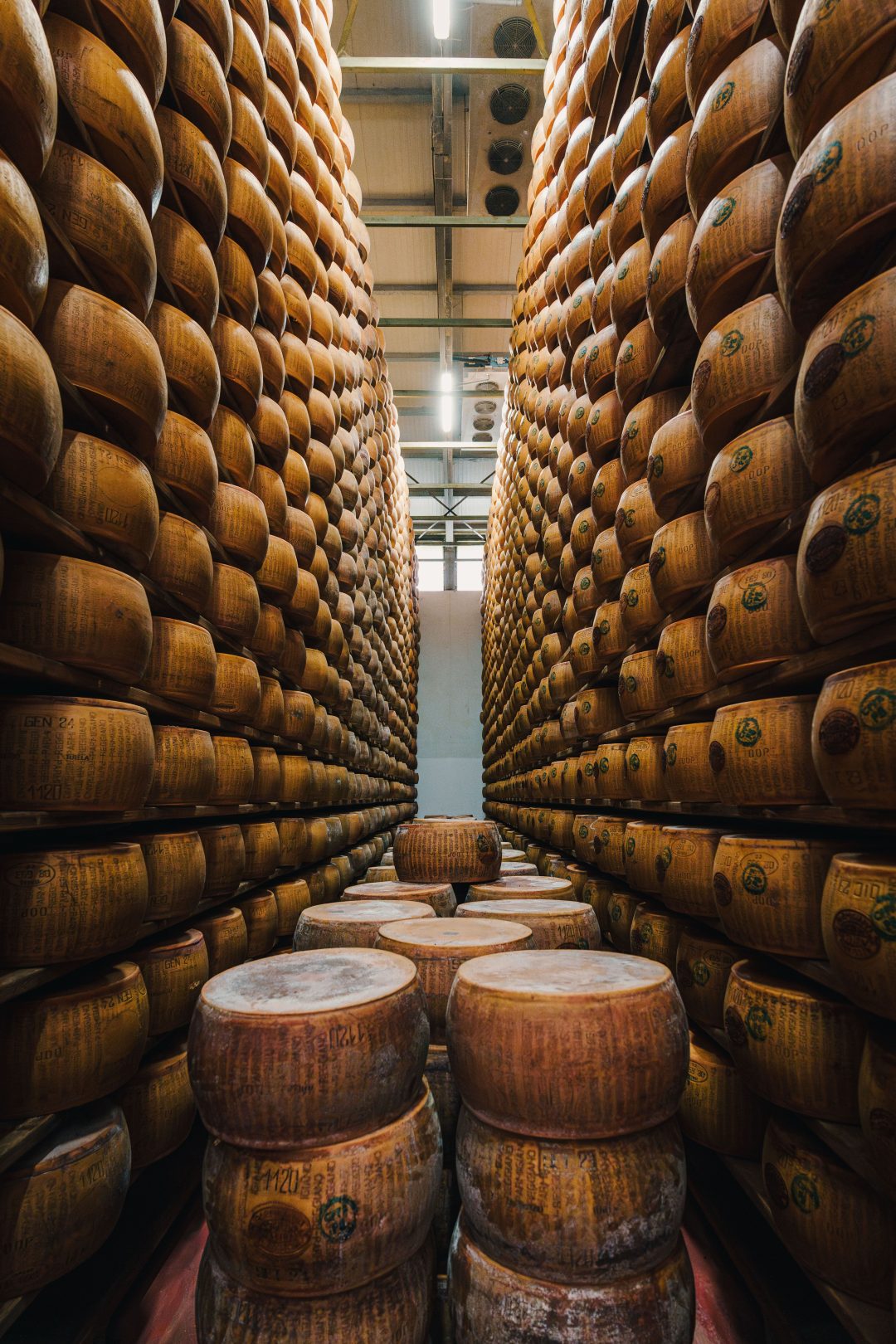
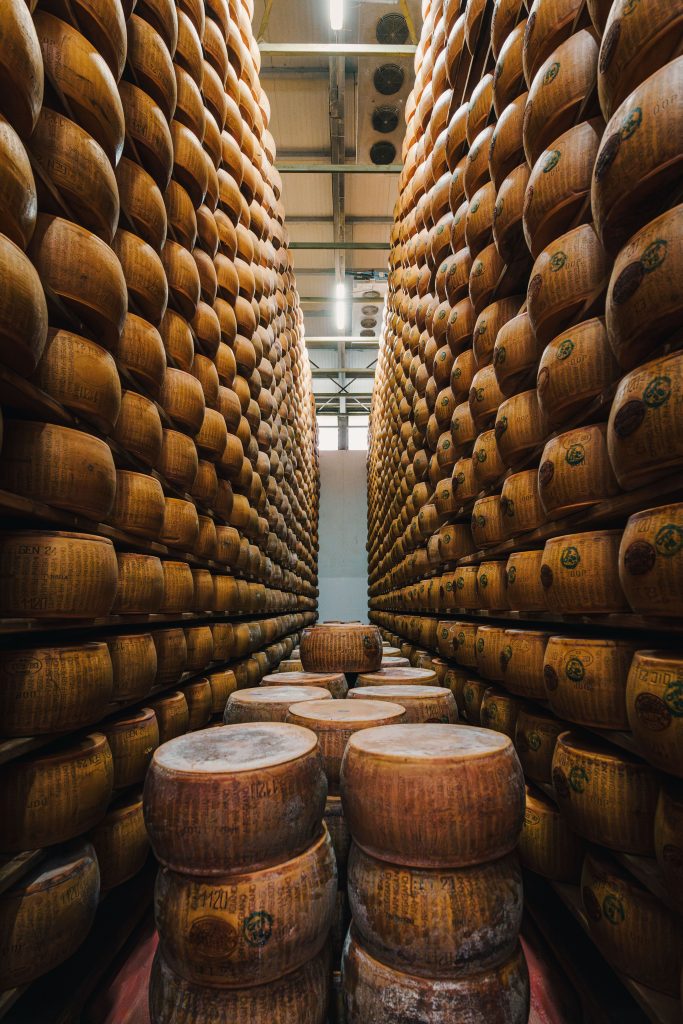
After production, Parmigiano Reggiano wheels must be aged for at least 12 months. Some are stored for three years or even longer before they are ready for sale.
Maintaining the right temperature and humidity inside these massive storage facilities has become increasingly expensive as temperatures rise.
More than 500,000 wheels of Parmigiano Reggiano worth over €300 million are currently stored in two warehouses operated by Magazzini Generali delle Tagliate (MGT), a unit of Italian bank Credito Emiliano, in the provinces of Reggio Emilia and Modena.
During this year’s most severe heatwaves, daily energy consumption at the facilities increased by about 30%, according to MGT director Giancarlo Ravanetti.
The company has responded by improving cooling systems and boilers, upgrading building insulation and expanding renewable energy production in an effort to improve energy efficiency.
The climate-controlled warehouses are part of a unique financial and production system sometimes known as the “Bank of Parmigiano.”
The facilities store vast quantities of ageing cheese, which can be used as collateral by producers seeking financing while waiting for their products to mature and be sold.
Despite the growing use of technology, traditional expertise remains central to the industry.
Every wheel of Parmigiano Reggiano undergoes strict quality inspections, including X-ray scans to detect possible defects.
Experts also inspect the cheese regularly by tapping each wheel with small hammers and listening for sounds that could indicate flaws developed during the ageing process.
“The human factor remains key and is the real strength of the entire process,” Ravanetti said.
Industry executives are increasingly concerned that longer and more severe extreme weather events could put further pressure on both production and profit margins.
Paolo Ganzerli, international sales director at Italian food group GranTerre, said increasingly intense weather events would affect the quantity and quality of milk while pushing costs higher across the industry.
GranTerre reported consolidated revenue of €1.87 billion in 2025.
The economic stakes are significant.
Italy’s Parmigiano Reggiano industry generates an estimated €4.5 billion in annual revenue, employs thousands of people and plays an important role in the economy of the Emilia-Romagna region.
The industry has also become increasingly dependent on international markets.
Exports accounted for more than half of global Parmigiano Reggiano sales in 2025, with the United States remaining the cheese’s largest foreign market.
The growing importance of overseas sales means any disruption to production or sharp increase in costs could have an impact beyond Italy.
Climate change is now forcing one of the country’s oldest industries to balance tradition with the need for greater investment in technology, cooling systems and energy efficiency.
For producers, the challenge is particularly difficult because Parmigiano Reggiano’s identity depends on strict production methods and ingredients sourced from a limited geographical area.
Unlike other industries, producers cannot simply move production elsewhere or easily replace locally grown feed with cheaper alternatives.
That leaves the sector particularly exposed to rising temperatures, drought and other extreme weather events.
Parmigiano Reggiano has survived wars, economic crises and dramatic changes in global food markets during its more than 800-year history.
Now, the industry faces a different kind of challenge as rising temperatures threaten milk production and drive up the cost of protecting, producing and ageing one of Italy’s most valuable food exports.
“We don’t want to be the last generation to eat it,” Ganzerli said.