



























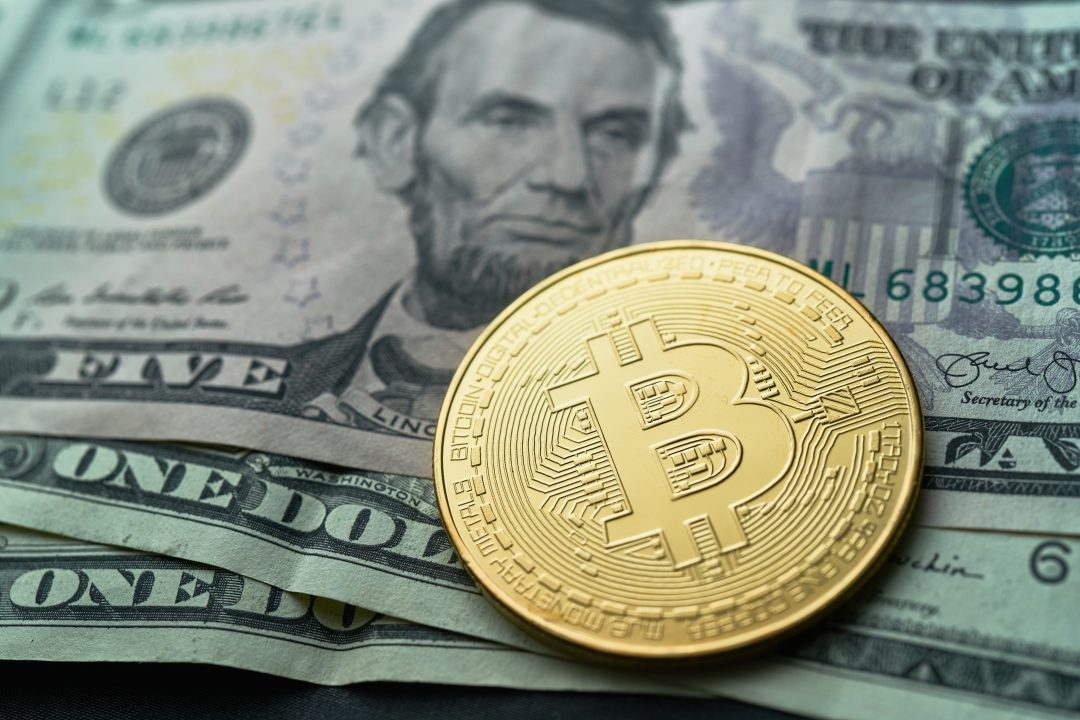
(Singapore, 25.08.2026)Wall Street investors are once again looking beyond the US dollar as concerns over America’s growing debt burden and efforts to contain borrowing costs revive the so-called “debasement trade”, sending money into gold and Bitcoin.
The strategy is based on the idea that investors should protect themselves against a decline in the value of traditional currencies by shifting into assets that are less directly influenced by government fiscal and monetary policies. Gold has traditionally played that role, while Bitcoin has increasingly joined the trade despite its much greater volatility.
Interest in the strategy has intensified after US Treasury Secretary Scott Bessent took several steps that unsettled currency markets. Most recently, the Treasury announced plans to at least double some buybacks of government bonds with maturities of between 10 and 30 years, an effort aimed at easing pressure on long-term borrowing costs.
The announcement briefly pushed bond yields lower, but the more noticeable reaction came elsewhere. The dollar weakened while gold and Bitcoin rallied, raising questions over whether attempts to stabilise the Treasury market could instead shift pressure onto the US currency.
The renewed debate comes as the US national debt has climbed above $40 trillion, while the federal government is running a deficit of nearly $2 trillion. Higher oil prices are adding to inflation risks, while governments and companies are competing for capital to finance everything from defence and energy security to artificial intelligence, data centres and semiconductor projects.
For investors, the challenge is balancing Washington’s push to bring borrowing costs down with persistent inflation, heavy government borrowing and strong demand for capital, all of which continue to put upward pressure on long-term interest rates.
Robin Brooks, a senior fellow at the Brookings Institution, warned that trying to restrain long-term yields without dealing with the underlying fiscal imbalance could simply move the problem elsewhere. Instead of pressure showing up mainly in the bond market, it could increasingly be reflected in a weaker dollar.
Bessent has maintained that the US continues to support a strong-dollar policy.
Gold and Bitcoin regain favour
The term “debasement trade” refers to the historical practice of rulers reducing the precious-metal content of coins by mixing gold or silver with cheaper metals. In modern markets, the phrase has come to describe investor concern that currencies may lose purchasing power because of fiscal or monetary policies.
The trade gained momentum in 2025, when uncertainty surrounding US tariffs and concerns about the fiscal deficit weighed on the dollar. The US currency recorded its worst annual performance since 2017, falling almost 10%, while gold surged 65%.
Those concerns faded somewhat at the beginning of 2026 after Kevin Warsh was selected to lead the Federal Reserve and stressed that price stability would be his top priority. More recently, however, expectations that the Fed may not raise interest rates as previously anticipated have added to pressure on the dollar.
Gold has emerged as one of the biggest beneficiaries of the shift in investor sentiment, climbing almost 7% over the past week and briefly approaching $4,700 an ounce, its highest intraday level since May. Gold-backed exchange-traded funds tracked by Bloomberg also added more than 28 tonnes last week, marking their largest weekly increase since January.
Citigroup has raised its three-month gold target to $4,800 an ounce, although its analysts cautioned that stronger physical demand would eventually be needed to sustain the rally.
Bitcoin has staged an even sharper rebound, climbing above $80,000 on Tuesday for the first time since mid-May and reaching as high as $81,257, after surging 23% in the seven days through Sunday for its strongest weekly gain in about three years.
The rally has also brought investors back to Bitcoin investment products, with the 13 US-listed spot Bitcoin exchange-traded funds attracting a net $1.92 billion last week, their strongest weekly inflow in 10 months, while the sharp price increase forced about $7.2 billion of leveraged bearish positions across cryptocurrency markets to be liquidated.
Still, the market is far from unanimous over whether the debasement trade marks the beginning of a lasting shift away from US assets.
Global investors continue to hold large amounts of Treasury securities, while the strength of US equities suggests foreign capital has not abandoned dollar-denominated assets. Some analysts also argue that the Treasury’s bond buybacks remain too small compared with the overall size of the market to justify the scale of the recent moves in currencies, gold and cryptocurrencies.
Brent Donnelly, president of Spectra Markets, initially viewed Bessent’s move as a reason to buy Bitcoin and sell the dollar against the Swiss franc, but later reconsidered because of the relatively modest scale of the Treasury intervention.
He said the policy reinforces longer-term concerns already facing the dollar, but questioned whether there is a strong enough near-term catalyst to keep the trade moving at its recent pace.
Attention will now turn to the Federal Reserve’s annual Jackson Hole gathering, where investors will look for clues from Warsh on how the central bank plans to respond to persistent inflation and whether monetary policy will move closer to Washington’s preference for lower borrowing costs.