























(Singapore, 28.08.2026)China’s sprawling 24-hour spas are emerging as an unlikely tourist attraction, combining hot baths and massages with unlimited food, entertainment and overnight stays at prices that can rival or even undercut traditional hotels.
The trend is drawing growing interest from international visitors, particularly younger travellers who first encounter the venues through TikTok, Instagram and YouTube. Their popularity comes as China’s inbound tourism rebounds and wellness-related experiences gain greater attention on social media.
China welcomed 21.3 million international visitors in the first quarter of 2026, up 22.3% from a year earlier, according to the National Immigration Administration. At the same time, the country’s bathhouse industry is enjoying rapid growth, with a 2026 report from Chinese services platform Meituan describing the sector as entering a “golden decade” following a social-media breakthrough last year.
Unlike traditional bathhouses, the latest generation of venues increasingly resemble a combination of luxury spa, entertainment centre, restaurant and hotel.
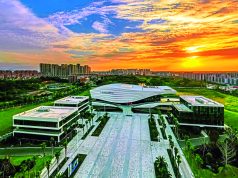
One example is Yoma Space in Guangzhou, a four-floor complex covering more than 215,000 square feet and capable of accommodating about 700 guests. Opened in 2023, the venue targets younger, fashion-conscious consumers with modern interiors designed to appeal both to domestic customers and social-media users.
Visitors can move between soaking pools, saunas and treatments such as gua sha, moxibustion and traditional ear cleaning, while also enjoying karaoke, mahjong, video games and sleeping areas.
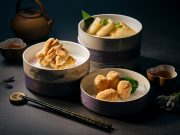
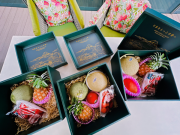
Food has become another major attraction, with Yoma offering fruit stations around the clock alongside sprawling buffets featuring lobster, sushi, crab and Peking duck. Guests willing to pay extra for the upgraded dinner can also enjoy unlimited sturgeon caviar, Alaskan king crab and Iberian ham.
A 24-hour package costs 799 yuan (about S$151) and includes spa facilities, breakfast, lunch, fruit and somewhere to sleep, although standard accommodation may be a sofa in a communal resting area. The premium dinner costs an additional 200 yuan.
For travellers accustomed to much higher wellness and hotel prices elsewhere, that combination has become part of the appeal.
Social media drives overseas demand
Other operators are attracting visitors with even lower prices, including Qianshen, another spa that has gained attention online and charges around 296 yuan (about S$55.95) when booked through Chinese platform Dianping. Shenzhen’s Tenz has similarly built a following among overseas visitors.
These venues reflect a broader transformation of China’s bathhouse culture. What were once relatively simple places for bathing and socialising have evolved into large lifestyle complexes where customers can spend an entire day, or even stay overnight.
Many newer venues are also designed for groups and families, with shared areas, restaurants, games and other entertainment alongside traditional spa services.
Social media has played an important role in bringing the concept to international travellers.
PandaStroll, a Chinese travel agency launched in September 2025, began offering bookings for Qianshen and Chengdu spa FuFu two months later. Founder Xiaodeng Chen told Bloomberg that international bookings have since roughly doubled from the 50 to 100 monthly bookings recorded in 2025.
Bathhouses now account for about half of the agency’s bookings, with demand rising noticeably in early 2026 alongside a wave of viral videos.
According to Chen, most overseas customers share similar characteristics, having discovered the spas through social media and drawn by the chance to experience a local Chinese lifestyle, with the majority aged under 30.
Yoma has also moved to capture this growing demand by expanding its international booking channels in late 2025, primarily through Asian travel platforms Trip.com and Klook.
Between December 2025 and May 2026, bookings through those overseas channels jumped about 200%, according to a Yoma spokesperson. The company did not disclose the actual number of customers represented by the increase.
Yoma attributed the growth to rising international travel to Guangzhou as well as exposure from videos posted on Instagram, YouTube and TikTok.
The operator is already expanding, adding another 53,820 square feet to its Guangzhou complex in May with new facilities including a restaurant and children’s playroom, while also discussing plans for additional locations.
The growth also comes as Chinese lifestyle habits gain greater visibility overseas, with a social-media trend known as “Chinamaxxing” taking off in 2025 among Generation Z and millennials experimenting with aspects of everyday life in China, from drinking hot water and eating congee to wearing indoor slippers.
Twenty-four-hour spas offer travellers a more immersive version of that interest, while combining it with the value-for-money appeal that has helped Chinese tourism businesses attract younger consumers.
Their growing popularity also highlights how social media is reshaping tourism spending, as travellers increasingly build itineraries around experiences discovered online rather than focusing only on traditional landmarks, creating new opportunities for businesses that once catered mainly to domestic customers.
For operators such as Yoma, the opportunity now extends beyond viral exposure, with its expansion and growing presence on international booking platforms suggesting that 24-hour spas could become a more significant part of China’s wellness and experiential tourism market as inbound travel continues to recover.
The challenge will be turning social-media curiosity into lasting demand, but for now, China’s giant bathhouses are finding an overseas audience willing to spend an entire day soaking, eating, playing and sleeping under one roof.