


























(Singapore, 15.09.2026)Indonesian President Prabowo Subianto has replaced his finance minister after a turbulent year for Southeast Asia’s largest economy, turning to a veteran technocrat as his government tries to restore investor confidence, protect fiscal discipline and stabilise markets after months of capital outflows.
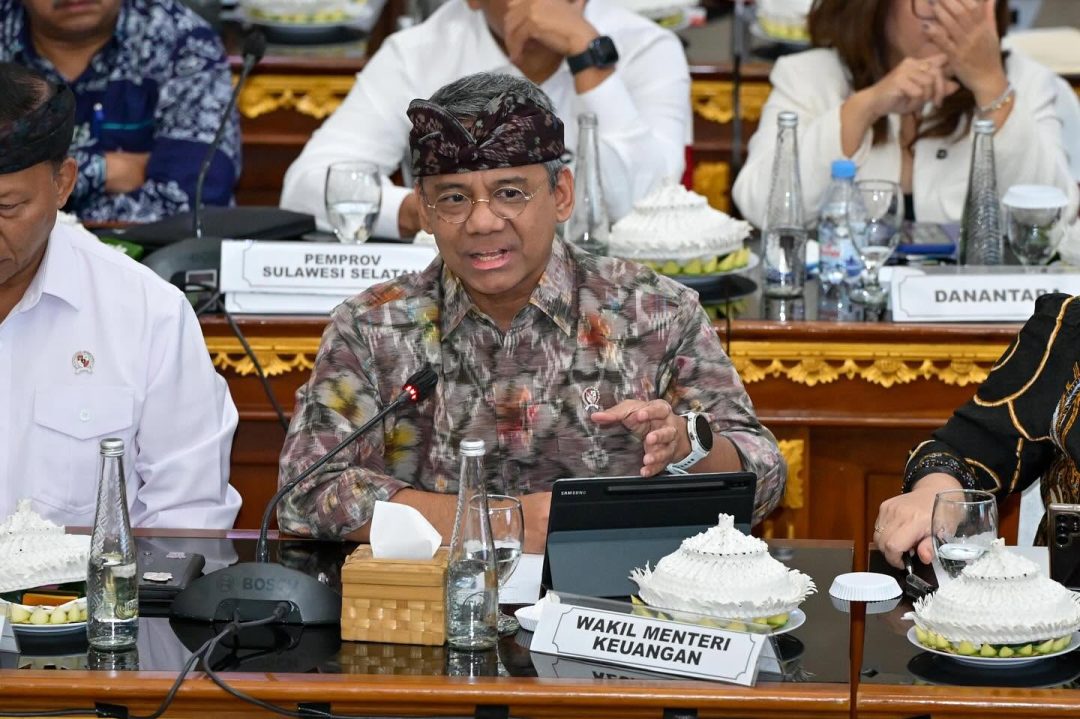
Prabowo appointed Suahasil Nazara as finance minister on Monday, replacing Purbaya Yudhi Sadewa just a year after he took the job. Nazara, 55, is a familiar figure in Indonesian economic policymaking, having served as deputy finance minister since 2019 and worked closely with former finance minister Sri Mulyani Indrawati, who was widely respected by international investors.
The appointment was initially welcomed by markets. Indonesian stocks recovered almost all of an earlier 2.6% decline following the announcement, while the yield on 10-year government bonds was unchanged at 7.17%. The rupiah was little changed on Tuesday after recovering about 3% from a record low reached in June.
Investors see Nazara as a potentially steadier hand after a difficult period under Purbaya, whose push for faster government spending and greater liquidity in the financial system raised concerns over Indonesia’s fiscal direction.
Purbaya had sought to accelerate growth partly by moving 200 trillion rupiah of government cash reserves held at Bank Indonesia into state-owned banks, with the aim of boosting lending and economic activity. His policies also contributed to tensions with monetary authorities at a time when the central bank was trying to support a weakening rupiah.
Those concerns were magnified by Prabowo’s ambition to give the state a bigger role in driving economic growth and fund costly social programmes. Indonesia’s budget deficit is expected to reach 2.85% of gross domestic product this year, putting it relatively close to the legal ceiling of 3%.
Nazara moved quickly to reassure markets that the limit would be respected, saying his appointment represented continuity rather than a major policy shift and promising to safeguard the country’s finances.
His background has helped strengthen that message. Before becoming deputy finance minister, Nazara headed the Finance Ministry’s Fiscal Policy Agency and spent years in academia, including as an economics professor at the University of Indonesia. He has also worked on fiscal decentralisation, poverty reduction and regional economic policy.
Analysts quoted by Bloomberg broadly viewed his appointment as a sign that the government recognises the need to rebuild fiscal credibility. Henry Wibowo, co-founder of Jakarta-based Alphagate Capital, said Nazara’s experience should provide greater confidence that Indonesia will remain committed to keeping its deficit below the statutory ceiling.
Markets Recover, but Investors Want More
The reshuffle comes at a relatively favourable moment for Prabowo after some of the pressure on Indonesian financial markets began to ease. Foreign investors have bought local bonds for four consecutive months, while the Jakarta Composite Index has entered a technical bull market after an earlier selloff.
The recovery, however, has only repaired part of the damage. Indonesian equities remain down almost a quarter this year, making the market one of the world’s worst performers, while about US$1.9 billion (S$2.41 billion) in foreign capital has left the country.
Investor confidence has been hit by a combination of domestic policy uncertainty, the Iran war and concerns that MSCI could downgrade Indonesia to frontier-market status. MSCI is expected to assess Indonesia’s progress on market-access issues in November after concerns over concentrated company ownership and the availability of shares for public trading.
Nazara will therefore face pressure not only to manage the 2027 budget but also to improve communication with global investors. The government is targeting economic growth of 6% and a fiscal deficit of 2.4% of GDP next year, although Bank Danamon expects growth of 5.1% and a deficit of about 2.75%.
Some investors are already becoming more positive. Mark Nash, a London-based money manager at Jupiter Asset Management, told Bloomberg that Nazara was a known figure to markets and said the appointment was supportive for Indonesian bonds and the rupiah.
Others remain cautious, arguing that changing senior officials will not by itself resolve deeper concerns over Prabowo’s economic strategy. James Athey of Marlborough Investment Management said investors were likely to demand evidence of more stable policy before returning to Indonesian assets in significant numbers.
Fiscal Discipline Faces Its Next Test
Nazara’s first major challenge will be completing the 2027 state budget while finding enough money for Prabowo’s growth agenda and social programmes without weakening the country’s fiscal position.
The change at the finance ministry also follows another major reshuffle at Bank Indonesia, where Governor Perry Warjiyo left unexpectedly in July and was replaced by his deputy, Destry Damayanti. The two appointments have placed experienced insiders at the head of institutions that are closely watched by foreign investors.
Relations between the finance ministry and central bank will be particularly important after tensions under Purbaya, whose push for greater liquidity came as monetary policymakers were raising interest rates to defend the rupiah. Investors will also be watching whether Bank Indonesia can maintain sufficient independence and how the government’s sovereign wealth fund Danantara fits into state finances.
Prabowo’s economic ambitions remain another source of uncertainty. The president has previously promoted the goal of eventually lifting annual growth to 8%, a pace Indonesia has not achieved in more than a generation. With global debt and borrowing costs elevated, investors have more choices about where to allocate capital, increasing the pressure on Jakarta to demonstrate predictable policymaking.
Nazara’s appointment has removed one source of uncertainty, but analysts say the direction of economic policy will ultimately continue to depend heavily on Prabowo. Felix Darmawan, an economist and fixed-income analyst at BCA Sekuritas, expects fiscal policy to remain prudent under the new minister, similar to the approach taken by Sri Mulyani, but said the policies eventually implemented will largely depend on decisions made by the president.
The next tests will come quickly, with investors looking to the 2027 budget for evidence that the deficit remains under control and to MSCI’s November review for signs that Indonesia can avoid a damaging downgrade. Those developments could determine whether the recent return of foreign money to Indonesian bonds and the rupiah develops into a more durable recovery.