





















(Singapore, 21.09.2026)The Tengchong Scientists Forum (TSF) has taken its first major step beyond China, opening its inaugural overseas conference in Bangkok with artificial intelligence, life sciences and regional scientific collaboration at the centre of the agenda.
Held along the Chao Phraya River under the theme “Connecting the World Through Intelligence, AI Transforming the Future of Life Sciences,” the three-day Bangkok conference brings together more than 300 scientists, government and business leaders, university representatives, industry experts and international organisations from more than 10 countries and regions.
More significant than the scale of the gathering, however, is where it is being held.
Since its establishment in 2022, the Tengchong Scientists Forum has largely developed as a China-based platform connecting scientific research, industry and government. Bangkok marks the Forum’s first overseas event and the launch of its “TSF Global Science Dialogue” series — signalling an ambition to build more regular links between China’s scientific community and research and innovation networks across Southeast Asia.
Thailand is a natural first stop. Its relatively developed biomedical research base, growing technology ecosystem and geographic position at the heart of Southeast Asia make it an important bridge between China and ASEAN.
From scientific dialogue to regional cooperation
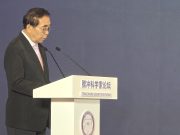
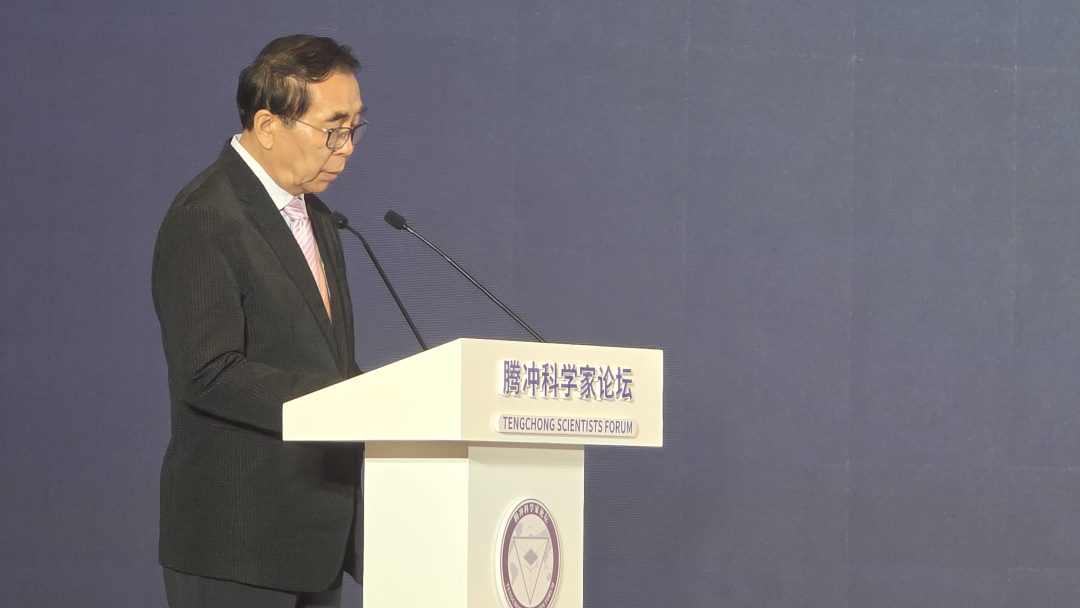
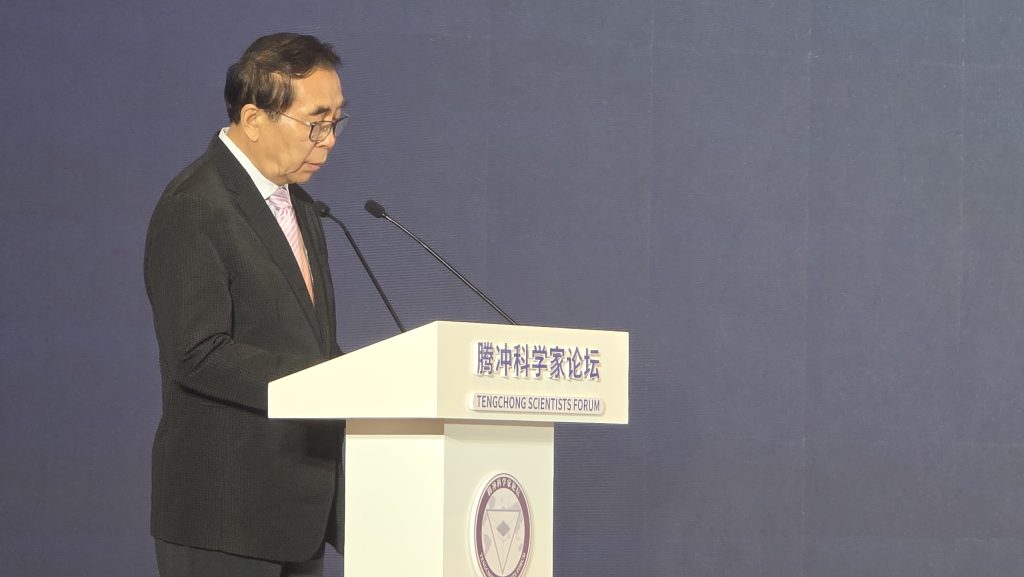
The opening ceremony brought together senior figures from China and Thailand, including Prof. Xu Zhihong, co-chair of the Tengchong Scientists Forum, Member of the Chinese Academy of Sciences and former President of Peking University; Prof. Bai Chunli, former President of the Chinese Academy of Sciences; H.E. Prof. Yodchanan Wongsawat, Thailand’s Deputy Prime Minister and Minister of Higher Education, Science, Research and Innovation; Mr. Wu Zhiwu, Chargé d’Affaires ad interim of the Chinese Embassy in Thailand; Mr. Chen Fengwei, Party Secretary of the Shanghai Advanced Research Institute of the Chinese Academy of Sciences; and Prof. Piyamitr Sritara, President of Mahidol University.
Their presence reflected a broader message running through the conference: scientific cooperation increasingly needs to move beyond academic exchanges and translate into research partnerships, talent development, industrial collaboration and practical applications.
That was also evident in two agreements announced during the opening ceremony.
Kunming Medical University and Mahidol University signed an agreement to jointly establish the “KMU Medical College in Collaboration with MU.” The proposed institution will focus on joint education programmes in nursing, public health and physiotherapy, while expanding research cooperation, faculty development and academic exchanges in medicine and health.
A separate five-party memorandum of understanding brought together Walvax Biotechnology, Yunnan ASXAN Biotech, Yunnan University, Burapha University and JSP Pharmaceutical Manufacturing (Thailand) to develop an international joint laboratory focusing on biomedicine and biomanufacturing. The initiative is intended to combine university research with industrial capabilities across China and Thailand and create a cross-border platform for research translation.
These agreements give the Bangkok gathering a dimension beyond conference diplomacy. They show how scientific dialogue can be connected directly with education, healthcare, research infrastructure and commercialisation.
AI meets life sciences
Artificial intelligence provided the other major thread running through the conference.
Three keynote speakers approached the subject from different perspectives: Thailand’s national science and innovation strategy, medical and technological innovation, and AI computing infrastructure. Discussions throughout the day examined how AI is changing not only scientific discovery, but also the way medical technologies are developed, delivered and shared across borders.
The morning leaders’ dialogue, moderated by Chinese Academy of Sciences academician Prof. George F. Gao, brought together scientists, healthcare specialists, representatives from UNESCO and industry leaders to discuss how international scientific cooperation can remain open and trusted amid a more fragmented global environment.
Participants explored the role of universities, research networks, multilateral institutions and technology companies in building longer-term scientific cooperation between China, Thailand and the wider ASEAN region. The discussion also touched on a question becoming increasingly important for emerging economies: how frontier technologies can be shared and applied without widening existing gaps in access, capability and affordability.
Two parallel roundtables in the afternoon took this discussion further.
One focused on AI and life sciences cooperation, including the accessibility and affordability of AI-enabled medical tools in Southeast Asia, barriers to cross-border research and the development of precision medicine.
The other examined AI-enabled drug discovery and the modernisation of traditional medicine, including the use of AI in natural-product screening and drug-target discovery, as well as how Chinese and Thai traditional medicine could develop stronger evidence-based systems and explore cross-border applications.
These discussions are particularly relevant to Southeast Asia, where healthcare demand is growing rapidly but medical resources, research capacity and access to advanced technologies remain uneven across markets. For the region, the value of AI will therefore depend not only on technological sophistication, but also on whether new tools can become accessible, affordable and usable in real healthcare systems.
From Tengchong to ASEAN
The Tengchong Scientists Forum was jointly initiated by Gu Binglin, former President of Tsinghua University; Xu Zhihong, former President of Peking University; and Rao Zihe, former President of Nankai University. Its stated mission is to connect academic exchange, government-industry-university-research collaboration, the translation of scientific achievements, and science and technology cooperation between China and South and Southeast Asia.
The decision to take the Forum overseas therefore carries significance beyond adding another international conference to the calendar.
For China’s scientific community, Bangkok offers a direct gateway into ASEAN research and innovation networks. For Thailand and other Southeast Asian countries, it creates another channel for working with Chinese universities, research institutes and technology companies in areas ranging from medicine and biotechnology to artificial intelligence.
The challenge now is whether the relationships established at the conference can continue after the delegates leave Bangkok.
Research partnerships, joint laboratories, student and faculty exchanges, industry collaboration and the cross-border application of new technologies will ultimately determine whether the Forum develops into a sustained regional platform rather than a series of international events.
The Bangkok conference is designed as the beginning of that process. TSF plans to use the event as a model for expanding its international cooperation network and gradually developing a more regular, multi-regional mechanism for scientific dialogue.
From Tengchong to Bangkok, the Forum has crossed its first national border. The more consequential journey will be turning that geographic expansion into lasting scientific cooperation — and connecting research, technology and industry across China and ASEAN.