


























(Singapore, 13.11.2026)Growing investment in household batteries and a global push towards electrification are bringing fresh attention to how solar electricity is stored and used, with implications for Singapore homeowners considering rooftop systems.
As equipment manufacturers combine solar generation, storage and energy management, the focus is broadening from how much electricity panels produce to how effectively that power meets a property’s needs.
One recent example is Chinese clean energy equipment maker Sungrow Power Supply, which is expanding its residential battery business as rising costs and competition put pressure on earnings.
Bloomberg reported on 13 November that the company forecasts global battery installations serving residential demand will reach 320 gigawatt-hours by 2030, with another 80 gigawatt-hours serving small commercial and industrial customers.
At its global partner summit this week, Sungrow showcased systems combining inverters, batteries and energy management, alongside storage options for properties that already have solar panels. The offerings illustrate how suppliers are developing solutions for both new installations and existing solar users.
Making better use of rooftop solar
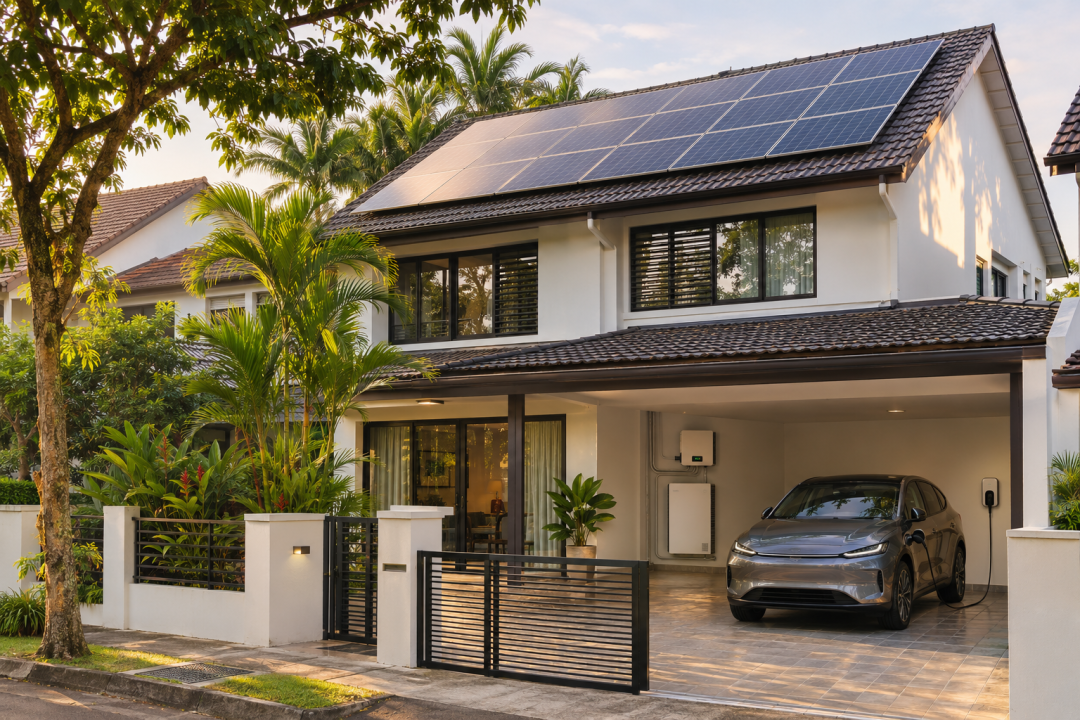
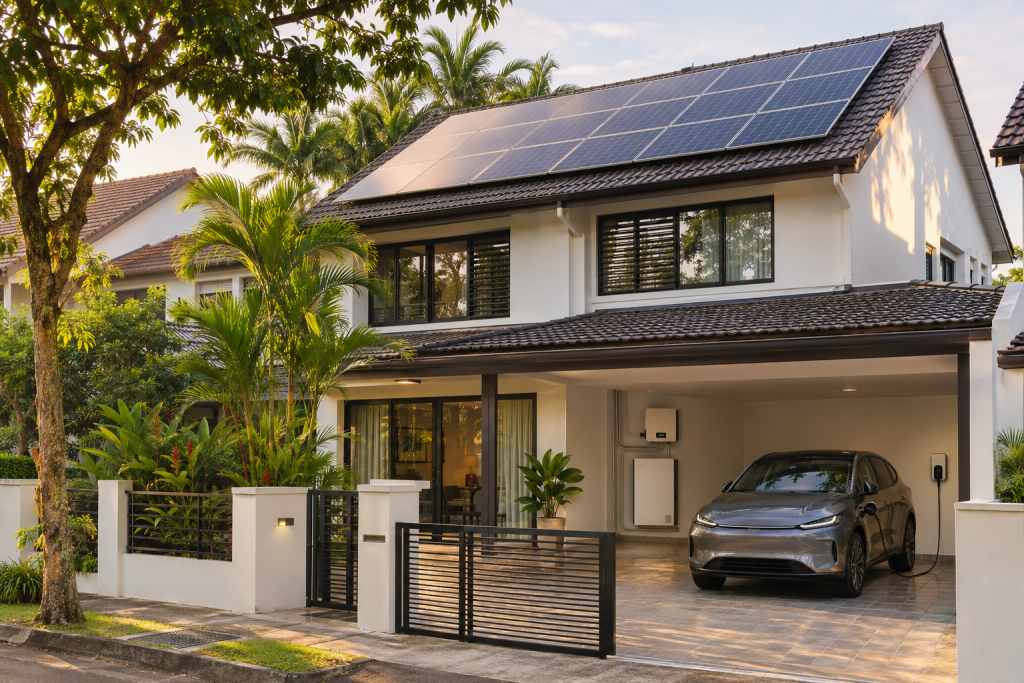
For Singapore homeowners, these developments highlight the importance of matching a solar system to household electricity consumption.
Solar panels generate electricity during daylight hours, but a home’s demand varies according to when residents are present and how they use appliances, air-conditioning and electric vehicle chargers.
A household that consumes substantial electricity during the day can use more of its solar generation directly. Where consumption is concentrated in the evening, battery storage can retain some daytime output for later use.
Energy management systems add another layer by helping coordinate generation, battery charging and household demand. Some products use weather forecasts and consumption patterns to guide their operation.
However, the growing availability of batteries does not mean every solar installation needs one. The financial case depends on equipment and installation costs, usable storage capacity, battery lifespan, electricity prices and the value of exporting surplus solar power compared with storing it.
For homeowners assessing rooftop solar, understanding their consumption patterns can therefore help determine system size, whether storage offers sufficient value and whether provision should be made for future expansion.
The wider shift towards electricity is also a focus at the COP31 climate summit in Antalya, Türkiye. The conference presidency is promoting a voluntary ambition to raise electricity’s share of global final energy consumption to 35% by 2035, from around 23%.
The initiative promotes electrification across buildings, transport and industry, alongside stronger electricity networks, storage and system flexibility. The target is not legally binding on individual countries.
For households, the connection is practical. As more activities, including transport, rely on electricity, decisions about solar panels, charging equipment and storage become increasingly linked.
Singapore expands solar and storage plans
These international developments coincide with Singapore’s plans to expand domestic solar generation and strengthen its electricity system.
The Energy Market Authority (EMA) said on 26 October that installed solar capacity had reached 2.3 gigawatt-peak (GWp). Singapore is working towards 3 GWp by 2030 and is now pushing towards an expanded target of 4 GWp by 2035.
It also plans to increase energy storage capacity from about 350 megawatt-hours to just over 1 gigawatt-hour by 2030. This is a power-system target, rather than a requirement for individual households to install batteries.
Singapore’s electricity demand is also rising, with EMA projecting that peak demand could reach between 9.9 and 13 gigawatts by 2031, up from 8.6 gigawatts in August 2026. Semiconductor manufacturing, data centres and electric transport are expected to drive much of the increase.
In its October energy storage consultation, EMA identified the potential for smaller systems in homes, businesses and electric vehicles to be coordinated through virtual power plants, allowing them to collectively support the grid.
Such arrangements could help balance fluctuations in solar output and ease pressure in areas with constrained network capacity. They also point towards a possible wider role for distributed storage, although participation arrangements and potential returns for individual users would depend on the models developed.
EMA is seeking industry proposals on storage technologies, business models and deployment barriers until 29 January 2027. The consultation also covers operating requirements and how storage systems could be centrally coordinated when needed, depending on their size and role in the power system.