

















(Singapore, 19.11.2026)Water shortages could make some clean energy projects harder to run, yet fewer than half of the companies examined in a study highlighted by Reuters on 18 November reported that they faced or expected water-related risks. The study by Clarity AI and environmental disclosure organisation CDP covered 524 companies involved in water-intensive low-carbon technologies. Just 43% reported such risks, and only 26% linked their disclosures to steps for managing them and to measurable water targets.
The effect on electricity supply was visible in France in July, when utility EDF shut down three nuclear reactors and reduced output at eight others to comply with limits on the temperature of cooling water discharged into rivers. Even when a plant can draw enough water to run, it may have to cut output if the river is already too warm to absorb the additional heat within permitted limits. By August, Copernicus was reporting widespread drought and unusually low river flows across parts of Europe.
For Singapore, the report raises a practical question about its own energy transition. As the country adds generating capacity at home and buys more electricity from abroad, how much water will those sources need to keep running? The International Energy Agency (IEA) has identified solar photovoltaics and wind as technologies that use very little water during operation. Solar therefore offers Singapore a way to add low-carbon power at home with little additional demand for water.
Solar adds power with little demand for water
Solar photovoltaic panels generate electricity directly from sunlight, so they can operate without a continuous supply of cooling water. Water may still be needed to clean panels, and manufacturing and construction have their own water requirements. A US national laboratory review found that solar photovoltaic and wind power were among the lowest users of water during operation. The distinction matters when comparing new power projects in places where water is already under pressure.
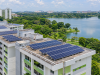
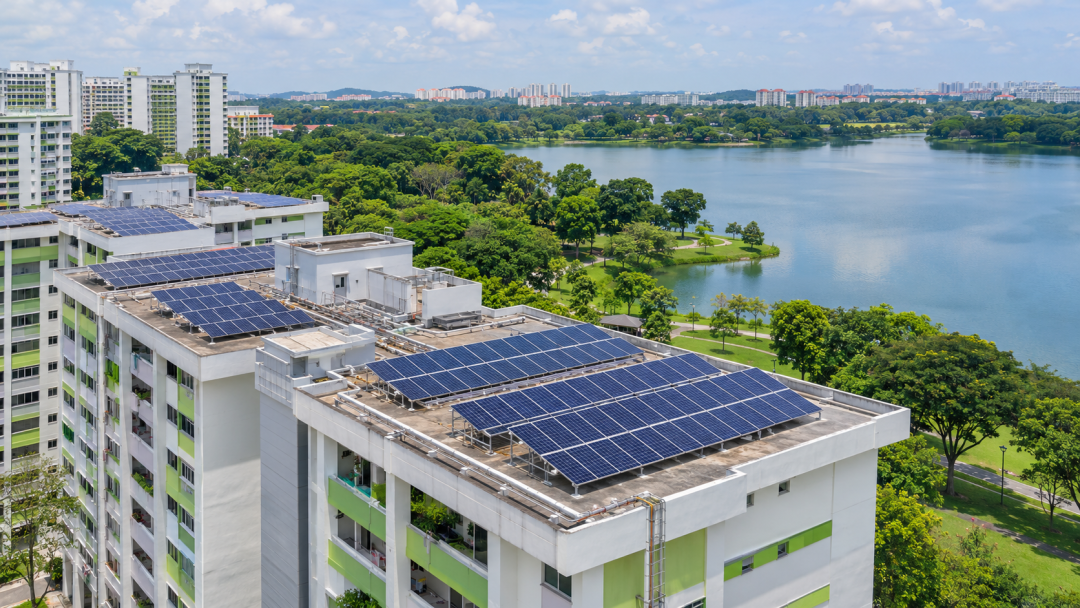
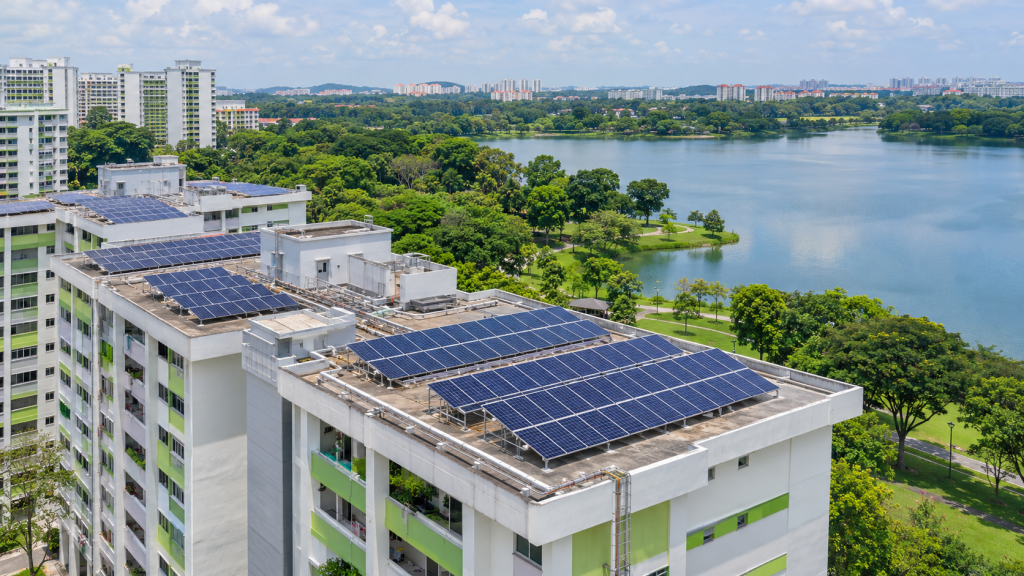
Singapore is already making use of rooftops, reservoirs and vacant sites to expand solar generation. In October, the Energy Market Authority (EMA) said the country had reached 2.3 gigawatt-peak (GWp) of installed solar capacity and was on track to reach 3 GWp by 2030. It also set out a target of 4 GWp by 2035. These figures measure peak generating capacity. Actual output varies with sunlight and cloud cover, which is why grid upgrades and energy storage also feature in Singapore’s plans.
The 60 MWp floating solar farm at Tengeh Reservoir illustrates how the same site can serve both the water and power sectors. When the project opened in 2021, national water agency PUB said its expected annual generation was equivalent to the electricity needs of Singapore’s five local water treatment plants. The reservoir provides space for the panels, while the panels generate electricity without drawing a steady supply of water for cooling.
Water risk extends to the power Singapore imports
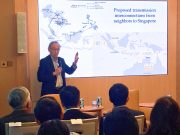
Water conditions overseas also matter as Singapore seeks to import around 6 gigawatts (GW) of low-carbon electricity by 2035. The first phase of the Lao PDR–Thailand–Malaysia–Singapore Power Integration Project brought in up to 100 megawatts of hydropower from Laos through Thailand and Malaysia. During a prolonged dry spell, less water can flow into reservoirs, limiting how much electricity hydropower plants can generate. Regional solar and wind projects can help diversify supply, with storage, grid connections and other power sources available to cover periods of lower output.
The Reuters report also shows how water needs can influence the design and location of low-carbon projects. Green hydrogen production uses renewable electricity to split water, with additional water potentially needed for purification and cooling. Developers in Spain and Portugal have had to plan for water supplies even at sites with access to relatively cheap renewable electricity. Some industrial plants can also reduce their water needs by using air for cooling, although the equipment can cost more upfront and operate less efficiently than water-based systems.
As Singapore weighs its next sources of low-carbon electricity, water risk will vary from project to project. For hydropower imports, one consideration is how much electricity suppliers can deliver after a prolonged dry spell. For rooftop and floating solar at home, the challenge is managing variations in output as the weather changes and daylight fades. Solar’s contribution is to give Singapore another source of electricity whose day-to-day operation places relatively little demand on water supplies.