
























(Singapore, 20.11.2026)Singapore-based DayOne Data Centers Ltd has put its planned US initial public offering on hold, Bloomberg reported, citing people familiar with the matter. The company had aimed to raise as much as US$5 billion as early as the fourth quarter, but began weighing a delay or a smaller offering as trading in AI and data centre stocks grew more volatile and investors questioned whether valuations could hold up.
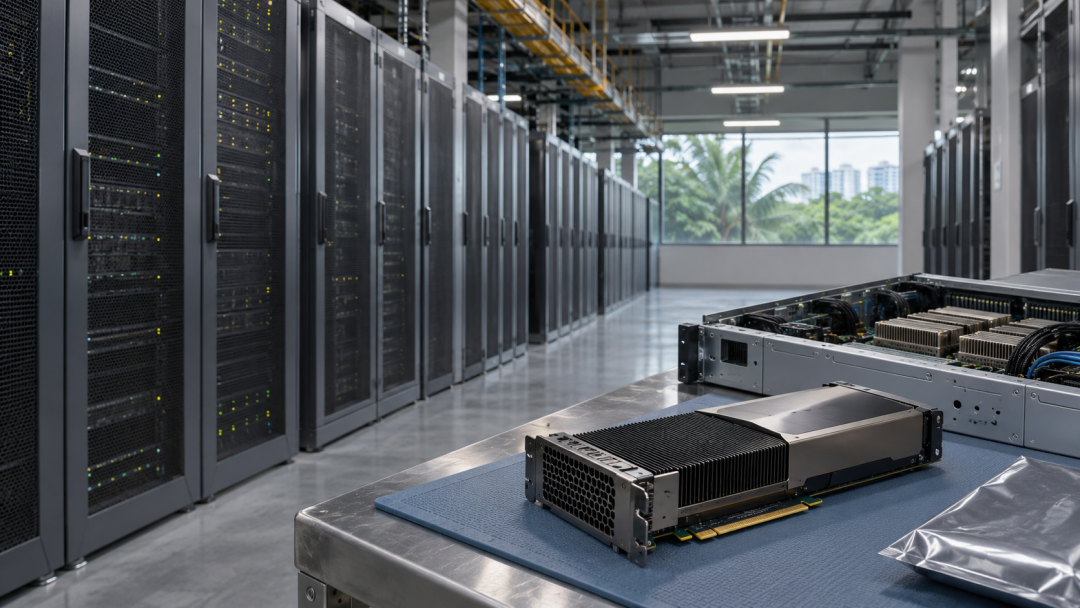
The IPO pause comes as new US chip controls take effect in Singapore, Malaysia, Thailand and Indonesia, four markets where DayOne operates large-scale facilities. Demand from Chinese technology companies such as ByteDance and Alibaba has helped fuel Southeast Asia’s data centre boom, with TikTok owner ByteDance now DayOne’s largest customer.
Under the interim US rule, which took effect on 19 November, exports, re-exports and local transfers of certain advanced chips and servers to or within the four markets generally require a licence. Washington is seeking to limit Chinese companies’ ability to access advanced AI computing power remotely through data centres overseas, adding another factor for operators to weigh as they plan equipment purchases and expansion.
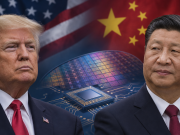
Speaking to Fox News from Shenzhen during the Asia-Pacific Economic Cooperation summit, US President Donald Trump suggested that Washington could allow sales of Nvidia’s Blackwell chips to China in two or three years, when newer processors would likely have surpassed them. Washington previously authorised sales of Nvidia’s less advanced H200 chips to China while withholding approval for Blackwell sales. Nvidia’s interim chief executive, Colette Kress, told analysts this week that the company sold US$2.4 billion worth of licensed Hopper-generation AI products to China in its latest quarter. She said those shipments had since stopped.
DayOne could revisit IPO in 2027
DayOne filed for its US IPO in October and could still pursue a listing in 2027 if market conditions improve, the people said. The company has been working with Morgan Stanley, JPMorgan Chase, Bank of America, Citigroup and BNP Paribas on the listing. Its backers include Coatue, Hillhouse, GDS Holdings, SoftBank Vision Fund and Citadel founder Ken Griffin. Discussions are ongoing, and a DayOne representative declined to comment.
Investors are questioning how quickly heavy spending on AI infrastructure will pay off, with the Nasdaq 100 down more than 6% so far in November. Australia’s Firmus Grid shelved its IPO plans in October, while Blackstone-backed AirTrunk delayed the planned Singapore listing of a real estate investment trust until 2027. Investors still showed an appetite for some AI offerings, however, with Anthropic’s IPO and concurrent private placement totalling US$107.3 billion and its shares closing 17% higher on their first day of trading.
India sees an opening
As tighter US rules complicate hardware purchases in parts of Southeast Asia, Indian operators are preparing for more demand. Darshan Hiranandani, co-founder and chairman of Yotta Data Services, told Bloomberg that India was already picking up demand from the United States, where data centre expansion faces political hurdles. Yotta now has about 34,000 graphics processing units (GPUs), up from the first 4,000 it received from Nvidia in 2024. The company expects to add computing power equivalent to roughly 100,000 GPUs over the next year, which Hiranandani said would increase India’s current computing capacity by about 10%.
As Indian operators expand, access to advanced chips depends on whether they have secured financing, lined up eligible customers and prepared their facilities to install the equipment, Hiranandani said, describing how Nvidia decides where to allocate its chips. AM Intelligence Labs, another Indian operator, ordered 9,000 of Nvidia’s Vera Rubin systems earlier this year, and co-founder Mahesh Kolli said plans to supply computing power in the second and third quarters of 2027 remained on track. The company’s customers include global cloud providers, AI labs and organisations developing AI models in India.
Investment pledges are growing alongside those hardware orders, with Mukesh Ambani’s conglomerate committing up to US$110 billion to AI infrastructure and Gautam Adani’s group pledging US$100 billion. Blackstone-backed AirTrunk is also moving ahead with plans to invest US$11 billion in data centres in India.
India has 153 data centres, ranking 14th globally by number of facilities, according to Cloudscene figures cited by Bloomberg. Turning investment pledges into operating facilities will require reliable electricity, financing and timely approvals. Power supply problems and administrative delays have previously led some large investors to favour Southeast Asia, where demand and funding from Chinese technology companies have helped support large projects.
Neil Shah, co-founder of Counterpoint Research, said the US restrictions could make India a more attractive alternative, though securing power and capital for projects requiring several gigawatts remains a challenge. Deutsche Bank said in a research report that India could eventually become an alternative data centre hub to the US, although building that capacity would take time.