


























(SINGAPORE 2026.11.24) A song urging people in China not to lose heart has brought many young listeners to tears, while sparking a wider debate: when jobs are scarce, incomes uncertain and household bills mounting, is “What’s there to be anxious about?” comforting reassurance or easy advice from someone insulated from everyday pressures?
The popularity of veteran comedian Zhao Benshan’s (赵本山) rendition of the internet song Huang Sha Zi Ma (慌啥子嘛, meaning “What’s There to Be Anxious About?”) offers a glimpse into the mood of Chinese society. First popularised through an AI-generated imitation of Zhao’s voice, the song later prompted him to record his own version. Then its appeal went beyond an internet music sensation, reflecting young people’s growing sense of uncertainty amid economic restructuring and intensifying competition.
Some netizens questioned whether a celebrity who has long enjoyed fame and fortune could understand ordinary people’s anxieties.
Zhao’s public image helps explain the song’s popularity. Born into poverty in rural northeastern China and raised without parental care, he rose to fame portraying farmers and ordinary people on China Central Television’s (CCTV) annual Spring Festival Gala. His sketches blended humour with everyday hardships and wisdom, making him a familiar figure to generations of viewers. Many of his characters struggled to make ends meet but still found reasons to laugh.
Now 69, Zhao has become a successful entertainment entrepreneur. His decision to sing Huang Sha Zi Ma was initially seen as a heartwarming response to audience requests.
Released on Nov 13 as a promotional song for the online drama Zou Ma Shang Ren (走马上任), it garnered more than one million likes within three hours. Related topics on Douyin platform accumulated over 200 million views. One comment captured the affection it inspired: “When I was little, he made me laugh. Now that I’ve grown up, he is still trying to comfort me and keep me from crying.”
But the song’s rapid rise also provoked another sentiment.
Xu Kunjie (徐坤杰), a commentator with Poster News (海报新闻), wrote in a Nov 21 article titled “What’s There to Be Anxious About? It May Soothe Emotions, But It Cannot Fix Lives” that some netizens had pushed back: “Of course you’re not worried. But how can I not worry about my car loan and mortgage?”
Others rewrote the lyrics to reflect their financial burdens: “Just when I finish paying off my mortgage, my car loan comes along; credit card bills are piling up one after another.”
Xu observed that although Zhao had “spent a lifetime playing farmers”, he no longer worried about mortgage repayments, car loans or his children’s school fees. Even a simple exhortation to “take your time” could therefore sound detached from reality, like the ancient saying attributed to an out-of-touch emperor: “No rice? Why not eat meat?” That phrase mocks those who fail to understand the hardships of the less fortunate.
Some critics went further, calling the song “spiritual anaesthetic” — a means for those benefiting from the existing system to numb the struggles of people at the bottom.
Xu also noted that Zhao’s commercial team had turned the online buzz into publicity for the drama, prompting questions about whether the emotional response was being exploited for commercial gain.
Nevertheless, Zhao explained why he agreed to sing it: “The young people like listening to it, so I sang it for them.”
Xu said there was something touching about an elderly man approaching 70 trying to connect with younger people’s emotions. But something can be moving without solving their problems.
Former Global Times (环球时报) editor-in-chief Hu Xijin (胡锡进) approached the debate from a broader social perspective.
He compared Huang Sha Zi Ma with songs popular among earlier generations, including See You Again in Twenty Years (二十年后再相会), Tomorrow Will Be Better (明天会更好) and Start All Over Again (从头再来), noting that popular songs reflect changing hopes and anxieties.
Society, he argued, should give young people more room to grow and better opportunities to build confidence in their future. “If society gets things right, this song will not become the defining anthem of this generation of young people,” he said.
But one netizen put it this way: “Earlier generations may have lived in a poorer China, but they had hope for the future. Today, all we seem to have ahead of us is prolonged stagnation. How can the two eras be compared?”
From ‘The Experienced’ to a Rural Elder’s Reflections on Life
The Zhao Benshan episode is not an isolated internet phenomenon. In recent months, several viral works centred on life lessons, personal setbacks and emotional reassurance have reflected ordinary people’s, particularly young people’s, anxiety about the future.
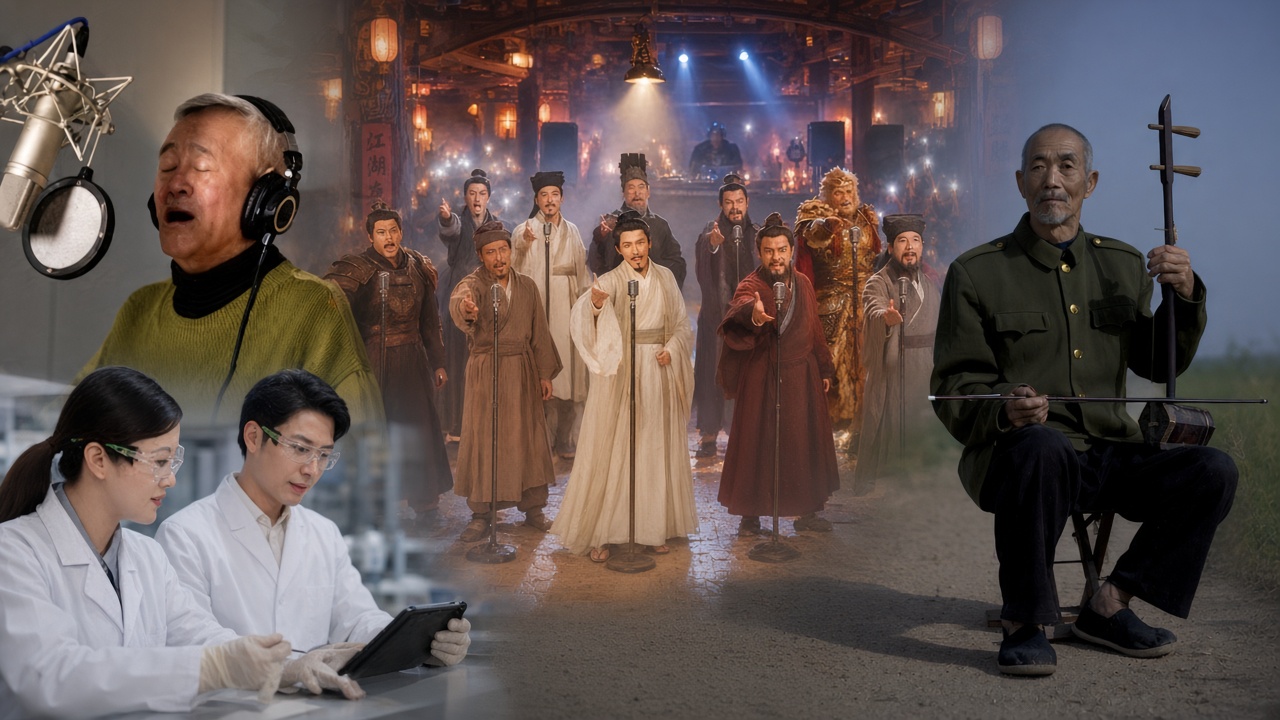
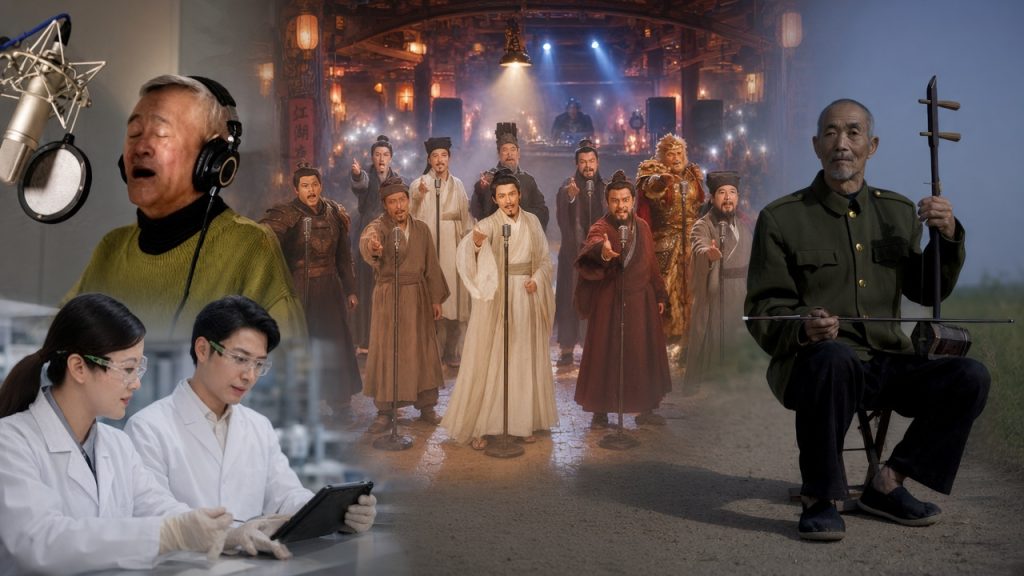
One example is Guo Lai Ren (过来人, meaning “Those Who Have Been Through It”), an AI-generated song that went viral in October.
Its rap video brings historical figures such as Du Fu (杜甫), Su Dongpo (苏东坡) and Liu Bang (刘邦) together in a tavern to recount their vicissitudes. By Oct 22, it had attracted about 124 million views, with netizens sharing personal struggles and sleepless nights filled with worry in the comments.
The video’s most resonant message was: “I’m not here to teach you. I’m here to accompany you through this part of the journey.”
AI filmmaker Wang Kunzhe (王琨喆), who made the video, told The Paper (澎湃新闻) that it might not offer solutions but could provide an emotional outlet. “A song cannot solve someone’s problems, but it can offer a place for unspoken exhaustion to find respite,” he said.
The post-1990s creator from Wuhan city said the song drew on his own experiences, including staying up late editing videos and chasing clients for overdue payments. He believes audiences can readily distinguish personal emotion from feelings deliberately manufactured for effect.
The difference between Guo Lai Ren and Huang Sha Zi Ma is telling. Rather than having a successful contemporary figure tell young people to take things easy, the former gives a voice to historical figures who experienced life’s ups and downs. Its message is not how to succeed, but that failure does not mean life has reached a dead end.
Similar sentiments surfaced in a short video from rural Shandong province.
Cheng Jingmu (程敬木), a 73-year-old farmer from Rizhao (日照), went viral after reflecting on life in a 23-second video. Dubbed the “Morgan Freeman of Shandong” by netizens, he had six years of schooling, worked as a carpenter and is an pallbearer who had carried 100 fellow villagers’ coffins. Speaking in his unadorned local dialect, which many listeners likened to London English accent, he recited a line by Tang dynasty poet Li Bai (李白): “Hair black as silk in the morning turns white as snow by evening.”
The video attracted more than 35 million views.
In an Oct 30 article, Liu Wanru (刘婉茹), a reporter with Farmers’ Daily (农民日报), observed that Cheng’s wisdom came not from a carefully crafted online persona but from years of work and experience in village life.
Rural communities, she wrote, were not short of people with something to say. What they lacked were “channels through which they could be genuinely heard”.
An elderly farmer without academic credentials or social standing has thus comforted millions of urban internet users.
Young People Are Not Unwilling to Take Things Slowly. They Simply Cannot Afford To
Behind these expressions of emotional comfort lie more immediate pressures.
A debate this month over “slow research” (慢科研) at Chinese universities offered a clear illustration of young people’s predicament.
Han Xiaoguang (韩晓光), an associate professor at the School of Science and Engineering of the Chinese University of Hong Kong, Shenzhen, joined more than 100 computer science and AI academics in advocating “slow research”. Their initiative urged universities to reduce their reliance on publication counts when admitting doctoral students and give researchers more time for in-depth work.
But some students questioned whether this was realistic. Research papers and output remain crucial credentials for postgraduate applications, further studies and employment. They simply could not afford to slow down.
Some criticised the initiative with remarks such as “Once you’re on the train, weld the doors shut”, suggesting that those already in secure positions were unwilling to let others in. Others invoked “Why not eat meat?” to accuse the academics of being out of touch.
In a Nov 17 commentary titled “Don’t Let ‘Slow Research’ Become a Luxury”, Beijing News (新京报) argued that students’ inability to slow down reflected their circumstances, not their attitudes.
When publication counts determine academic advancement and further-study opportunities, it is rational for students and young academics to race to produce more research, the commentary said.
Young people may want to live at their own pace, but education, employment and social competition keep pushing them forward. Even a brief pause could mean losing opportunities.
The debate also recalls the Kong Yiji (孔乙己) phenomenon that swept across the Chinese internet in 2023.
Named after an impoverished, educated character in a short story by influential early 20th-century Chinese writer Lu Xun (鲁迅), the Kong Yiji trend reflected graduates’ frustration at being unable to find suitable jobs and their growing sense that academic qualifications no longer guaranteed social mobility.
Kong’s traditional long gown became a metaphor for their psychological trap: graduates were reluctant to accept low-paying jobs but struggled to find opportunities matching their qualifications and expectations.
From “Kong Yiji” to today’s “slow research” debate and the popularity of Huang Sha Zi Ma, young Chinese’s expressions may differ, but their anxieties remain similar.
They fear hard work may not bring adequate rewards, falling behind may make it difficult to catch up, and tomorrow may not be better than today.
These trends do not represent every young Chinese person. But they point to a social sentiment that deserves attention: amid economic and employment uncertainty and doubts about upward mobility, people increasingly seek understanding and reassurance.
A song may help people forget their bills temporarily, but it cannot postpone payment deadlines. Historical figures may accompany the disillusioned through sleepless nights, but they cannot find them jobs. An elderly farmer’s wisdom may offer comfort, but it cannot change the competitive environment facing young people.
In his commentary, Xu Kunjie argued that the real question is not whether people should be told to stop worrying, but whether the problems leaving them with little choice but to panic are being taken seriously and addressed.
When growing numbers of people need reassurance not to be anxious, society should perhaps worry less about their anxiety and more about why they find it increasingly difficult to feel secure about the future.