
























(SINGAPORE, 2026.11.26) The Democratic Republic of Congo (DRC, or Congo (Kinshasa) 刚果(金)), the world’s largest cobalt producer, will suspend all cobalt (钴) exports again from Nov 30 until further notice. The move could disrupt China’s cobalt supplies and expose its battery industry’s dependence on overseas minerals, prompting companies to accelerate recycling, diversify sourcing and reconsider battery technologies.
The DRC’s Authority for the Regulation and Control of Strategic Mineral Substances announced on Monday that the suspension covers cobalt from both industrial mines and artisanal miners. The measure will be reviewed after four months.
This is the country’s second administrative suspension of cobalt exports, following a similar ban in February 2025. After extending that ban, the DRC replaced it with an export quota system in October last year. The latest halt is a continued effort to curb global oversupply and arrest a prolonged decline in cobalt prices.
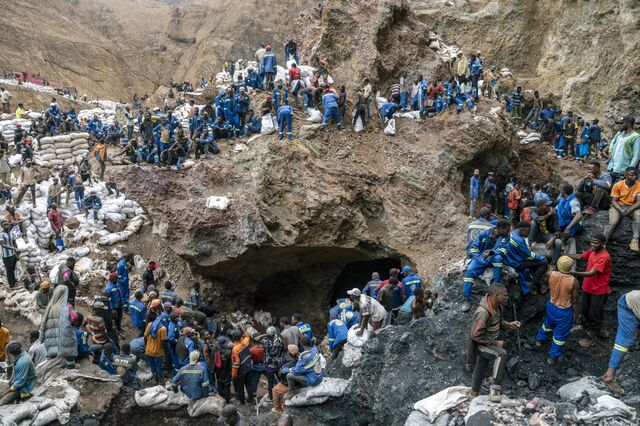
The DRC accounted for 74.2 per cent of global cobalt production in 2025, making it a key Chinese supplier. From January to October 2026, China imported about 23,800 tonnes of cobalt hydroxide from the DRC, or 95.1 per cent of its total imports of the material.
If the suspension lasts four months, about 28,600 tonnes of outstanding exports could be held up, the Shanghai Securities News (上海证券报) reported. The disruption is expected to intensify from the first quarter of 2027.
Cobalt is a key component of lithium-ion battery cathodes, particularly in nickel-manganese-cobalt (NMC) batteries, where it improves energy density, stability and lifespan. It is widely used in electric vehicles and consumer electronics.
Given the scale of China’s battery and electric vehicle industries, reliable cobalt supplies are essential to controlling costs, maintaining inventories and keeping production running.
Yet China’s dominance in cobalt refining does not extend to mining. Its heavy reliance on overseas raw materials leaves the domestic market vulnerable to policy changes in the DRC.
The immediate reaction was a sharp rise in cobalt prices and related stocks. China’s most actively traded cobalt futures contract surged nearly 12 per cent at one point on Tuesday, while shares of producers including Tengyuan Cobalt (腾远钴业), Hanrui Cobalt (寒锐钴业) and Huayou Cobalt (华友钴业) also climbed.
But higher prices could squeeze battery makers’ margins. The Beijing News’ Shell Finance (新京报贝壳财经) reported that cobalt-related shares fell the following day, reflecting concerns over rising raw material costs for downstream producers.
For Chinese miners in the DRC, the immediate priority is to ship existing stocks before the suspension takes effect.
China Molybdenum (CMOC, 洛阳钼业), one of the world’s largest cobalt producers, operates two major copper-cobalt mines in the DRC: Tenke Fungurume Mining (TFM, 腾科丰古鲁梅) and Kisanfu (KFM). Its DRC operations primarily produce copper and cobalt.
An investor relations representative told Hong Kong’s South China Morning Post that the company would accelerate shipments in the week after the announcement, with some cargoes already in transit. The immediate challenge is therefore getting existing output to buyers before restrictions take hold.
Another Chinese producer, Tengyuan Cobalt, said its DRC factory was operating normally, but its separated cobalt products would have to remain in local storage until exports resumed.
A representative told China’s 21st Century Business Herald (21世纪经济报道) that the move could be intended to support depressed cobalt prices. The company added that years of sourcing diversification could limit the impact of the ban on its operations.
Beyond expediting shipments and diversifying suppliers, Chinese companies are developing another source of cobalt: recycling.
Compared with the previous suspension, the industry now has greater capacity to recover cobalt from spent batteries and industrial waste. This secondary supply could supplement imports and ease pressure from disrupted mine output.
The Shanghai Securities News reported today that listed companies including GEM (格林美), Huayou Cobalt, Tengyuan Cobalt, Hanrui Cobalt and Tianqi Group (天奇股份) are investing in cobalt recovery technologies, building supply systems that combine mined and recycled materials.
However, recovery volumes depend on battery replacement cycles, industrial waste availability and recycling economics. Recycled cobalt is therefore unlikely to replace a significant share of imported mined supplies in the near term.
China is also seeking alternative geographical sources. Indonesia, with its abundant nickel resources, is emerging as a potential supplier of cobalt recovered as a by-product of nickel processing.
But new production capacity takes time to develop. Whether Indonesian output can expand quickly enough and at competitive costs to offset reduced DRC supplies remains uncertain.
A longer-term strategy is to reduce cobalt use in batteries. Lithium iron phosphate (LFP) batteries, which contain no cobalt, have gained ground in China’s electric vehicle and energy storage markets.
Ternary lithium battery makers are also seeking to lower cobalt content to reduce costs and exposure to supply disruptions.
Even so, cobalt is unlikely to become redundant. NMC batteries’ high energy density keeps them relevant to premium electric vehicles and consumer electronics, and alternative chemistries are unlikely to displace them entirely in the short term.
Beyond batteries, cobalt is used in aerospace applications, high-temperature alloys and other industrial products.
The vulnerability also extends beyond cobalt. Graphite, rare earths, gallium, germanium and antimony are essential to batteries, semiconductors, permanent magnets and defence industries.
Although China dominates the processing of many such minerals, the needed raw materials are concentrated in relatively few countries. Export restrictions by producing nations thus remain a geopolitical risk to Chinese supply chains.
Meanwhile, the DRC faces economic trade-offs. Chinese companies are major investors and producers in its mining sector. Repeated policy changes could raise their inventory, transport and financing costs, undermine investor confidence and deter future investment.
For China, the latest disruption underscores that dominance in industrial processing does not guarantee supply security. Reducing that vulnerability will require more diversified sourcing, greater recovery of used materials and a gradual shift towards battery chemistries that use less cobalt.