


























(Singapore, 10.06.2026)For much of 2025, Labubu was everywhere. The mischievous, sharp-toothed character sparked a global collecting frenzy, propelling Pop Mart from a popular Chinese toy company into an international consumer phenomenon. Across Asia, North America and Europe, fans queued for hours, limited-edition releases disappeared within seconds, and resale prices soared as demand for the quirky character reached unprecedented heights.
The craze transformed Labubu into one of the most successful toy characters in recent years and helped turn Beijing-based Pop Mart into one of the world’s fastest-growing consumer brands. However, as the initial frenzy begins to cool, investors are increasingly asking whether the company can sustain its momentum beyond the character that made it famous. Pop Mart’s management insists the company is far more than a one-hit wonder, pointing to a growing portfolio of intellectual properties (IPs) that are steadily gaining traction across global markets.
According to Chief Operating Officer Si De, the extraordinary success of Labubu may have overshadowed the performance of the company’s other characters. While Labubu dominated headlines and social media conversations last year, several other franchises also recorded strong growth and attracted substantial numbers of new fans.
The company revealed that in the United States, currently its largest overseas market, products unrelated to Labubu accounted for roughly half of total sales last year. In Japan, South Korea and Southeast Asia, non-Labubu characters already contribute the majority of revenue, suggesting that the company’s growth story may be broader than many investors assume.
Among the standout performers is Twinkle Twinkle, a collection of dreamy, star-themed characters that has emerged as one of Pop Mart’s fastest-growing franchises. Other popular characters such as Skullpanda and Crybaby have also built loyal fan communities and are increasingly contributing to the company’s overall sales mix.
The rise of these characters comes at a critical time. After delivering a remarkable 185% increase in revenue in 2025, including more than 300% growth in overseas markets, Pop Mart is beginning to face questions about the sustainability of its rapid expansion. The company enjoyed one of the most extraordinary growth stories in the global toy industry last year, but maintaining such momentum will inevitably become more challenging as the business scales.
Recent data suggests that growth in the United States, one of Pop Mart’s key overseas markets, has moderated compared with the explosive pace seen during the peak of Labubu mania. While the company continues to expand internationally, sales growth is no longer matching the exceptional levels recorded during its breakout year.
Those concerns have weighed on investor sentiment. Pop Mart’s shares have retreated significantly from their record highs as analysts debate whether the company can continue creating blockbuster characters capable of replicating Labubu’s success.
Some market observers remain cautious. They argue that Labubu serves as more than just a best-selling product, acting as a powerful gateway into the broader Pop Mart ecosystem. Many consumers first discover the brand through Labubu before exploring other characters and product lines. If the popularity of Labubu declines significantly, critics warn that the impact could extend beyond a single franchise and affect overall customer engagement.
There are also concerns about whether Pop Mart can consistently develop new hit characters. While Twinkle Twinkle has emerged as a breakout success, some recently introduced IPs have generated a more muted response from consumers, highlighting the challenges of sustaining creativity and excitement in an increasingly competitive collectibles market.
Nevertheless, many analysts believe Pop Mart has already made meaningful progress in reducing its dependence on a single character. Twinkle Twinkle has become a major growth driver, particularly across Asian markets, while Skullpanda continues to perform strongly internationally through collaborations with well-known global brands. Crybaby has also established itself as a fast-growing franchise, attracting younger consumers seeking fresh additions to their collections.
Importantly, these characters are not simply replacing Labubu. Instead, they are helping Pop Mart broaden its appeal and attract different consumer segments, creating a more diversified portfolio that may strengthen the company’s long-term growth prospects.
Founder and Chief Executive Officer Wang Ning has consistently emphasized that Pop Mart’s ambition extends beyond creating a single viral toy. His vision is to build a global platform capable of developing and nurturing multiple successful intellectual properties, similar to how entertainment giants such as Disney and Sanrio have built enduring businesses around a portfolio of beloved characters.
That ambition is increasingly reflected in the company’s business strategy. Beyond collectible toys, Pop Mart has expanded into theme parks, exhibitions, jewelry collections and licensing partnerships. The company is positioning itself as a broader entertainment and lifestyle brand, using storytelling and character development to deepen connections with consumers.
One of its most ambitious initiatives is a planned Labubu movie being developed in partnership with Sony Pictures Entertainment. The project, which remains in the early stages of development, is expected to combine live-action and computer-generated imagery and could be released as early as 2028. By bringing Labubu to the big screen, Pop Mart hopes to transform the character from a collectible toy into a long-lasting entertainment franchise with global appeal.
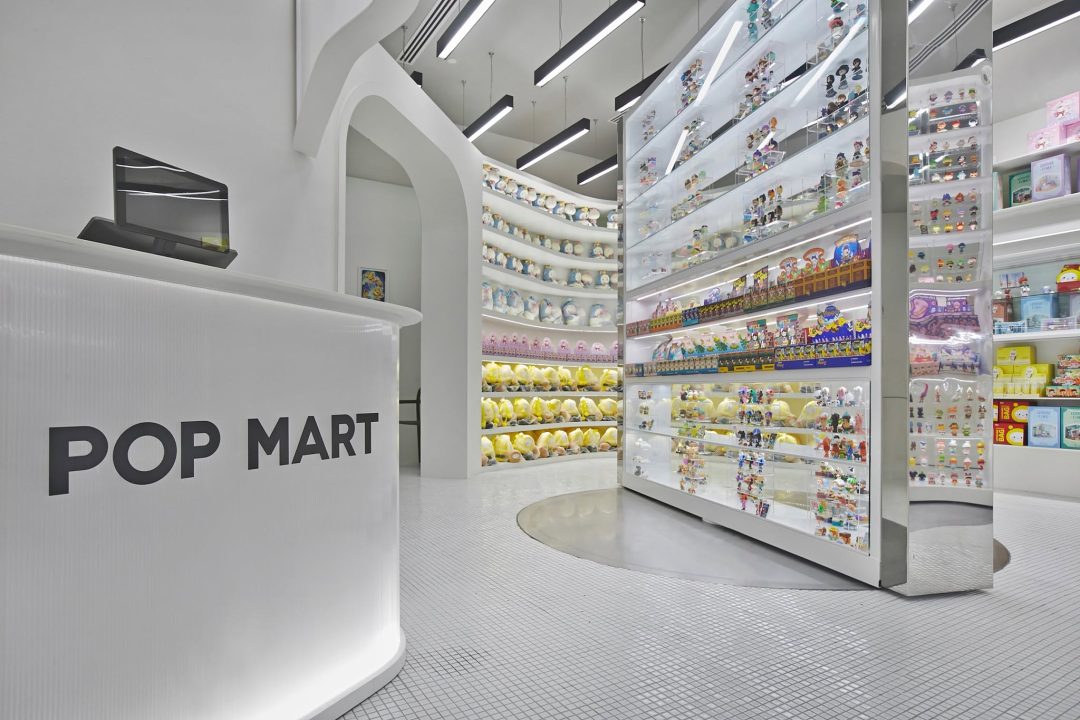
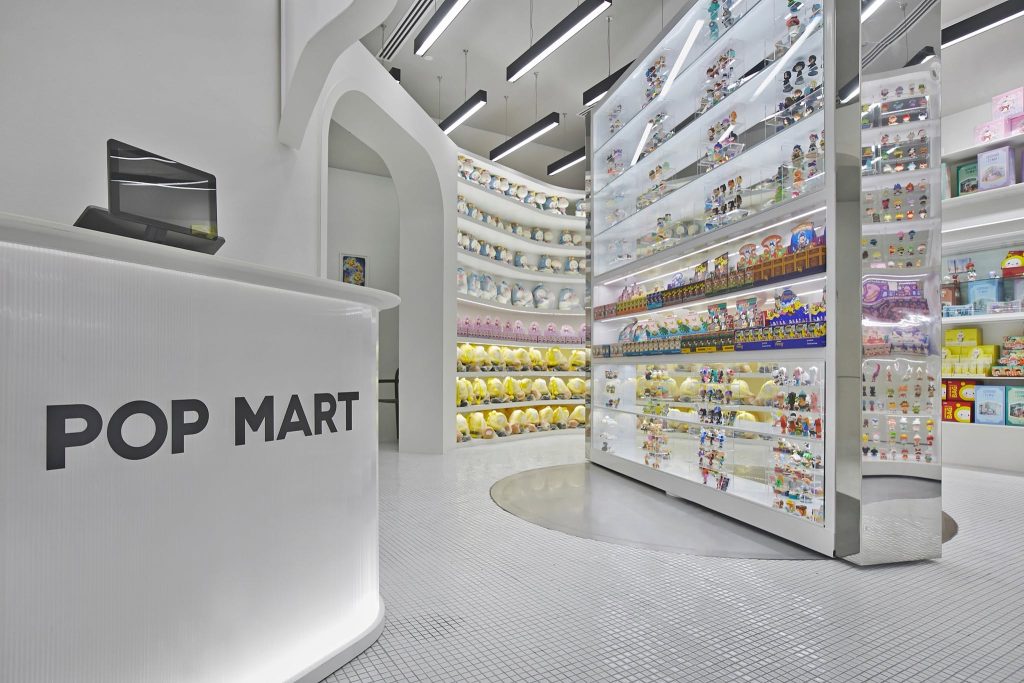
At the same time, the company continues to invest aggressively in overseas expansion. In the United States alone, Pop Mart has added more than a dozen new stores during the first five months of this year and aims to operate more than 100 locations by year-end. Planned flagship stores in New York’s Times Square and Fifth Avenue are expected to further strengthen the brand’s visibility in one of its most important international markets.
The company is also becoming increasingly global from an operational perspective. Overseas employees currently account for roughly a quarter of its workforce, but management expects that proportion to approach 50% within the next few years as international operations continue to expand.
Despite signs of slowing growth, Pop Mart remains confident that its global journey is still in its early stages. Management believes the company can replicate overseas, within a few years, the success that took more than a decade to build in China. With stronger brand recognition, a growing portfolio of characters and expanding international reach, Pop Mart sees substantial opportunities ahead.
For now, Labubu remains the face of the company and one of the most recognizable designer toy characters in the world. Yet Pop Mart’s long-term success may ultimately depend not on how long the Labubu phenomenon lasts, but on whether the company can continue creating new characters that capture the imagination of consumers around the world. If it succeeds, Pop Mart could evolve from the company behind a viral toy craze into a global entertainment powerhouse built on a universe of enduring intellectual properties.