




















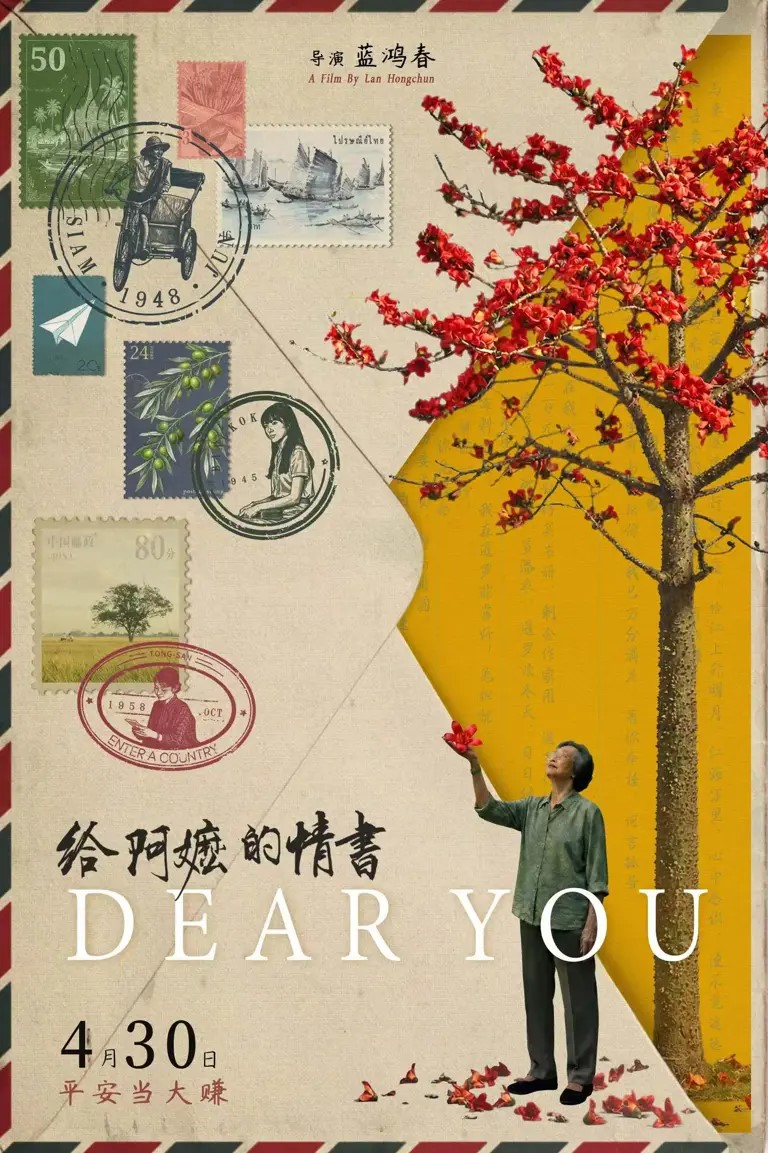
(Singapore, 09.06.2026) In the space of just two weeks, Singapore found itself grappling with two controversies that, on the surface, appear entirely unrelated.
One involves a low-budget Chinese dialect film from China, A Love Letter to Grandma 一 a nostalgic story about migration, family separation, and overseas Chinese identity beginning in 1940s. The other centres on viral, China-originated online videos claiming that Singapore is being “overrun by Indians,” which sparked heated debates about immigration, demographics, and national identity.
The first controversy saw Singapore’s Chinese-language media publish a wave of commentaries warning about the film’s subtle instigation of cultural attachment to ancestral roots. The second led to government crackdown, with authorities ordering social media platforms to block fourteen pieces of content deemed capable of inciting racial hostility.
One triggered debate on cultural identity, the other on race and immigration. Yet both ultimately touch on the same underlying questions that have haunted Singapore since independence: who belong there, what bind the nation together, and how a small, multicultural state preserves social cohesion in an era of easy cross-border mobility.
The “Too Many Indians” Debate
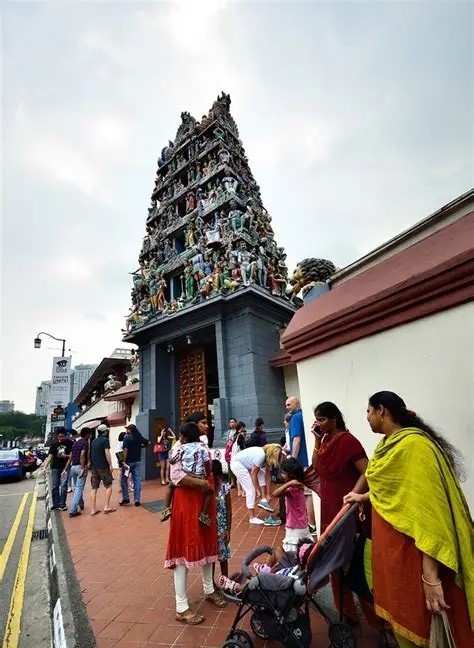
The fiercer controversy erupted in May, when a series of Chinese-language videos began circulating on social media platforms. One widely shared video shows crowds of Indians thronging Pagoda Street in Chinatown. The narration accompanying it suggests that neighbourhoods historically associated with Singapore’s Chinese community are gradually being “taken over” or dominated by Indians.
Other videos went further, claiming that Singapore has become overly dependent on Indian immigration, and suggesting that the country’s cultural identity is slowly being diluted.
Across related discussion forums and social media comment sections in both Singapore and China, the phrase “There are so many Indians in Singapore, it’s scary” surfaced as a recurring cry.
Singapore supporters of these narratives trace the Indian influx back to the Comprehensive Economic Cooperation Agreement (CECA), signed between Singapore and India in 2005. They argued that the agreement had facilitated greater inflows of Indian professionals into sectors such as technology, finance, consulting, and other professional services. Many pointed to the high visibility of Indians in multinational corporations, the tech industry, and even leadership positions as evidence of a significant demographic shift.
The more alarmist ones questioned whether large-scale immigration of foreigners would eventually alter the country’s ethnic balance, and whether Singapore’s model of multiculturalism would remain intact if demographic trends shift too far. Some argued that Singapore’s social compact has worked in part because ethnic Chinese remain a substantial majority. If that is undermined, they suggested, the foundations of racial harmony could come under strain.
For those who support taking in immigrants, these concerns misrepresent the population data and overlook Singapore’s economic reality. The country, they noted, has a small domestic labour pool and relies heavily on international talent to stay globally competitive. Immigrants also help offset an ageing population and the country’s persistently low birth rates.
Official figures continue to show that ethnic Chinese make up about three-quarters of Singapore’s citizen population, while ethnic Indians account for less than one-tenth. Government officials therefore asserted that claims of Singapore being “overrun” are not only inaccurate but potentially dangerous.
When Debate Turns Into Hostility
As online discussions intensified, authorities concluded that some videos had crossed a line from political debate into racial incitement. Following investigations by the Ministry of Home Affairs and the Singapore Police Force, the government determined that some of these appeared to be designed to stir hostility towards Singapore’s Indian community.
According to the Ministry of Home Affairs, these productions and the ensuing discussions initially emerged on China-based online platforms before spreading to social media networks accessible in Singapore. Some opinions seek to pit Singapore’s racial communities against one another, including flinging derogatory stereotypes such as jokes about pervading “curry odour” in Singapore’s streets. Some disparagingly suggested Singapore should be renamed “Indiapore“.
Some videos combined footage from local Hindu festivals, gatherings of foreign workers, and unrelated overseas scenes showing large crowds of Indians, creating a misleading impression that Singapore is experiencing an uncontrolled influx of South Asians.
In response, police invoked the Online Criminal Harms Act and issued 14 disabling directions to platforms including YouTube, Facebook, and X, requiring them to block access to the concerned contents for users in Singapore.
Law and Second Home Affairs Minister Edwin Tong described the targeted videos as attacks on the foundations of Singapore’s multiracial society. “The contents attack Singapore’s multicultural model and seek to drive a wedge between different racial communities,” he said.
But authorities stressed that there is no evidence suggesting the “campaign” was orchestrated by a foreign government. Investigators believe the contents most likely emerged independently from various online communities and individuals abroad.
Minister for Digital Development and Information Josephine Teo also cautioned Singaporeans against being influenced by divisive narratives, adding that racial harmony had taken decades to build but could be damaged very quickly.
The government’s strong response reflects more than concern over some disparate viral posts. It reflects a deep historical memory. The racial riots of 1964 remain among the most traumatic episodes in Singapore’s history, having left dozens dead and hundreds injured, and profoundly shaping the thinking of the country’s founding leaders.
Since then, racial harmony has been treated not merely as a social ideal but as a matter of national security. Singapore’s legal framework imposes strict penalties on racial incitement, while housing policies, education, and political institutions are all designed to encourage integration among ethnic groups.
From the government’s perspective, narratives that encourage hostility toward any racial community are not simply offensive—they are potential threats to social stability.
A Different Controversy, the Same Anxiety
At almost the same time, Singapore was also drawn into another debate—this one centred on the recently released China film A Love Letter to Grandma.
The film is a modestly budgeted Teochew-language drama set against the backdrop of migration from China to Southeast Asia in the 1940s. It focuses on family bonds, handwritten letters, and the emotional experience of separation. There are no overt political messages.
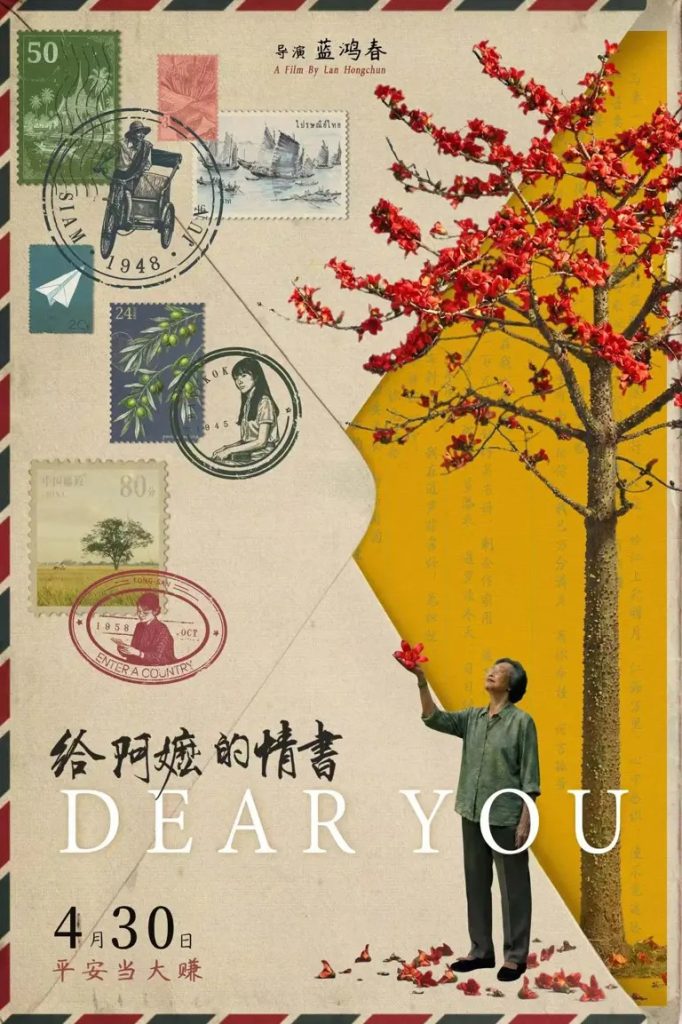
Yet despite not having been shown in Singapore, the film elicited unexpectedly intense discussions.
Starting from late May, Singapore’s leading Chinese-language newspaper Lianhe Zaobao published a series of commentaries examining the film and warning about its broader implications. The most prominent piece, written by its China correspondent, was especially critical, arguing that although the film is not overt propaganda, it functions as a powerful emotional and cultural narrative that could undesirably strengthen cross-border Chinese identity.
It further suggested that the film raises difficult questions for Singapore about where cultural affinity ends and political identity begins.
Other commenters also warned that such historical yarn could deepen emotional attachment to ancestral homelands and blur the line between cultural heritage and present-day national identity.
These reactions unfolded against a broader backdrop of China’s expanding global cultural influence, particularly after incidents in which some Chinese tourists lambasted ethnic Chinese in Southeast Asia—especially Singaporeans and Malaysians—for not sufficiently acknowledging their ancestral ties to China.
A line repeatedly emerged in rebuttal by offended Singaporeans: “China is not our motherland. Singapore is our country.”
To many observers, however, especially in China, the reactions to the film appear excessive. How could a quiet story about family, memory, and migration be politically sensitive?
The answer lies in a long-standing Singaporean concern. Although Singapore is a Chinese-majority society, its leaders have spent decades deliberately cultivating a national identity that transcends ethnicity. After Singapore gained independence in 1965, the government promoted English as the common working language while fostering loyalty to Singapore and eliminating attachment to ancestral homelands.
The goal is to build a shared identity uniting Chinese, Malays, Indians, and others within a single nation and under one flag.
A Love Letter to Grandma touches directly on themes of roots, migration, and belonging. Its emotional portrayal of overseas Chinese ties to China resonates strongly among many in Southeast Asia. This sentiment unsettled some policymakers and social commenters.
Last month while in Shanghai, Senior Minister Lee Hsien Loong reiterated that Singapore is “a Chinese-majority country, but a separate country with separate sovereignty from China,” averring that Singapore’s relationship with China is based on shared interests rather than ethnic identity.
A Small Nation’s Big Sensitivities
Viewed separately, a nostalgic film and some anti-Indian online memes may seem to have little in common. But in Singapore’s political context, both expose hidden tensions in its social and political milieu.
Singapore’s leaders have long been acutely aware of the country’s vulnerabilities. It is a tiny state with limited natural resources, situated in a complex regional environment. Its prosperity depends heavily on social stability, international credibility, and economic openness.
As a result, issues that might elsewhere be treated as ordinary political disagreements often take on far greater significance in Singapore.
In that sense, a Teochew grandmother’s love letter and a viral insult about “curry odour” constitute symbols of something much larger and dangerous.