





















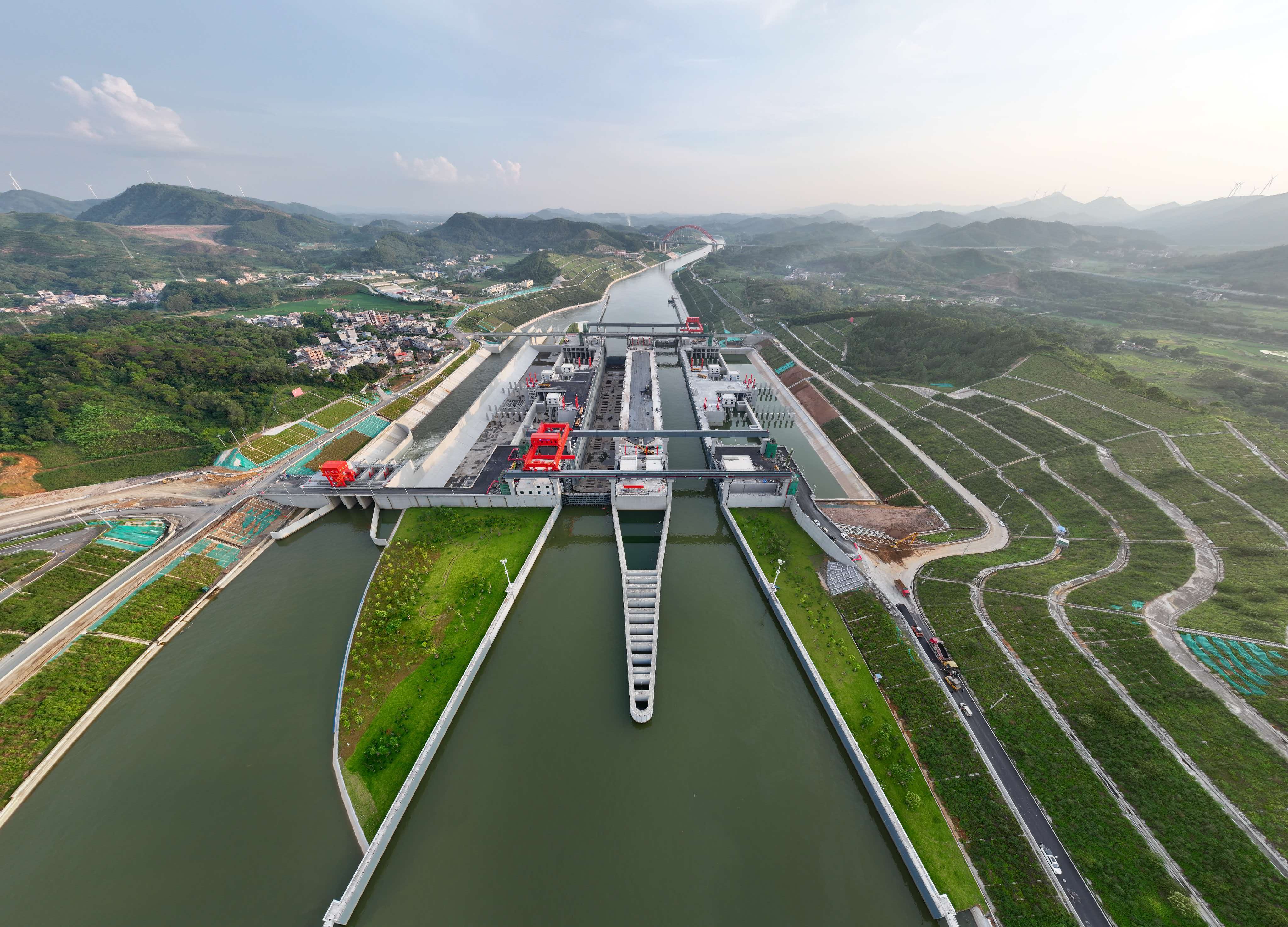
(2026.9.3 PINGLU CANAL) With less than two weeks to go before the Pinglu Canal (平陆运河) officially opens for navigation, this 134.2-kilometer “golden waterway” linking the vast and otherwise maritime-isolated hinterland of southwest China to the open seas of the Beibu Gulf off Guangxi, is far more than a mega-engineering project redefining regional economic geography.
It carries the future of countless people and businesses. Across the province of Guangxi, from port managers to multinational corporations and frontline engineers, many are preparing for this same epoch-marking moment.
Nanning Port’s Gaze: From “Inland River Port” to “International Gateway”
For General Manager Wang Fakun (王发坤) of Nanning Port, this moment represents one of the most thrilling countdowns of his career. He would soon be witnessing his humble river port metamorphosing into a key inland transshipment node serving 5,000-tonne international vessels coming up the canal.
Mr Wang had been eagerly waiting to receive Nanning Port’s international vessel entry permit from the central government—a clearance that officially opened it to foreign ships on August 28. This regulatory milestone opened Nanning Port to the world, which is positioned at the upstream end of the canal, in contrast to Qinzhou Port on the coast.
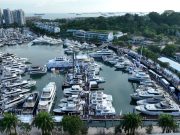
He told Southeast Asian reporters covering the Pinglu event that infrastructure upgrades at and around his port have entered their final sprint: berths capable of handling 5,000-ton vessels are undergoing final testing, while a new railway link for cargo shipping is nearing completion.
Pointing to the port area, which is humming now with orderly preparations for the big day, he said with confidence: “We are getting ready for the surge that’s coming.”
Upon its opening, the Pinglu Canal will enable ships to reduce voyage distances up to 560 kilometers and cut travel time by three to five days by turning south toward Qinzhou seaport at the junction of Nanning instead of continuing east to Guangdong, thereby yielding significant savings in logistics costs.
“By this time next year, our yards will be full of containers,” Mr Wang predicted. In his view, Nanning Port will become a “vital node” connecting western China with Asean — no longer an ordinary port; it will be a genuine gateway.
A Multinational Giant’s Bet: The Canal as the “Key Decision Factor”
Similar expectations are palpable at the office of French chemical giant SNF. The global leader in water treatment and polymer chemistry is building its largest production base in south China at Nanning’s eastern new district.
The project represents a total investment of 1.5 billion yuan (about S$283 million) and is scheduled to begin production in 2027, with capacity rising to 370,000 tons of paper-making chemicals annually.
SNF Vice President Cedric Fillon made it clear that the Pinglu Canal was a “key decision factor” in his company’s picking Nanning. He looks forward to the canal’s opening as its direct link to the Beibu Gulf will offer an economically attractive and fast trade route for bulk chemicals heading for Southeast Asian markets.
“This will allow us to be prompt in supplying southern China and Asian markets,” Mr Fillon enthused.
The project, which is a vital part of SNF’s global expansion strategy, is advancing around the clock. The bustling construction site itself is a vote of confidence in the canal’s charming prospects.
In Nanning, the local government itself is building a high-end papermaking and new chemical materials industrial chain, with the country’s biggest paper producer Sun Paper as the leading enterprise. SNF’s new branch in Nanning is to play a key part in this chain.
An Engineer’s Pride: The Last Mile to a “World-First” Legacy
Working his head off at the forefront of the canal’s construction, Chief Engineer Pan Jian (潘剑) is leading his team through final navigation tests to ensure flawless sailing.
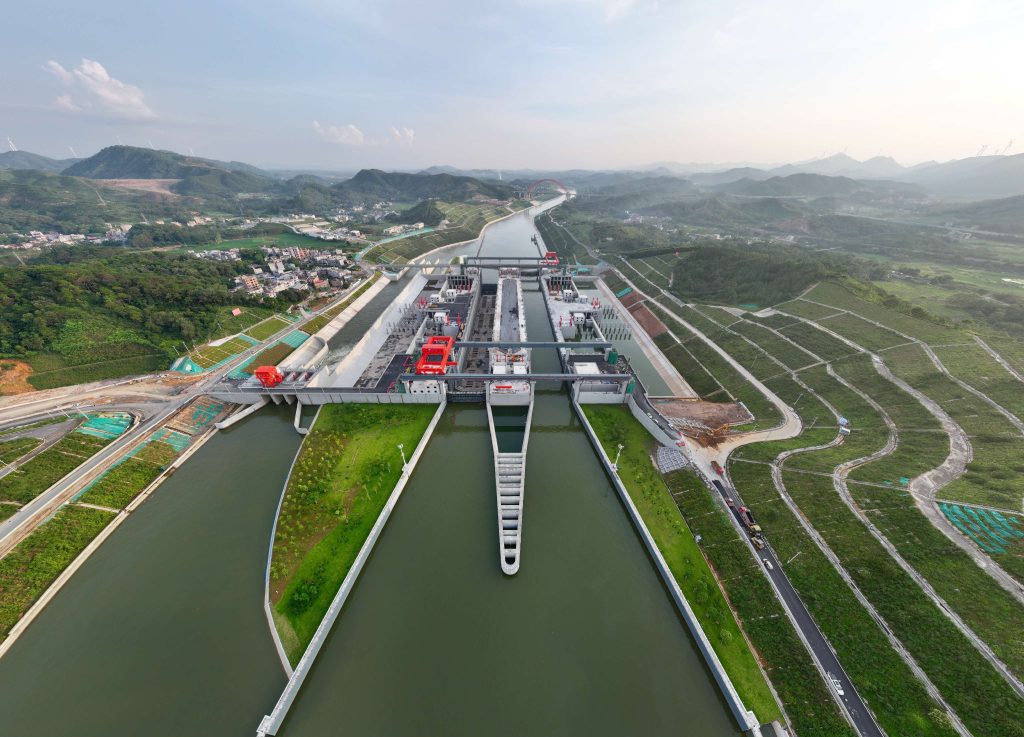
The Pinglu Canal, forged through years of painstaking planning and implementations, stands as a monument to engineering. Most remarkably, to overcome a natural water-level drop of 65 meters along the canal while also aiming to conserve excess water released to elevate passing ships, the project utilizes a “world-first three-stage water-saving lock design.”
Pointing to the sprawling Madao (马道) and Qishi (企石)junctions (梯级枢纽))along the canal, he explained that these are water-saving basins that act like underwater staircases, recycling over 60% of water per lock cycle. They would help save more than one billion cubic meters of water annually.
“We have just completed several days of real-ship trials, and several 5,000-ton vessels passed smoothly through all the locks,” said Mr Pan, a hint of fatigue on his face but beaming with sense of achievement.
He told reporters that the canal project is over 98% complete, and his team remains on duty, fine-tuning the rapid gate system — which opens in one minute and closes in 30 seconds for ships — for final adjustments. For him, ensuring that this waterway, which carries the dreams of regional development and prosperity, operates safely and unimpeded is the best tribute he and all its builders can offer to its future.
Epilogue
From September 15 on, containers from Nanning Port, chemicals from the SNF plant, and bulk goods from the vast southwestern hinterland will all flow down this new waterway toward the sea with unprecedented saving of time, cost, effort and distance. But this canal does not carry just ships and goods; it also embodies a shared vision and collective hope of multitudes for regional rise.
Twelve more days to go.