

























(Singapore, 1.10.2026) For more and more young Chinese workers, a job is worth more than its salary.
Its value is also measured by weekends they can truly enjoy, the freedom to ignore their bosses’ messages after office hours, bathroom breaks without anxiety, and the compensation they can expect if they suddenly lose their jobs.
Ahead of this year’s National Day holiday, these frustrations boiled over over one perennial workplace gripe: public holiday “make-up workdays” (调休).
In mid-September, Chinese social media users turned the public holiday calendar into a tongue-twister, mocking what they saw as an endless cycle of government-mandated workdays and days off. Under the official schedule, the Mid-Autumn Festival break this year ran from Sept 25 to 27, followed by the National Day holiday from Oct 1 to 7. To compensate, however, workers had to work on Sunday, Sept 20, and Saturday, Oct 10.
The State Council’s General Office designed the arrangement to create longer holiday breaks. The practice is hardly new, and long holidays remain popular. But more workers are questioning why they must surrender their weekends for longer breaks.
Reuters reported on Sept 29 that online discussions of the practice had drawn more than 360 million views and 120,000 posts on Weibo. A 27-year-old tourism worker told Reuters that the arrangement had taken away weekends that should have been hers. To protest during the holiday, she planned to “not travel, not order food delivery and not take taxis”, cutting spending just as the government seeks to revive sluggish consumption through the long breaks.
The discontent goes beyond holiday scheduling. Young Chinese are factoring employers’ treatment of workers into their spending decisions.
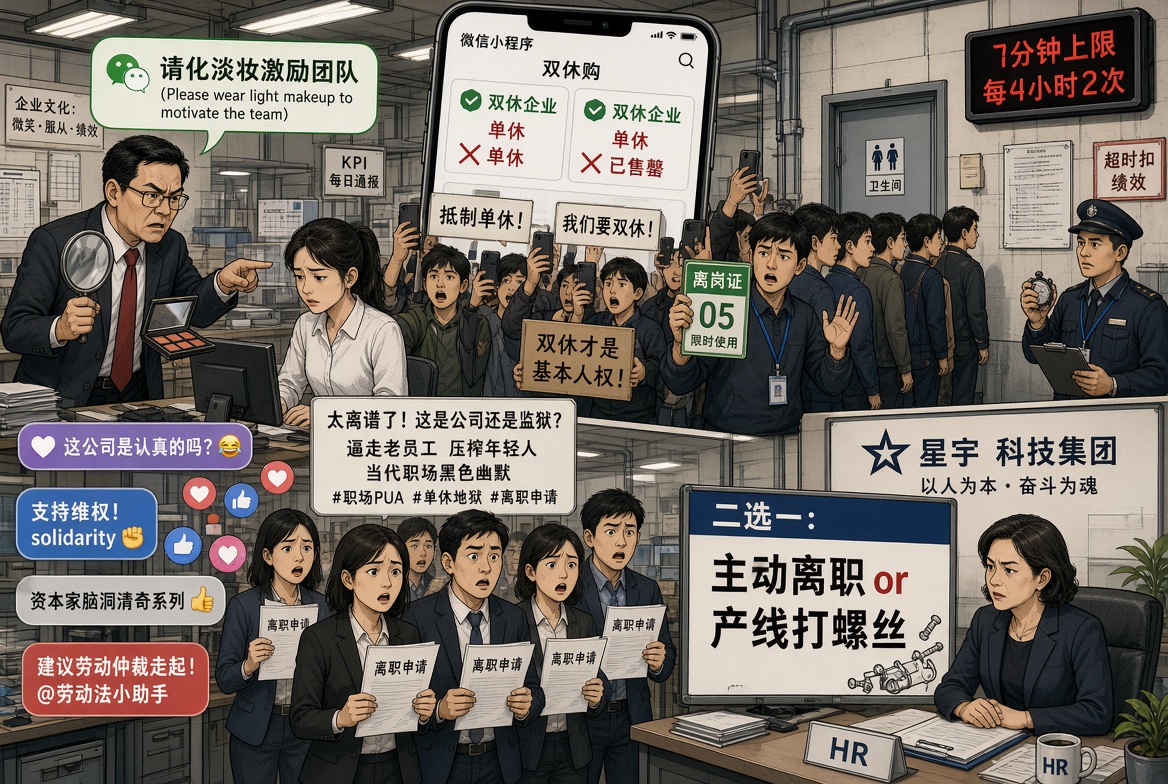
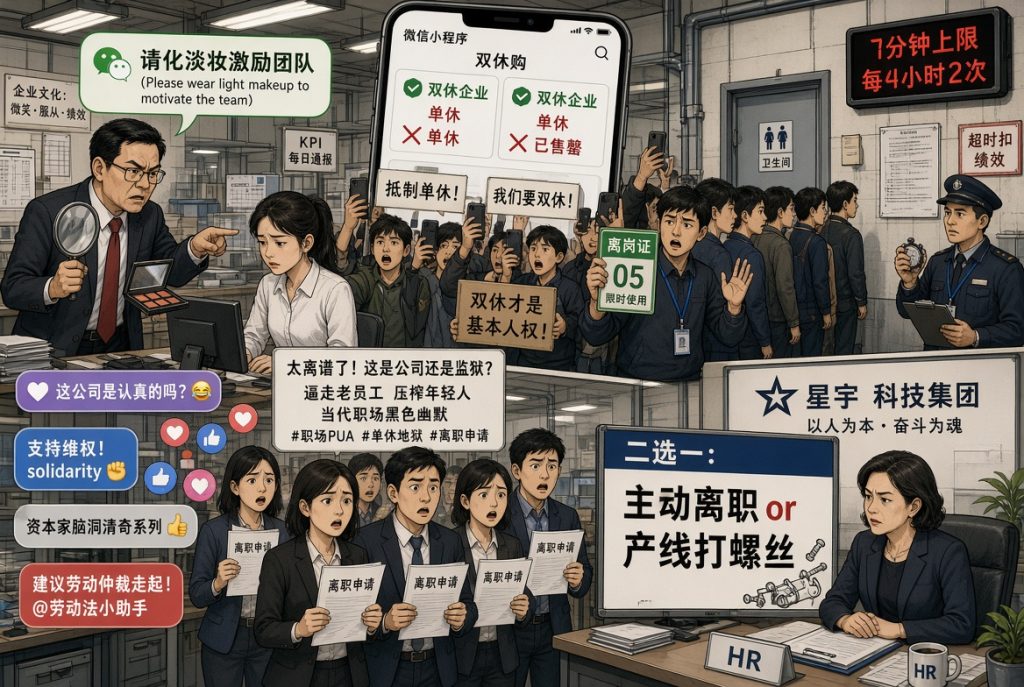
This summer, a group of young workers calling themselves “working people” developed a WeChat mini-program, “Two-Day Weekend Shopping” (双休购), which rates companies on whether they give employees two days off a week. It encourages consumers to support employers offering better working conditions, as the traditional five-day workweek becomes less common in China.
The platform quickly gained traction, but by September it had become harder to find online, with some content flagged for regulatory violations. Meanwhile, some companies began promoting their five-day workweeks to appeal to consumers.
A user surnamed Liu from Anhui province, who joined the discussion, told BBC Chinese: “If we don’t stand up for ourselves, who else will stand up for us?”
The significance lies less in how many workers share this view than in how it recasts the employer-employee relationship. Workers are also consumers. If they cannot negotiate better conditions at work, can their spending choices become a form of protest?
The debate is also spilling from social media into offices and factories, where workers are challenging workplace rules.
This year, two Chinese labor disputes over bathroom breaks brought the limits of workplace control into focus.
In Nantong, Jiangsu province, an employee spent unusually long periods in the bathroom 11 times in a month, with the longest lasting six hours and 21 minutes. The court ruled that the absences far exceeded normal physiological needs and upheld the company’s dismissal.
In Beijing, another employee suffered sudden abdominal pain while on duty. After arranging for a colleague to cover his post, he spent just three minutes in the bathroom. The company still dismissed him for leaving without authorization. The court ordered it to pay more than 60,000 yuan (about S$11,400) in compensation.
The rulings went in opposite directions, but together they established a distinction: employers can enforce workplace discipline, but normal bodily needs are not misconduct.
Bathroom breaks may seem a trivial issue, but they expose a fundamental question about workplace control: workers sell their time and labor, but does that entitle employers to monitor even their most basic bodily needs?
An even greater concern this year has been the prospect of losing a job without warning.
Automotive lighting maker Xingyu Automotive Lighting (星宇汽车照明) in Changzhou, Jiangsu, recruited 440 graduates from the class of 2026 through campus hiring, of whom 372 eventually joined the company. Just over a month later, it began transferring or laying off some of the new hires as production orders and staffing needs changed. In the end, 107 employees had their contracts terminated.
The graduates did not simply accept the decision. Some compiled recordings, employment contracts and recruitment materials and lodged complaints with Xingyu’s multinational automotive clients. Volkswagen China confirmed an investigation, while the complaints also drew scrutiny from the Hong Kong Stock Exchange, where Xingyu was seeking a listing.
Xingyu later admitted that its decision had been flawed, apologized publicly and acknowledged poor communication with employees. It offered each of the 107 workers a monthly job-search and living allowance of 5,000 yuan for three months. Those still unemployed by the end of November would receive another six months of compensation based on their original salaries.
By Sept 7, 71 had found new jobs and another 22 had received offers.
A job’s value now carries another calculation: If I lose it without warning, what compensation will I receive?
This raises a related question: When workers choose to change their career paths, what price must they pay?
One graduate enrolled in a postgraduate programme despite having signed an employment agreement. The graduate was ordered to pay 50,000 yuan in damages for terminating the agreement. He later asked the court to reduce the sum.
Such disputes reflect the uncertainty of today’s job market. If companies can revise hiring plans when business conditions change, should young workers have similar freedom to reconsider their choices and redirect their lives?
From make-up workdays and the fight for two-day weekends to bathroom-break disputes and sudden layoffs, these cases may appear unrelated. Together, however, they point to a broader shift: young Chinese workers are reassessing what they give up and what they should receive in return for their labor.
In the past, having a job was itself a source of security. Workers were expected to adapt to employers’ schedules, efficiency demands and business risks.
Now, amid employment pressures, subdued income expectations and corporate uncertainty, they are scrutinizing another cost: beyond their salaries, how much of their time and lives must they surrender?
Data from China’s Supreme People’s Court show that courts nationwide accepted 648,000 labor-dispute cases in the first nine months of 2025, up 37.5% from a year earlier. The increase does not prove that workers are universally more willing to defend their rights, but it underscores the growing prominence of labor disputes.
The actions may not transform workplace culture overnight. But they are bringing issues once dismissed as unavoidable — “nothing can be done” or “that’s just how things are” — into public debate and, in some cases, negotiation.
The shift is not that Chinese workers have suddenly become unwilling to work. Rather, more are asking who gets to set the price of a job.
As wages stagnate and job prospects weaken, time off, control over one’s own body and protection from sudden job loss take on greater value.
The repricing of work may have just begun.