

























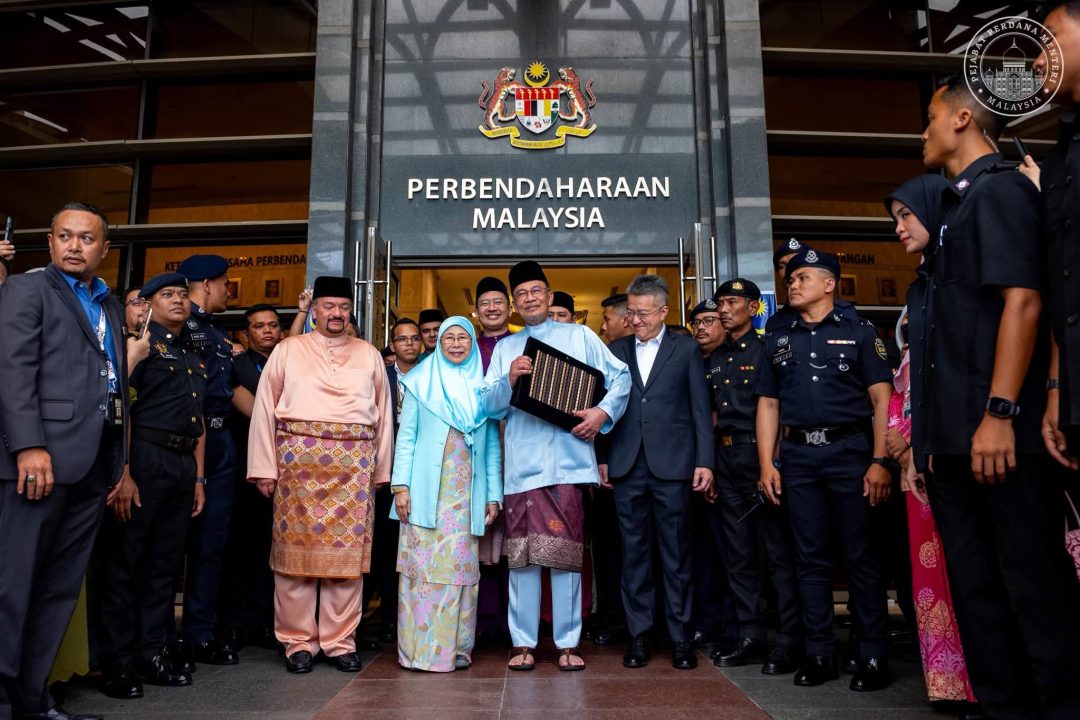
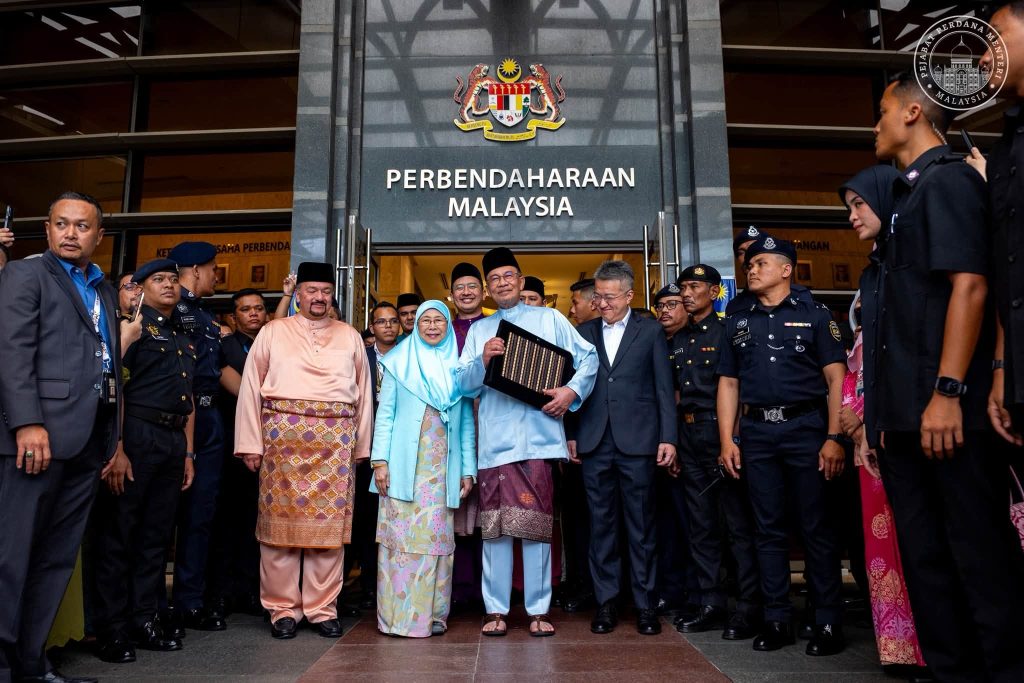
(Singapore, 09.10.2026)Malaysia has unveiled a RM459.8 billion (US$112.5 billion) budget for 2027, promising higher minimum wages, personal income tax cuts and more financial support for households as Prime Minister Anwar Ibrahim seeks to ease living costs while keeping the country’s finances on track ahead of a possible general election.
Presenting the budget in parliament on Friday (Oct 9), Anwar said stronger economic growth must translate into better wages, greater household savings and more opportunities for small businesses, as many Malaysians continue to face pressure from rising prices despite the country’s relatively resilient economy.
The spending plan represents a 3.6% increase from the revised RM444.1 billion allocated for 2026, with RM376.8 billion earmarked for operating expenditure and RM83 billion for development projects.
The announcement comes at a politically sensitive time, with Malaysia’s next general election due by February 2028, although speculation continues over an earlier vote. Anwar’s ruling coalition has also faced electoral setbacks this year, adding pressure on his administration to deliver more visible economic benefits.
Higher Wages and Tax Relief for Households
One of the budget’s biggest announcements is an increase in Malaysia’s monthly minimum wage from RM1,700 to RM2,000 starting June 2027, a move expected to benefit more than four million workers.
However, micro, small and medium enterprises with annual revenue below RM50 million will be temporarily exempted to give businesses more time to adjust.
The government also plans to introduce a minimum starting salary of RM2,500 a month for semi-skilled workers and graduates, addressing concerns that wages have not kept pace with workers’ qualifications and productivity.
Government-linked companies and investment firms have also committed to raising their living wage benchmark from RM3,100 to RM3,400 monthly, potentially benefiting another 230,000 workers.
Middle-income households will receive additional support through personal income tax changes, including an increase in individual tax relief from RM9,000 to RM12,000, marking the first revision since 2010.
Tax rates for individuals earning taxable income between RM70,000 and RM100,000 will be reduced to 18%, while those in the RM100,000 to RM150,000 bracket will pay 24%.
According to Anwar, the combination of higher tax relief and lower rates could provide up to RM1,600 in additional disposable income for around five million taxpayers.
Other tax relief measures will be expanded to cover postpartum care and a wider range of expenses related to caring for parents and grandparents.
The government is also extending support to Malaysia’s growing gig economy, with a RM160 million package jointly funded with ride-hailing company Grab to improve earnings, insurance coverage and vehicle maintenance assistance for delivery riders and drivers.
Around 600,000 Malaysians earn their living through ride-hailing and delivery platforms, while taxi and bus drivers will receive separate one-off assistance payments.
Higher Spending, but Smaller Fiscal Deficit
Despite the larger budget, Malaysia aims to narrow its fiscal deficit to 3.3% of gross domestic product in 2027, compared with a revised target of 3.6% this year, as the government works towards reducing the shortfall to 3% by 2028.
The 2026 deficit target was raised from an earlier 3.5% after the US-Israeli war on Iran pushed global energy prices higher, increasing Malaysia’s fuel subsidy burden.
Government spending on subsidies and social assistance is expected to reach RM74.5 billion this year, up 34.7% from 2025, before easing slightly to RM72.7 billion in 2027.
Higher energy costs have created additional pressure on public finances, but Anwar maintained that the government remains committed to fiscal consolidation while retaining enough flexibility to protect households from unexpected economic shocks.
Federal revenue is projected to increase 4.7% to RM380.8 billion next year, supported partly by higher contributions from national oil company Petronas.
Petronas is expected to contribute RM32 billion to government coffers in 2027, compared with a revised RM27 billion this year.
Malaysia’s economy is forecast to grow between 4.2% and 5.2% in 2027, while growth this year is expected to reach the upper end of the government’s revised 4.8% to 5.3% range.
Inflation, meanwhile, is projected at between 1.8% and 2.8% next year, reflecting the delayed impact of higher energy, food and production costs.
Beyond household assistance, the budget includes stronger support for East Malaysia, with Sabah receiving RM18.7 billion and Sarawak RM16.2 billion for infrastructure, electricity supply and education.
The government is also increasing investment in artificial intelligence and digital skills, including another 100,000 free AI subscriptions and plans to develop a sovereign AI cloud to keep sensitive national data under domestic control.
Nearly RM15 million will be allocated to AI Malaysia Bhd to strengthen the country’s AI ecosystem, supporting its ambition to develop 200,000 skilled AI workers.
The budget will face parliamentary debate beginning Oct 12, followed by responses from government ministries later in the month, as attention turns to how Malaysia will finance higher wages and household assistance while continuing to reduce its fiscal deficit.