






















(Singapore, 14.10.2026)Global demand for solar energy is growing as countries seek cleaner and more secure electricity supplies, but the industry’s biggest manufacturing hub is facing a deepening crisis, with China’s leading solar companies cutting tens of thousands of jobs amid persistent overcapacity and falling prices.
Five of China’s largest solar manufacturers, Longi Green Energy, Trina Solar, Jinko Solar, JA Solar and Tongwei, reduced their combined workforce by 40,589 employees in 2025, according to company filings reviewed by Reuters.
The companies employed 154,061 people at the end of last year, representing a 21% decline from 2024. This followed a 31% reduction the previous year, meaning the five manufacturers have collectively eliminated roughly half their workforce over two years.
The cuts highlight a growing contradiction in the global renewable energy industry. Solar power is becoming increasingly important to energy security, particularly as the conflict involving Iran and disruptions around the Strait of Hormuz raise concerns about dependence on fossil fuels.
Yet the companies supplying much of the world’s solar equipment are struggling to make money, despite record installations and growing demand for clean electricity.
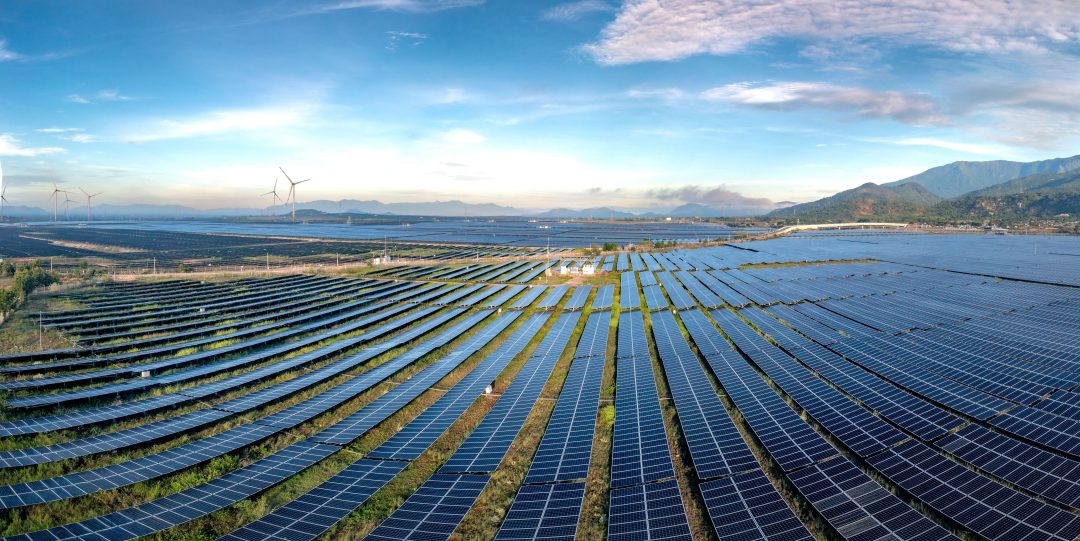
China has built enough solar manufacturing capacity to meet approximately twice the world’s demand, creating intense competition that has pushed prices below sustainable levels for many producers.
According to the latest Report on China Energy Development 2026, China now supplies about 80% of the world’s solar photovoltaic modules and 70% of wind power equipment, demonstrating its dominance in global clean energy manufacturing.
That manufacturing strength has helped lower the cost of renewable energy worldwide, but it has also left Chinese producers vulnerable to prolonged price wars.
Record Solar Growth Fails to Lift Manufacturers
China’s renewable energy expansion reached another milestone in 2025, when the country’s combined installed wind and solar capacity surpassed coal-fired thermal power capacity for the first time.
By the end of the year, wind and solar installations had reached 1.84 billion kilowatts, equivalent to 1,840 gigawatts (GW), according to the industry report.
Renewable energy sources accounted for more than 60% of China’s total installed power generation capacity, while additional electricity generated from wind, solar and biomass met more than 90% of the country’s increase in electricity consumption.
The expansion reflects China’s efforts to strengthen energy security, reduce dependence on fossil fuels and support growing electricity demand from advanced manufacturing and emerging technologies.
However, the rapid increase in installations has not translated into stronger earnings for solar equipment manufacturers.
According to energy research consultancy Thunder Said Energy, the average selling price of solar modules produced by China’s five leading manufacturers dropped to US$130 per kilowatt in 2025, compared with US$350 in 2019.
Their average earnings before interest and taxes (EBIT) margin deteriorated to negative 13%, compared with negative 8% in 2024, indicating that operating losses have continued to widen.
Although reducing headcount can help manufacturers control expenses, analysts warn that cost-cutting alone cannot restore profitability when products are being sold below production costs.
Jefferies analyst Alan Lau told Reuters that companies would continue losing money unless the industry addresses its fundamental supply-demand imbalance.
An earlier attempt by major polysilicon producers to consolidate production capacity and support prices failed to gain sufficient industry backing, leaving manufacturers without a clear solution to the oversupply problem.
The workforce reductions have affected production, research and development, and administrative operations.
Trina Solar reported voluntary employee turnover of between 18% and 19% in 2025, while Tongwei disclosed a 21% reduction in technical staff. Longi also reduced its research and development spending by 15%.
None of the five manufacturers publicly announced layoffs during the period, and none responded to Reuters’ requests for comment.
Slower Installations Add Pressure to Industry
The outlook for solar manufacturers has become more challenging in 2026 as China’s domestic market slows following changes to renewable energy pricing policies.
The government has replaced guaranteed returns for renewable energy projects with market-based electricity pricing mechanisms, making developers more cautious about new investments.
Jefferies expects China to install between 150 GW and 200 GW of solar capacity this year, down sharply from the record 315 GW installed in 2025.
International demand has also failed to absorb the industry’s excess production, with China’s exports of solar cells and panels falling 10% by volume during the first eight months of 2026 compared with the same period last year.
Morningstar analyst Cheng Wang believes manufacturers have likely continued reducing their workforces this year as weaker demand adds to the pressure from excessive production capacity.
However, the industry could be approaching a turning point as Beijing prepares to introduce stricter manufacturing standards.
From January 1, 2027, new energy-intensity requirements for polysilicon and silicon wafer production, together with tougher efficiency standards for solar modules, will take effect.
Manufacturing facilities that cannot meet the new requirements could be forced to close, potentially helping remove older and less efficient production capacity from the market.
Wang expects overcapacity to persist into 2027 but believes the worst of the industry’s downturn may be over by then.
For the wider solar industry, China’s manufacturing difficulties present both opportunities and risks.
Lower equipment prices have made solar projects more affordable for countries expanding renewable electricity generation, supporting the global shift toward cleaner energy.
However, continued financial losses and shrinking workforces could also place pressure on manufacturers’ ability to invest in new technologies and maintain production over the longer term.
With China remaining the dominant supplier of solar equipment worldwide, the effectiveness of its upcoming manufacturing standards and efforts to reduce excess capacity will be closely watched by renewable energy developers and investors.
The challenge is no longer simply how quickly solar power can expand, but whether the companies producing the technology can build a financially sustainable industry alongside that growth.