





















(SINGAPORE, 29.09.2026)Today, more than 300 policymakers, business leaders, investors and experts gathered in Singapore for the opening of Asia New Vision Forum (ANVF) Innovation 2026, as geopolitical uncertainty and rapid advances in artificial intelligence reshape the economic and business landscape across Asia.
Organised by Caixin Global with support from the Singapore government, this year’s forum carries the theme “Disruption Meets Resilience.” Discussions span geopolitics, artificial intelligence, energy transition, biotechnology, investment and changing consumer markets, with a particular focus on how businesses can respond to structural shifts already taking place.
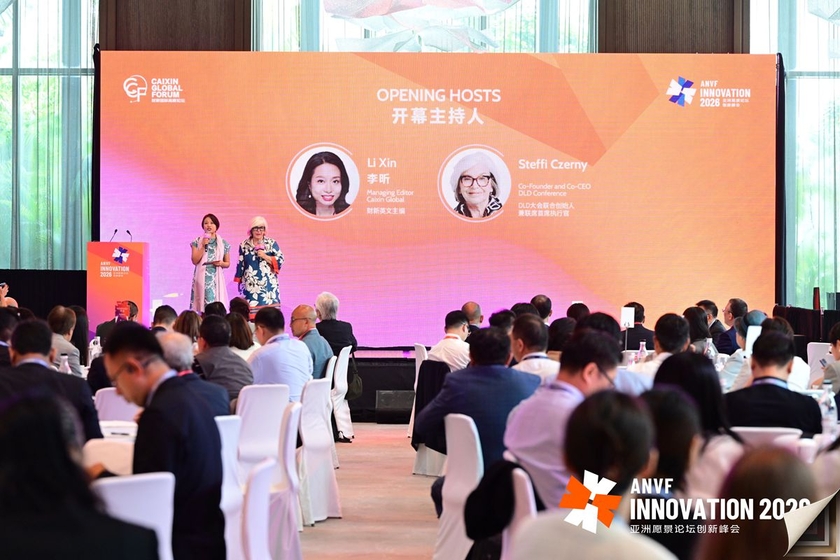
The 2026 edition also marks a change in the forum itself. After three editions since its launch in 2023, ANVF has introduced the “Innovation Forum” sub-brand, moving beyond macro-level geopolitical dialogue to place greater emphasis on business solutions, technology deployment and industry applications.
Opening the forum, Wang Shuo, Editor-in-Chief of Caixin Media, described the forces transforming the world as twofold: the unraveling of the old order and the rise of AI.
Both, he said, are simultaneously “breaking down and building up,” while resilience ultimately comes from a sense of meaning and purpose.
Heng Swee Keat, Co-Chair of ANVF and Singapore’s former Deputy Prime Minister, said countries are navigating technological advances, energy transition, supply-chain realignment and geopolitical tensions at the same time. Against this backdrop, he stressed the importance of maintaining stability while advancing economic and industrial restructuring, and strengthening capabilities through cooperation.
Asia Searches for Stability
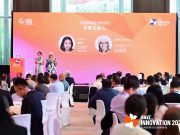
The opening panel turned to Asia’s role amid a more fragmented global environment.
Yu Tiejun of Peking University, Joseph Liow Chinyong, Dean of the Lee Kuan Yew School of Public Policy at the National University of Singapore, and Yasuto Watanabe, Director and CEO of the ASEAN+3 Macroeconomic Research Office, examined whether Asia can continue to provide stability as geopolitical and economic pressures intensify.
The discussion reflected a broader theme running through the forum: disruption is increasingly affecting not only international relations but also investment decisions, technology deployment, capital flows and corporate strategy.
Day-one sessions examined China’s growth outlook, emerging-market investment and changes in Asian travel, culture and consumption. Speakers included senior representatives from Standard Chartered, China Securities, Zhejiang University, Trip.com and H World Group.
ASEAN received particular attention through the ASEAN Business Forum: The Future of Capital & Connectivity, which focused on the region’s growth prospects, renminbi internationalisation and the changing demands of a new generation of consumers.
Chinese Ambassador to Singapore Cao Zhongming and Malaysia’s Deputy Minister of Investment, Trade and Industry Sim Tze Tzin delivered keynote addresses, while executives and investors from Alibaba Cloud, Standard Chartered China, GSR Ventures and Huafu Securities joined the discussions.
From AI Ambition to Real-World Deployment
Artificial intelligence formed another major thread of the first day, with discussions moving beyond the rapid development of AI models to the practical constraints surrounding their deployment.
Speakers from the Bank for International Settlements, Arm Technology (China), MATRIX Robotics, Squirrel Ai Learning and Momenta Robotaxi examined computing capacity and the application of AI across businesses and industries.
The risks accompanying that transformation were also addressed. Gaurav Keerthi, Founder and CEO of StrongKeep Cybersecurity, and Gene Yu, Founder and CEO of Blackpanda Group, discussed how AI and geopolitical fragmentation are changing the cybersecurity landscape.
The forum continues on Wednesday with discussions on energy security, medical innovation, critical minerals, AI and talent, and sustainable development.
Singapore’s Minister for Sustainability and the Environment and Minister-in-charge of Trade Relations Grace Fu will take part in a fireside chat on Singapore’s approach to sustainability, while Senior Minister of State Tan Kiat How will deliver a keynote on Singapore’s National AI Strategy.
Other speakers include Rio Tinto Chair Dominic Barton, National University of Singapore Professor Tai E Shyong and Trinasolar Executive President Helena Li.
The two-day gathering will conclude with a dialogue featuring former basketball star Yao Ming, former Indonesian Trade Minister Gita Wirjawan and ONE Championship Co-Founder and Group President Hua Fung Teh, shifting the discussion from technology and economics to a more fundamental question: how the next generation can remain connected, adaptable and resilient in an increasingly uncertain world.