























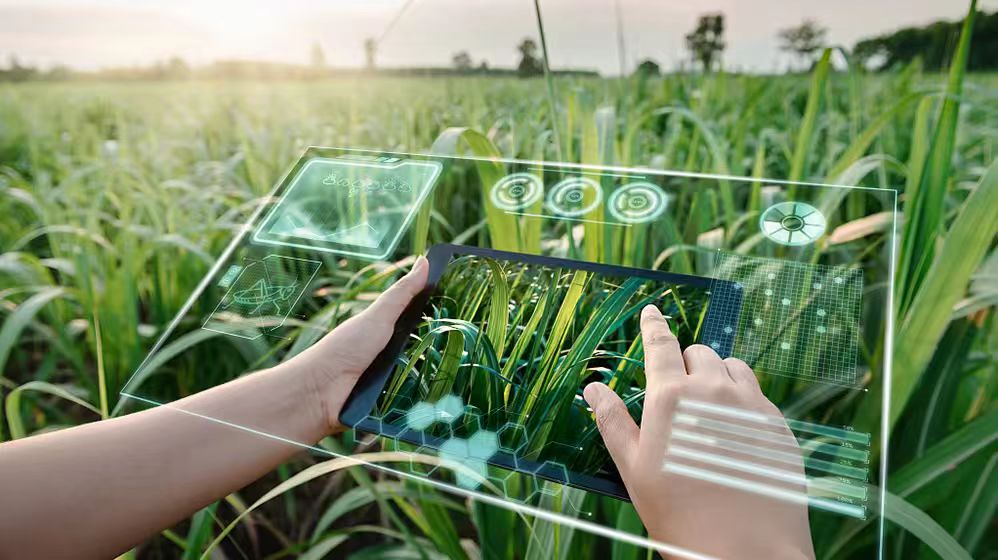
(Singapore, 14.08.2026) As AI data centers compete with farmland for land, water, electricity, and labor around the world, the same technology is reshaping agriculture from another direction. For years, the story of smart farming has largely remained in the pilot stage. But in 2026, change is quietly taking hold — from collaborations between multinational tech companies and agricultural platforms to policy push from international organizations, AI’s transformation of agriculture is moving from concept to real farms and supply chains.
AI is a double-edged sword, and for agriculture, that is especially true. Liang Chengwang, Executive Chairman of Zixin Group Holdings, noted: “The unchecked expansion of computing infrastructure does create competition for farmland, but AI itself is a key driver for the transformation and upgrading of traditional agriculture. Computing power may compete for land, but AI can also empower it.”
In July 2026, the Food and Agriculture Organization (FAO) convened its first-ever Global Conference on Smart Farming in Rome. The FAO Director-General noted: “The ways we have driven agricultural growth over the past five decades are hitting their limits. Smart farming is not a vision of the future; it is an urgent option to help farmers produce more food with fewer resources.”
That same month, Cropin and Google Cloud launched OrbitAI, described by the companies as the world’s first agentic AI platform for food and agriculture. Unlike large language models trained on general internet data, OrbitAI is built on data from complex, real-world interactions across crops, climate, weather, soil, geography, agronomic practices, and global supply chains.
Founded in 2010, Cropin is the world’s largest deployed AI platform for food and agriculture. The platform integrates fifteen years of proprietary agricultural intelligence — covering 103 countries, more than 400 crop types, over 10,000 varieties, and intelligence data from more than one billion acres of farmland. A specialized network of AI agents serves decision-making needs across the food value chain, from cross-border procurement to field-level farm management, delivering region-specific, actionable recommendations through natural language.
In one demonstration, a procurement manager asked about “soybean supply risk over the next 90 days.” OrbitAI responded within 30 seconds: risk level “high,” with soil moisture deficits expected to create a 12% to 15% supply gap, and advised initiating buffer procurement from the third week. A potato farmer in Gansu inquired about crop health; the platform flagged a “high” risk of late blight and recommended preventive action within 48 hours. Both responses were grounded in real field data and predictive models, offering actionable guidance rather than general references.
Cropin founder and CEO Krishna Kumar said: “AI has already changed the way the world accesses information. The next transformation will be about how the world makes decisions about food.”
Markets are taking note. Research firm Fact.MR projects the global smart agriculture solutions market will grow from US$17.7 billion in 2026 to US$34.6 billion by 2036.
Across the globe, AI technology is moving from laboratories to farmlands. In northeastern Brazil, a “Science and Technology Backyard” is using sensors, big data, and AI to equip small family farms with a “digital brain.” Since its launch, local productivity has increased five to sevenfold, and farmers’ incomes have risen by 80% to 90%. In Abu Dhabi, desert farms are leveraging AI and robotics to produce a steady seven tonnes of fresh vegetables daily. In Japan, AI-powered harvesters have been deployed for broccoli cultivation, capable of precisely identifying mature areas and executing harvests automatically.
Liang sees AI’s impact on agriculture as moving beyond isolated applications to permeate the entire chain. “From breeding to the field, from processing to the supply chain, every link is being redefined.”
Zixin Group has already implemented AI applications tailored to its operations: an IoT monitoring system at its planting bases tracks soil moisture and crop data in real time; digital tools support sweet potato breeding in collaboration with research institutes; smart control systems optimize drying and sterilization at processing facilities; and market data helps farmers plan planting and harvest schedules.
“We prioritize practical technologies that cut costs, stabilize yields, and improve quality,” Liang said. “We say no to gimmicky, conceptual smart gadgets.”
Looking ahead, Liang believes AI will reshape agricultural production models and competitive dynamics from the ground up. But he also cautions: “No matter how advanced AI becomes, it cannot replace high-quality farmland as the essential carrier. The ideal development model is for computing power to make use of low-grade land without encroaching on prime farmland, while modern agriculture harnesses AI to maximize the value of every cultivated acre.”