























(SINGAPORE, 2026.6.4) The rapid emergence of restaurants designed specifically for solo and individualized dining has prompted a reassessment in China of what it means to eat alone — and what this shift reveals about changing consumer behavior and evolving social norms.
Traditionally, Chinese dining culture has placed strong emphasis on togetherness. Meals are typically shared, tables are communal, and eating is as much a social ritual as it is about consuming food. In many ways, dining has long functioned as a form of relationship-building, where connection and conversation matter as much as the dishes themselves.
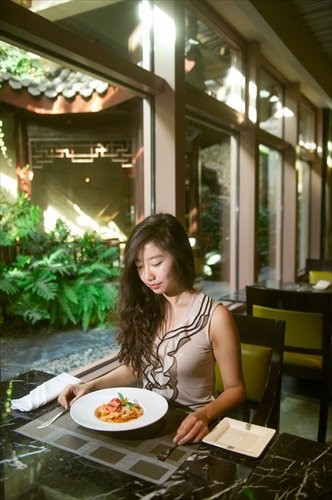
However, a range of demographic and social changes is reshaping this pattern. Falling birth rates, an aging population, the rise of smaller households, and the expansion of digital social interaction have all contributed to a more “solitary” society. Today, China has more than 240 million single adults and over 100 million people living alone, creating a substantial and growing demand for dining experiences designed for one.
Yet the shift is not purely demographic. It also reflects a deeper emotional undercurrent among younger consumers. Many feel they have limited control over major aspects of their lives—workplace pressures, housing costs, and career uncertainty among them. As noted by Canqi Boss Neican (餐企老板内参), a leading Chinese food-service industry platform, the simple act of choosing when, where, and what to eat offers a small but meaningful way to reclaim a sense of autonomy.
In the past, eating alone often carried negative associations—linked to loneliness, social exclusion, or even a casual disregard for food. Over the past two years, however, solo dining in China has progressively been reframed as an expression of personal agency.
Hence, it is not accurate to assume that China’s new generation of solo diners simply eat quickly and leave, in the manner often associated with their Japanese counterparts. Restaurants themselves are evolving in response to this new “experiential” eating-alone norm. “Solo dining” in many cases is better understood in China as “individualized dining.”
It is now common to see young Chinese professionals leaving offices at dusk and heading to small restaurants scattered across city streets. Instead of gathering friends for dinner, many go straight to counter seats or single-person tables, order food they genuinely enjoy, and eat quietly on their own, the Neican depicted.
Previously, customers dining alone were typically offered small portions or single-serve set meals designed for efficiency and affordability, with little expectation beyond quick turnover. The experience was functional rather than experiential.
Today, a quieter but more meaningful transformation is reshaping the restaurant industry.
Noodle chains such as Wang Fanxing (王繁星) and Chunya (椿芽) are no longer focused only on offering basic sustenance. Instead, they increasingly emphasize ambience, comfort, and menu diversity, providing a more rounded dining experience.
A similar evolution is visible through the conveyor-belt and self-service formats. From mini hotpot to barbecue, more concepts are adopting the conveyor-style systems, giving solo diners greater convenience, variety, and control over their choices.
Counter dining and chef’s-counter formats are also gaining traction. These settings make solo dining more interactive, allowing customers to observe the chefs at work, exchange brief conversations, and feel part of the cooking process rather than isolated from it.
Meanwhile, Japanese chains such as Sushiro (寿司郎) and Hamazushi (滨寿司) have become popular in part because their layouts naturally accommodate both groups and individuals, allowing solo diners to blend in seamlessly rather than stand apart.
Taken together, these developments are not all explicitly designed for solo diners. Yet they point to a broader transition: greater comfort, expanded choice, and marginal interaction—without social pressure. The “lonely meal” has morphed into a form of “self-care dining.”
Still, the narrative is not universally accepted.
Staff at Xiaoran Tongxue (小然同学), a restaurant in Guangzhou’s Tianhe City (天河城) shopping center, noted that although the seating layout of their eatery suits individuals, most customers still arrive in pairs. Similar patterns appear in many chef’s-counter establishments, where two-person dining remains most common.
Some operators are similarly sceptical. One counter-dining owner has suggested that solo dining may be somewhat overstated in China. Unlike Japan, where solitude in public spaces is more culturally normalized, Chinese dining culture has traditionally prioritized sociability and shared meals. From this perspective, the market for “pure” solo dining may be smaller than it appears.
Such observations challenge the idea that solo dining is the growing trend. But a closer look suggests a more nuanced reality, according to Neican.
The key shift is not a simple move from eating together to eating alone. Rather, it is a transition from “everyone sharing the same dishes” to “everyone choosing their own meal.”
As food industry consultant Wang Yuyan (王雨嫣) puts it, contemporary solo dining is less about isolation and more about the reorganization of meals. It reflects a broader move toward smaller groups, individualized ordering, and modular food options.
In this sense, solo dining is not totally replacing communal dining—it is reshaping it from within.
Where once a single person might order dishes for the table, now each diner makes independent choices, including preferences such as spice level or oil content. Decision-making has become increasingly individualized.
This is why “solo dining” in China is often better understood not literally as eating alone, but as “1+1” or even “1+1+1” dining.
People may sit at the same table, but order separately. Friends share space while consuming entirely different meals, maintaining social connection without uniformity of consumption.
This explains the popularity of conveyor-belt hotpot, self-service barbecue, pay-by-weight buffets, and other highly customizable formats. Their purpose is less about encouraging solitude than about enabling individualized choice within shared spaces.
Beneath these changes lie deeper shifts in consumer psychology and social structure.
One notable trend is the declining appeal of so-called “internet-famous” restaurants. Consumers are now unwilling to spend time queuing purely for social media hype or photo opportunities.
Motivation is shifting from external validation to internal satisfaction. Younger diners are less concerned about impressing others and more centreed on their own experience—reflecting a broader lifestyle change from outward performance toward inward fulfillment.
In his book The Solitary Society: The Coming Fifth Consumption Era, Japanese sociologist Atsushi Miura (三浦展) argues that the defining feature of the “fifth consumption era” is the normalization of solitude alongside a stronger pursuit for emotional fulfillment.
He highlights two key tendencies: “slow living” and “sensory pleasure,” where consumers prioritize experience quality and emotional satisfaction over speed or efficiency.
China appears to be moving in a similar direction.
Younger generations—especially Gen Z—are more and more comfortable with solitude. For many, eating alone is as ordinary as drinking water, free of stigma or embarrassment. As this cohort becomes the dominant consumer group, individualized dining is likely to become the default rather than the exception.
A carefully prepared solo barbecue meal priced at 78 yuan (S$14.43) may feel worthwhile because of the experience it delivers. By contrast, a basic 20-yuan bowl of noodles may quench hunger but offer limited emotional reward. Value is increasingly defined by experience rather than cost alone.
As single-person households rise in China and younger consumers gain spending power, individualized dining will likely continue moving into the mainstream. Its influence will extend beyond menus into restaurant design, operations, and business models.
Restaurants are expected to move further toward offering smaller portions, modular combinations, and customizable sets. Pricing and serving formats will become more flexible and personalized. Spaces will increasingly be designed to balance individual autonomy with optional social interaction.
For the restaurant industry, the implication is clear: the key question is no longer simply what to serve, but what diners actually seek, concluded Neican.