






















(Singapore, 29.09.2026)Japan is turning an unlikely remnant of its economic boom years into a new source of clean energy, as former golf courses increasingly make way for solar farms, highlighting a challenge that is also familiar to Singapore: how can densely populated economies expand renewable energy when suitable land is increasingly difficult to find?
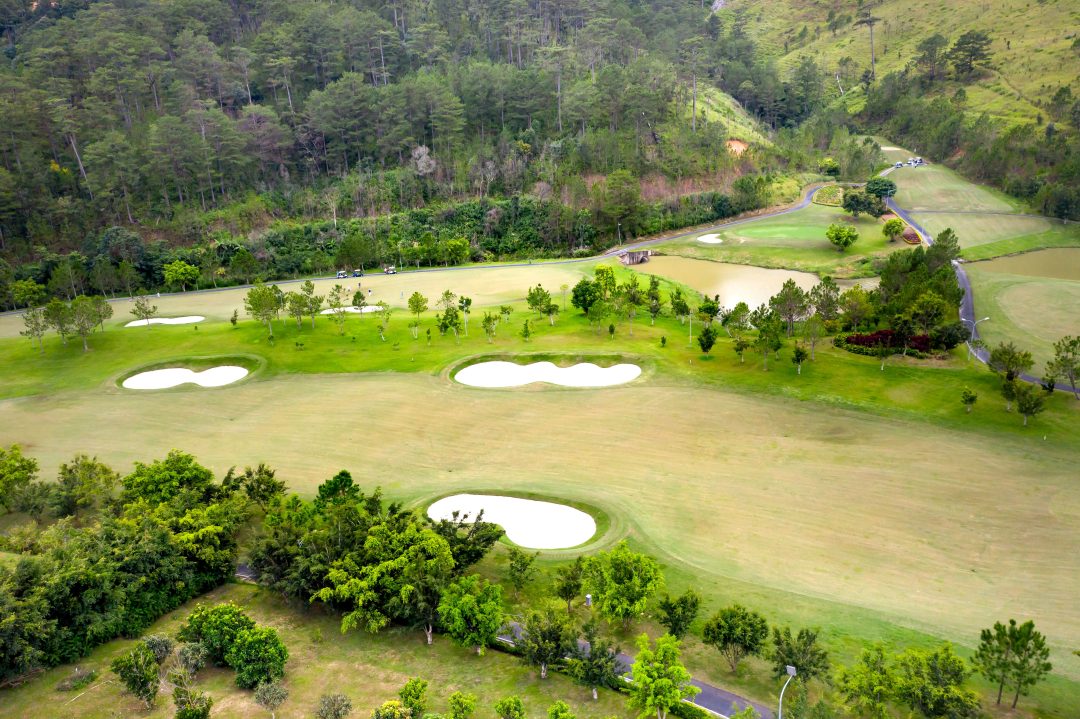
In Gunma Prefecture, about two hours from Tokyo, the 27-hole Minohara Country Club is expected to eventually disappear beneath rows of solar panels after the loss-making course was bought by construction and real estate company Kamisato Kensetsu in 2025, with plans to develop a 152-megawatt solar project on the site.
According to Bloomberg, golf courses have become some of the last large tracts of relatively open land available to solar developers in Japan, where mountainous terrain and dense development limit the number of locations suitable for major renewable projects.
Around 9% of Japan’s utility-scale solar capacity is already located on former golf courses, based on BloombergNEF data covering projects of at least 0.9MW, while at least another 1GW of solar projects that have been announced or are under construction are located on golf courses, representing roughly 10% of Japan’s current pipeline.
The unusual combination reflects changes on both sides of Japan’s economy, with golf courses having expanded rapidly during the country’s economic boom in the 1980s, when golf and resorts became symbols of corporate wealth, before their popularity declined over subsequent decades, particularly in rural areas facing shrinking populations.
At the same time, Japan needs significantly more renewable electricity, with solar supplying about 10% of the country’s electricity in 2025, double its share a decade earlier. Japan is now targeting solar to provide as much as 29% of its electricity by 2040, before reaching net-zero emissions by 2050.
Finding enough space to reach those targets, however, is becoming more difficult because large solar projects need more than sunlight, with developers also requiring reasonably flat land, access to the electricity grid and sufficient distance from residential areas. Former golf courses often meet several of these requirements while allowing developers to avoid clearing forests for new projects.
This has become increasingly important as large solar farms face opposition from communities concerned about deforestation, landslides and changes to local landscapes. EDP, which recently commissioned a solar project on a former golf course in Fukushima Prefecture, said such sites allow large projects to be developed while reducing the need for extensive tree cutting.
Singapore Faces an Even Tighter Land Constraint
Japan’s search for unconventional solar sites carries a broader lesson for Singapore, where the physical limits on renewable energy development are even more pronounced.
Unlike larger countries that can dedicate wide areas to utility-scale solar farms, Singapore has to fit renewable generation into an already highly developed urban environment, making the challenge less about finding vast new plots of land and more about extracting energy value from surfaces that already serve another purpose.
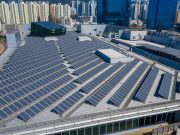
Rooftops are one obvious example, as solar panels can be installed on homes, commercial buildings, factories and public housing without requiring a separate parcel of land solely for electricity generation, while floating solar systems provide another approach by making use of reservoirs and other suitable water surfaces.
The underlying principle is similar to what is happening on Japan’s ageing golf courses: instead of competing for untouched land, solar development increasingly needs to make better use of spaces that are already available.
Japan is already looking beyond golf courses as the supply of suitable sites becomes more limited, with renewable energy developer Renova moving towards smaller installations on abandoned farmland, while the government is backing next-generation perovskite solar cells that could eventually be installed on rooftops, walls and other surfaces that cannot easily accommodate conventional panels.
For Singapore, advances in such technologies could eventually be particularly relevant, as lightweight or flexible solar technologies could increase the range of urban surfaces capable of generating electricity and allow solar deployment to move beyond conventional rooftop installations.
From Finding Land to Finding Usable Surfaces
The land constraint also changes how solar fits into Singapore’s wider energy strategy, as solar alone cannot meet electricity demand around the clock and the country’s limited size restricts how much generation can be installed domestically. This means local solar will need to develop alongside other parts of the energy system, including energy storage, electricity imports and more efficient management of demand.
Australia offers one example of how distributed solar can grow into a significant part of an electricity system, with more than 4.4 million photovoltaic systems installed across approximately 11 million households, while rooftop solar supplied almost 13% of the country’s electricity during the first half of 2026.
Battery installations are also rising rapidly as households seek to store electricity generated during daylight hours for use later in the day, with more than 250,000 battery systems installed in Australia during the first six months of the year, an increase of more than 50% from the previous six months.
Singapore cannot replicate Australia’s model directly because its housing patterns, electricity market and available space are very different, but the Australian experience shows how millions of relatively small installations can collectively become an important source of electricity generation.
For land-scarce Singapore, this could become an increasingly important way to think about solar, with the next phase of growth depending less on searching for one large location for another solar farm and more on identifying thousands of smaller surfaces — homes, factories, warehouses, public buildings and other infrastructure — where electricity can be generated without demanding additional land.
Japan’s golf courses illustrate how that calculation is already changing elsewhere in Asia, as conventional sites become harder to find and the expansion of solar becomes a question not simply of how many panels a country can install, but how creatively it can use the space it already has.